
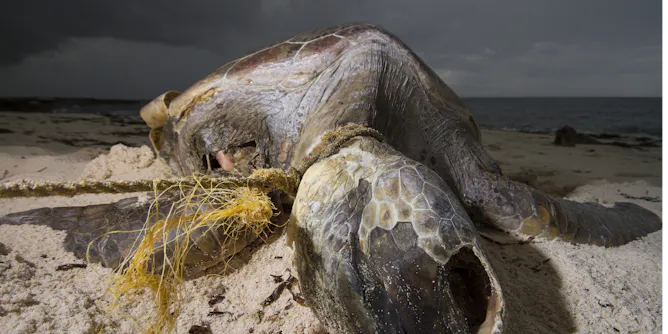
Remote islands in the Indian Ocean are now strewn with plastic waste – the origin of this waste has until now not been established.
Articles on Sharks
Displaying 61 - 80 of 249 articles
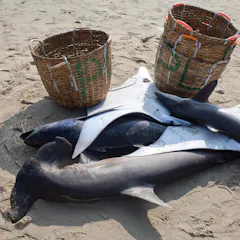
Sharks and rays are traded for their meat, liver and other products. The global demand for these products has increased, and in India, the trade affects livelihoods and culture.

Swimming and surfing in the ocean is fun and invigorating. But sharing the water with animals comes with risks to us and them.
Humans often look to nature for the solutions to complex problems – here are five times where biological processes have inspired innovation.
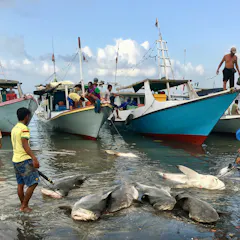
Countries have voted to limit the international shark trade, but this fails to account for the diversity in fishing contexts around the world.
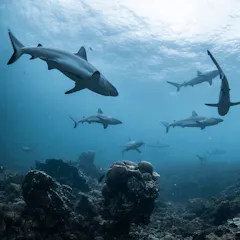
Fining and jailing Indonesian fishers taking shark fin is a knee-jerk solution. As long as sharks keep vanishing and demand for shark fin soup remains high, illegal fishing will continue.
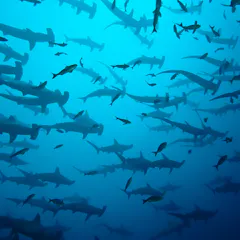
A study offers evidence that marine biology’s biggest stage is broken, and suggests ways to fix it.
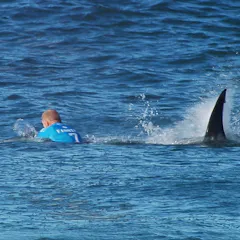
Many surfers have seen sharks while surfing in the ocean. Yet, unlike the general public, 60% are not afraid of sharks. It’s a finding that offers an insight into attitudes to shark conservation.
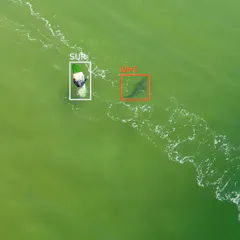
Discerning whether that dark splodge in the water is a shark or just, say, seaweed isn’t always straightforward. In reasonable conditions, drone pilots get it right only 60% of the time.

Thousands of hours of ocean footage reveal how fish rub their heads on sharks to scrape off parasites and scratch itches.
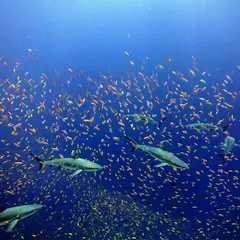
Sharks are much more severely threatened by humans than vice versa. A marine biologist explains how people can help protect sharks and why some strategies are more effective than others.
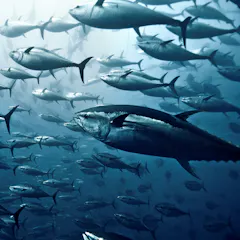
Just about every creature on Earth needs to grab some Zs from time to time. Imagine trying to doze while dodging great whites and killer whales.

The scars many whales bear throughout their lives resulting from shark attacks are more than sufficient evidence sharks will have a go if an opportunity arises.
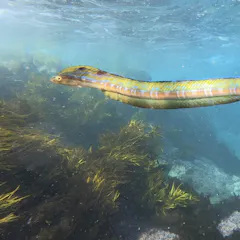
The photographs show how climate change is disrupting our marine ecosystems – sometimes in ways previously unknown to marine scientists.
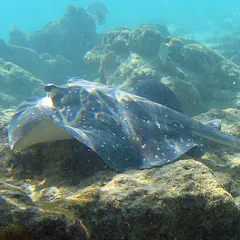
I attest these rather ordinary, mud-covered stingrays are beautiful, and I never tire of watching them. Unfortunately, they are at risk of decline and localised extinctions.
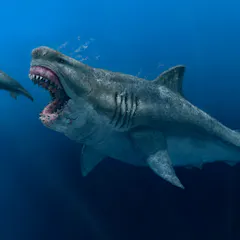
The largest shark to ever live on Earth, megalodon terrorised the world’s oceans, and could eat a killer whale in just a few bites.

The true cost of marine conservation often falls on vulnerable coastal communities. Can a ‘beneficiary pays’ approach protect both endangered species and the communities dependent on them?
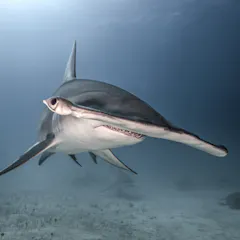
The first hammerhead shark was likely the result of a genetic deformity. A biologist explains how shark DNA reveals hammerheads’ history.
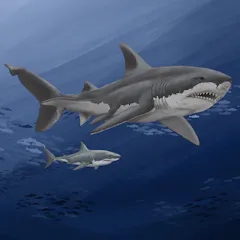
Megalodon, the world’s largest known shark species, swam the oceans long before humans existed. Its teeth are all that’s left, and they tell a story of an apex predator that vanished.
CC BY-NC-ND13.6 MB (download)
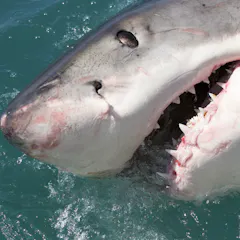
A pair of killer whales are hunting and preying on South Africa's great white sharks, forcing the sharks to flee.
Top contributors
-

Associate Professor of Public Policy, University of Sydney
-
Wen Family Chair in Conservation, The University of Western Australia
-
Marine Biologist, South African National Parks (SANParks); Honorary Research Associate, South African Institute for Aquatic Biodiversity (SAIAB), South African Institute for Aquatic Biodiversity
-
Senior Lecturer in Geography, University of Wollongong
-
Senior Research Fellow, Conservation Science, University of Oxford; Bangor University
-
Professor of Marine Fisheries Ecology, Macquarie University
-
Shark biologist, The University of Western Australia
-
Associate Professor of Evolutionary Developmental Biology, University of Florida
-
Doctoral Programmes Manager, Nottingham Trent University
-
PhD graduate, University of Southampton
-
Professor of Marine Ecology, University of Southampton
-
Director, Florida Program for Shark Research and Coordinator of Museum Operations, Florida Museum of Natural History, University of Florida
-
Director, Florida Program for Shark Research, University of Florida
-
Faculty Research Associate in Marine Biology, Arizona State University
-
Executive Dean of the College of Arts, Sciences & Education and Professor of Biological Sciences, Florida International University