
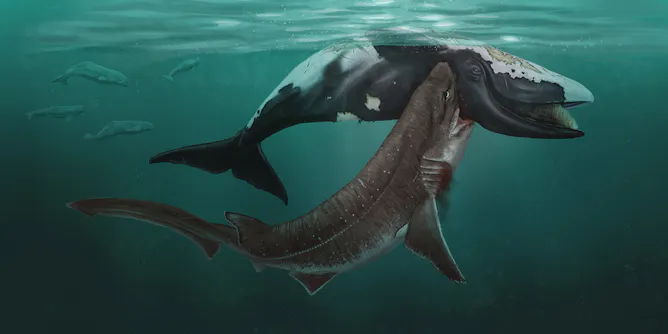
Could new populations of seals and porpoises attract the descendants of some of the large shark species that were thriving in this region 4-5 million years ago?
Articles on Great white sharks
Displaying 1 - 20 of 38 articles

The teeth of white sharks are not static weapons but living records of a shark’s changing lifestyle.
A new study sheds light on how sharks colonised the oceans and became apex predators.
The film made us afraid to go back in the water. It ultimately gave sharks more to fear from us.
White sharks suffered great declines after the Jaws movie was released. But these iconic predators must be protected.
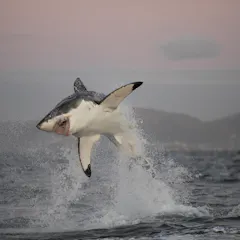
The majestic white shark that once drew many tourists to South Africa’s western and southern Cape regions has all but disappeared. The only explanation can be a sharp decline in the population.

The scars many whales bear throughout their lives resulting from shark attacks are more than sufficient evidence sharks will have a go if an opportunity arises.
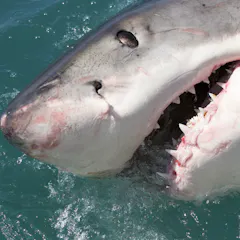
CC BY-NC-ND13.6 MB (download)
A pair of killer whales are hunting and preying on South Africa's great white sharks, forcing the sharks to flee.
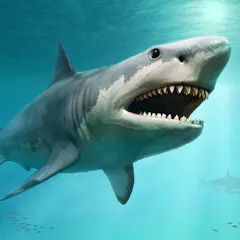
A terrifying sight in ancient waters, the megalodon shark was once the most feared creature in the sea.
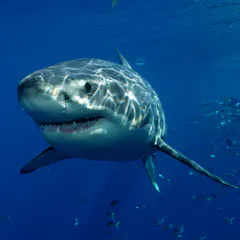
As the oceans warmed, great whites were more adaptable.

Researchers have discovered that great white sharks are more social than previously thought. Using specialized tags, they tracked six sharks and found that some stay close to each other when hunting.
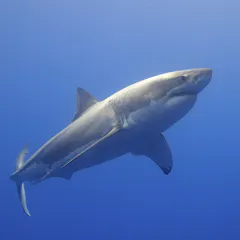
The death of 57-year-old Paul Millachip at Fremantle’s Port Beach is a reminder that shark bites, though rare, can be tragic. New research aims to reduce the risk by understanding sharks’ vision.
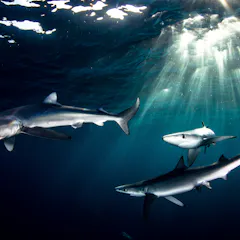
Sharks grow slowly and produce few young compared to bony fishes. In many cases, this means that their populations are fished out faster than can be replenished if not well managed.
A high seas treaty could help rebuild populations – but time is running out.
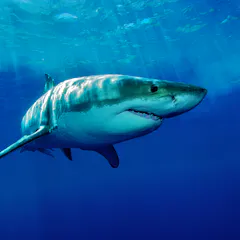
You’re more likely to drown at a beach than be killed by a shark. But there are things people can do to reduce the already low risk even further.
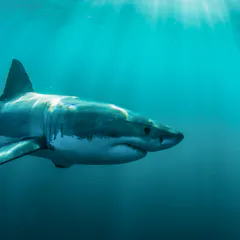
How many shark encounters have there been at your local beach? Explore our interactive map to see 20 years of incidents between humans and sharks in coastal waters around Australia.
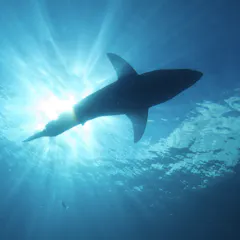
New research has used genetic analysis in a world-first effort to accurately estimate Australian and New Zealand white shark numbers.

Fatal shark bites are very rare. But the stats do suggest that the likelihood of an attack proving fatal is higher in Australia - probably because our waters are home to the “big three” dangerous species.
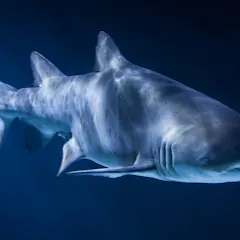
Sharks can’t sneeze like we do, but they can do other cool tricks – like making their stomach stick out of their mouth to get rid of unwanted stuff.

LIfeguards could potentially have a new ally in the fight to reduce shark incidents: drones that can spot when a shark swims nearby, and automatically alert authorities.
Top contributors
-

Associate Professor of Public Policy, University of Sydney
-
Doctoral Programmes Manager, Nottingham Trent University
-
Marine Biologist, South African National Parks (SANParks); Honorary Research Associate, South African Institute for Aquatic Biodiversity (SAIAB), South African Institute for Aquatic Biodiversity
-
Professor of Marine Ecology, University of Southampton
-
Emeritus Strategic Professor in Palaeontology, Flinders University
-
PhD graduate, University of Southampton
-
Professor of Marine Fisheries Ecology, Macquarie University
-
Postdoctoral Researcher in management and conservation of white sharks, Stellenbosch University
-
Shark biologist, The University of Western Australia
-
Wen Family Chair in Conservation, The University of Western Australia
-
Professor, College of Science and Engineering, Flinders University
-
Principal Research Scientist, CSIRO
-
Senior Lecturer in Geography, University of Wollongong
-
Shark Biology & Assessment, Sydney Institute of Marine Science
-
Associate Professor, School of Life and Environmental Sciences, Deakin University