
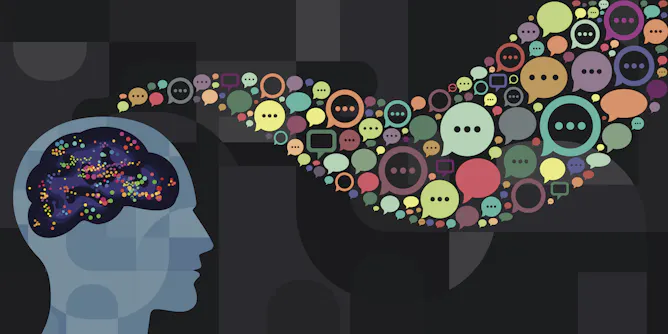
Print advertising increasingly makes use of linguistic and visual syneasthesia to create multisensory experiences.
Articles on Senses
Displaying 61 - 80 of 95 articles

Researchers are training dogs to detect lung cancer in breath and saliva samples, with the aim of developing early-detection screening and a functional “electronic nose” for diagnosing lung cancer.
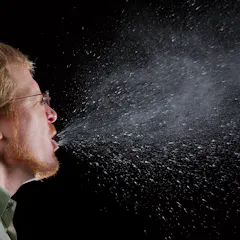
Compounds in your breath could help AI detect illnesses, including different cancers.

Synaesthesia – a rare experience where the senses merge – comes in many different forms.
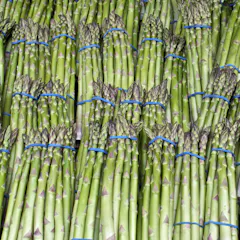
Perhaps you’ve noticed something unusual in the bathroom after you consume this healthy spring vegetable. A Speed Read explains there’s two parts to the stinky puzzle: production and perception.

Rather than trying to out-compete each other, flowers may work together to attract bees en masse. It’s the sort of approach that is effective in the world of advertising too.

People have wondered for years and scientists still don’t know for sure.

Many living vertebrates have the ability to detect electric fields, especially in other animals when hunting. But what can the fossil record tell us about the origins of this sensory system?

They engage with your senses and subconscious.

We can see at a finer resolution than the spacing between individual photo-receptors in the eye – and it’s all down to our brains.

Our senses of taste and smell are linked to one another in ways that experts are continuing to explore. See if you can answer some questions for which experts have discovered some surprising answers.
Blood-detection dogs work paw in hand with scientists and Australia’s police to solve crimes and missing persons cases.
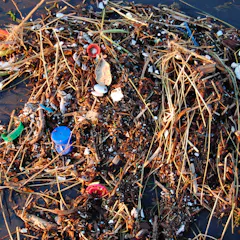
A new study shows that anchovies – key food for larger fish – are attracted to plastic trash because it smells like food. This suggests that toxic substances in plastic could move up through food chains.

Move over, dogs. The latest evidence suggests humans can match most other animals when it comes to smelling – and even outperform them for certain scents.
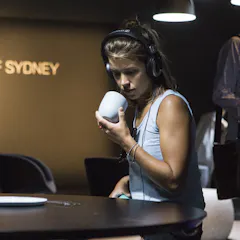
What’s the smell you associate with your childhood home? Or road-trips? Or fear? Conceptual artist Cat Jones has created the Scent of Sydney for the Sydney Festival, exploring the city in smells.

When Charles Foster wanted to open his senses to the world he took to the woods.

How does your brain deal with the ambiguous and variable visual information your eyes collect? Neuroscientists think it bets on what’s the most likely version of reality.
New research is narrowing the gap, creating technology with the detecting capabilities of canines but without the downsides of relying on a biological system.

Nearly everyone can’t tickle themselves and it’s all to do with how our brains see and perceive movement.
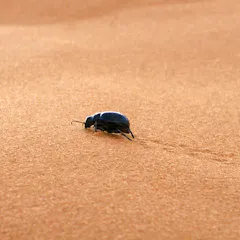
Detecting drier or wetter conditions is crucial for insect survival. We’ve long known they can do this – now researchers have discovered the genetic and neural basis for their humidity-sensing system.
Top contributors
-

Postdoctoral Researcher in Cognitive Neurosciences, The University of Queensland
-
Associate Professor in Physiology, UNSW
-
Professor, School of Psychology, The University of Queensland
-
Professor of Pharmacology and Therapeutics, University of Florida
-
Associate lecturer, University of Sussex
-
Professor, Macquarie University
-
Associate Professor in Psychological Science, Western Sydney University
-
Professor of Psychology and Head of Department, Goldsmiths, University of London
-
Professor, University of Essex
-
Emeritus Strategic Professor in Palaeontology, Flinders University
-
Postdoctoral research associate, Max Planck Institute for Evolutionary Anthropology
-
Senior Research Scientist, Pacific Northwest National Laboratory
-
Assistant Professor
-
Assistant Professor of Psychology, University of Wisconsin-Madison
-
Professor of Consumer Psychology, Anglia Ruskin University