
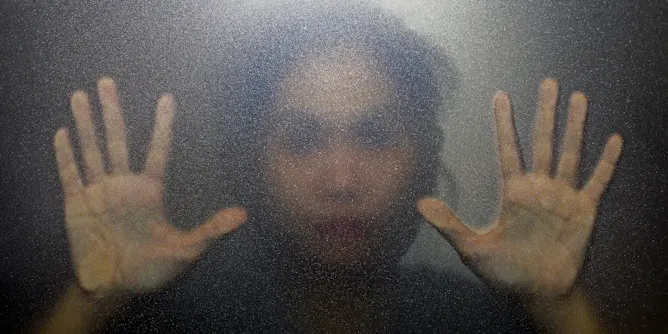
A cultural collaboration with deafblind people led to the development of a high-tech device to help navigate their world post-lockdown
Articles on Senses
Displaying 21 - 40 of 95 articles

A device could be use to transmit a camera’s video feed into moving patterns of electrical stimulation on the surface of the tongue.

Selling through smelling.
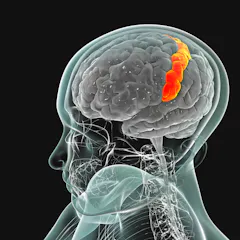
The brain’s somatosensory cortex may help enrich our emotional experiences and improve our mental health. Mindfulness and dance movement therapy may be effective ways to activate it.

There’s still a lot we don’t know about motion sickness – but the balance system seems to play a big role.

It’s intriguing how some people experience ASMR while others don’t - our latest research suggests that many ASMR responders are highly sensitive “orchids”.

If you ever feel like you can’t stop eating sugar, you are responding precisely as programmed by natural selection. What was once an evolutionary advantage has a different effect today.

Nobel prizewinning research has revealed the various molecules that help us sense temperature, touch, pain, and even the positioning of our body parts.

Learning that our brains process information differently when we’re standing up or lying down has implications for how we study and assess brain function.

By looking at the eye bones and ear canals of extinct dinosaurs, researchers show that a small ancient predator likely hunted at night and had senses as good as a modern barn owl.

A curious kid asks: what do blind people experience in their dreams?

Arctic foxes have a few special talents that help them sneak up on unseen prey and pounce.

Proprioception is the sense that allows us to rapidly know without looking where each part of our body is.

Neuroscientists tackling the age-old question of whether perceptions of color hold from one person to the next are coming up with some interesting answers.

It’s been ten years since the term was coined. Here’s what researchers know so far.

Brains recognize a smell based on which cells fire, in what order – the same way you recognize a song based on its pattern of notes. How much can you change the ‘tune’ and still know the smell?

Your faithful friend’s view of the world is different than yours, but maybe not in the way you imagine.

Imagine being able to detect a smell from more than a kilometre away. Dogs can sniff out things from a greater distance than that.

Many respiratory viruses cause us to temporarily lose our sense of smell. But SARS-CoV-2 isn’t like those other viruses. Researchers are now exploring how it differs and whether patients recover.

Mmmmmmm. That smells delicious. Wait, how do you know that?
Top contributors
-

Postdoctoral Researcher in Cognitive Neurosciences, The University of Queensland
-
Associate Professor in Physiology, UNSW
-
Professor, School of Psychology, The University of Queensland
-
Professor of Pharmacology and Therapeutics, University of Florida
-
Associate lecturer, University of Sussex
-
Professor, Macquarie University
-
Associate Professor in Psychological Science, Western Sydney University
-
Professor of Psychology and Head of Department, Goldsmiths, University of London
-
Professor, University of Essex
-
Emeritus Strategic Professor in Palaeontology, Flinders University
-
Postdoctoral research associate, Max Planck Institute for Evolutionary Anthropology
-
Senior Research Scientist, Pacific Northwest National Laboratory
-
Assistant Professor
-
Assistant Professor of Psychology, University of Wisconsin-Madison
-
Professor of Consumer Psychology, Anglia Ruskin University