

Creating a quieter environment can improve your health – but you have to know what you’re listening for.
Articles on Hearing
Displaying 1 - 20 of 75 articles

Every dollar invested in hearing care returns about $16. So why are 98% of Africans who need a hearing aid still going without one?
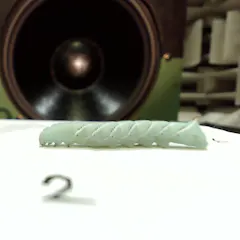
Scientists give caterpillars haircuts and put them in a room isolated from sound to figure out how they’re able to hear without ears.

About 1-4% of people have synaesthesia, a trait that both fascinates and puzzles scientists.

We often think of conversation as effortless. In fact, it’s a finely tuned dance of listening and speaking.

Hearing loss and dementia often occur together, but the link is complex.

Home testing could mean faster results, less stigma, and more choice - but only if everyone can access it.

Without visual clues, our ears mishear sounds produced in front of us. Knowing more about why this happens will give new insights into how the brain works.

Mice don’t just use their whiskers as a sense of touch.

Left and right brains hear speech differently, yet how this divide forms was unclear − until mouse studies showed each hemisphere runs on its own developmental clock.

The powerful documentary on Apple TV+ is shining a light on a decades-long revolution that’s still unfolding, and now threatened under Trump.

Many Australians experience hearing loss but hesitate to seek help. So what are the options if you need help with your hearing?

By combining ultrasound with a concept called nonlinear acoustics, you can create sound that stays silent until it reaches a specific location.

Listening to music and doing homework can be in harmony − as long as you turn down the volume.

The damage caused by loud noise exposure is irreversible – but many simple precautions can lower your risk.
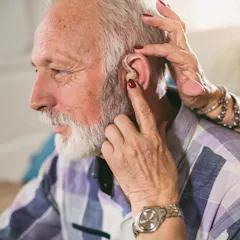
This is both a result of social inequality, and an issue that could widen disparities further.

Detecting and tracking motion is key to survival. The ability to extract auditory information from a noisy environment changes when your brain isn’t wired to rely on vision.

From insects to birds to bats to frogs, these little loudmouths have found ingenious ways to deliver their messages at high volume.

Impacted earwax that blocks the ear canal is a major reason for GP consultations.
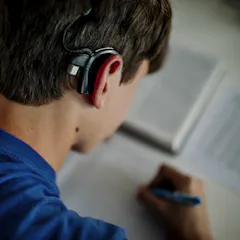
Researchers are exploring different ways to improve how cochlear implant users perceive speech and music in noisy environments.
Top contributors
-

Post-Graduate Researcher in Tactile Neuroscience, University of Southampton
-
Research Fellow in Auditory Neuroscience, University of Southampton
-
Ewing Professor of Audiology, University of Manchester
-
Professor in Audiology in the Department of Speech-Language Pathology and Audiology, University of Pretoria
-
Professor, University of Essex
-
Professor of Psychology, University of the Witwatersrand
-
Assistant Professor
-
Professor of Acoustic Engineering, University of Salford
-
Senior Research Associate, University of Bristol
-
Emeritus Strategic Professor in Palaeontology, Flinders University
-
Academic, The University of Melbourne
-
Assistant Professor of Communication Sciences, Case Western Reserve University
-
PhD student, University of Southampton
-
Assistant Professor of Psychology, University of Wisconsin-Madison
-
Professor, Macquarie University