

With dreaded, invisible germs lurking on surfaces and in people, our surroundings are seen as a minefield – and we end up dulling one of our most valuable senses.
Articles on Senses
Displaying 41 - 60 of 95 articles
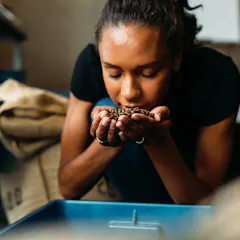
Patients who later test positive for COVID-19 are reporting early loss of smell and taste. Researchers are now trying to understand if this could be an early sign of the disease.

It’s hell to lose your sense of smell.
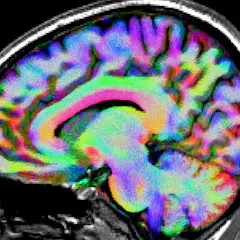
Odd findings in a brain scan of a 29-year-old woman have scientists asking new questions about how our sense of smell really works.
If artificial intelligence can amaze us with its prowess, there are many areas where it falls flat when compared to human and animal intelligence.
Brain functions integrate and compress multiple components of an experience, including sight and smell – which simply can’t be handled in the way computers sense, process and store data.

New multisensory approaches to presenting visual art propose solutions to barriers that limit access for marginalized audiences.
Designating an object with the movement of a finger is at the heart of human communication, yet precisely why we point isn’t clearly understood. A new paper indicates that it may be related to touch.
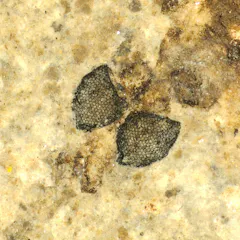
Fossil flies from what is now Denmark reveal some striking similarities between insect eyes 54 million years ago, and our own vision today.
Our sense of touch lets us know how hard or soft something is, how solid or pliable it is to handle. That’s an important skill if you want robots to handle things safely.

As climatic conditions change, plants’ odours are altered, with direct consequences for pollination, especially by bees.

New research involving temporary ‘finger amputations’ raises hope for more effective stroke rehabilitation.

As we get older, the way we experience taste can change drastically – but it’s not all down to one sense.
Would you rather lose your sense of touch or your vision? Here are the pros and cons of each, according to science.
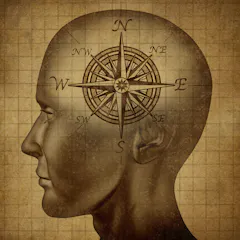
Your brain’s sensory talents go way beyond those traditional five senses. A team of geoscientists and neurobiologists explored how the human brain monitors and responds to magnetic fields.

Our ability to smell is a function of the brain, so it makes sense that an impaired sense of smell can point to cognitive decline. The good news is training our noses may be effective.
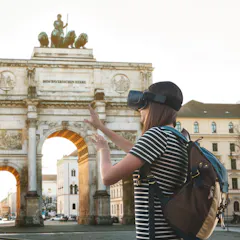
Virtual reality can be more than a mirror that gives you a realistic simulation of the current world: it can bring the past into the present.
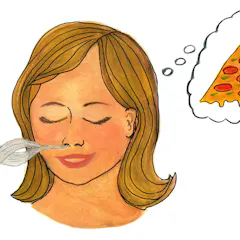
The parts of the brain that get ‘smell signals’ from the nose also do other things, such as storing memories or provoking emotions. That is why some smells can bring back old memories.
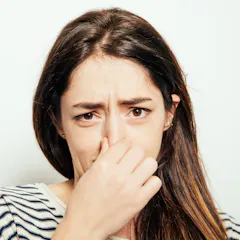
Smelling odours that aren’t there can be annoying. It can also be a sign of a serious underlying condition.
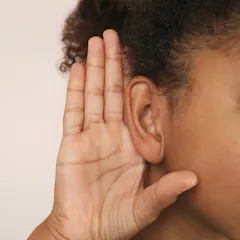
Blind people don’t have superhuman ears but their brains can rewire themselves to give them an edge over those who can see.
Top contributors
-

Postdoctoral Researcher in Cognitive Neurosciences, The University of Queensland
-
Associate Professor in Physiology, UNSW
-
Professor, School of Psychology, The University of Queensland
-
Professor of Pharmacology and Therapeutics, University of Florida
-
Associate lecturer, University of Sussex
-
Professor, Macquarie University
-
Associate Professor in Psychological Science, Western Sydney University
-
Professor of Psychology and Head of Department, Goldsmiths, University of London
-
Professor, University of Essex
-
Emeritus Strategic Professor in Palaeontology, Flinders University
-
Postdoctoral research associate, Max Planck Institute for Evolutionary Anthropology
-
Senior Research Scientist, Pacific Northwest National Laboratory
-
Assistant Professor
-
Assistant Professor of Psychology, University of Wisconsin-Madison
-
Professor of Consumer Psychology, Anglia Ruskin University