
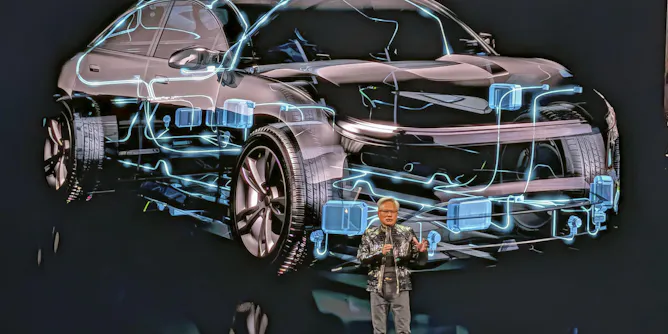
Nvidia’s new AI system, Alpamayo, could prove a major step to making autonomous cars a common sight on our roads.
Articles on Self-driving buses
Displaying all articles
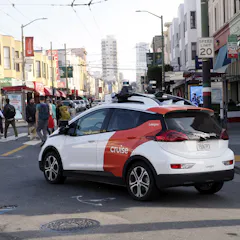
Roughly half of people surveyed support the development of autonomous vehicles. But a third were undecided about many aspects and will need to be convinced about their safety and other benefits.
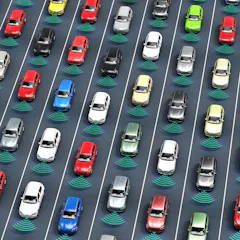
Self-driving vehicles that constantly roam the streets looking for passengers could overwhelm cities. But, if kept in check, these vehicles could be useful for improving urban transport.
Planes, trains and automobiles produced a step-change in the speed of travel – driverless and electric cars simply cannot deliver such radical improvements.
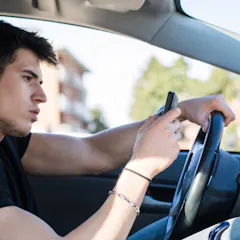
The real ethical challenge of driverless cars is not deciding how they respond in emergencies – it’s facing up to the failings of human drivers.

It might not be effective now, but the development of self-driving vehicles could be a game changer for public transport services.
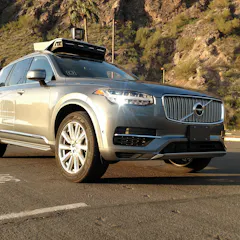
Sensors that monitor everything a self-driving vehicle does can help determine who is responsible in the case of an accident – the manufacturer, the service centre or the vehicle owner.
If government and industry overhype autonomous vehicles, the public may expect too much, be disappointed and reject the new technology.
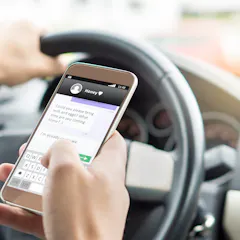
Why do tech companies care so much about self-driving cars? If drivers no longer need to pay attention to the road, they can use their mobile devices even more.
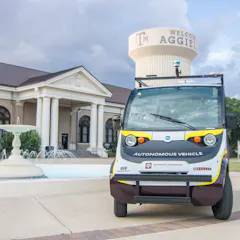
Combining machine learning, artificial intelligence and autonomous vehicles could revolutionize how people with disabilities get around their communities.
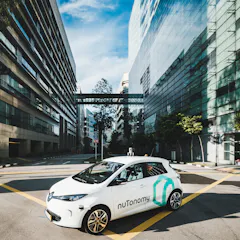
It’s clear autonomous vehicles will disrupt our cities, their land use and planning. Whether they make urban life better or worse depends on how well we anticipate and adapt to their impacts.

As disruptive technology increasingly enters our lives, it demands that we rethink and reorganize all aspects of work, life, and society.
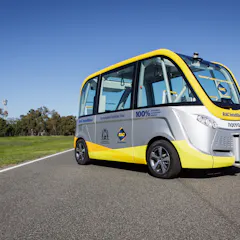
There’s every chance that, if mismanaged, driverless vehicle technologies will entrench the ills of car dependency.

The ethics and psychology of trust suggest ways we might learn to understand self-driving cars, but also show why doing so might be more challenging than we expect.
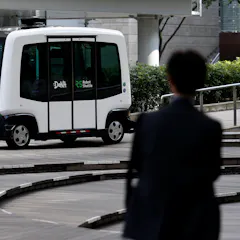
New technologies do not exist in a vacuum. To succeed, new transport technology needs to match the ways we want to move around cities and be accommodated by laws and regulations.
Top contributors
-

Visiting Scholar, Vanderbilt University
-
Professor of City Planning and Transport, Curtin University
-
Professor and Associate Dean Research, School of Architecture, Design and Planning, University of Sydney
-
Honorary Professor of Transport Studies
-
Professor, Faculty of Business & Economics, University of Winnipeg
-
Professor of Data Science, Philosophy, & Policy, University of California, San Diego
-
Professor at the School of Computer Science and Engineering, UNSW
-
Associate Professor of Urban Planning, The University of Melbourne
-
Associate Professor of Urban Planning, Monash University
-
Professor of Distributed Systems & Chair in Applied Data Sciences, Queensland University of Technology
-
Professor of Urban Studies and Planning, Queensland University of Technology
-
Professor of Public Transport, Director Public Transport Research Group, Monash University
-
Senior Lecturer, Nottingham Business School
-
Associate Professor in Mechanical Engineering, Texas A&M University
-
Senior Research Fellow, Curtin University