
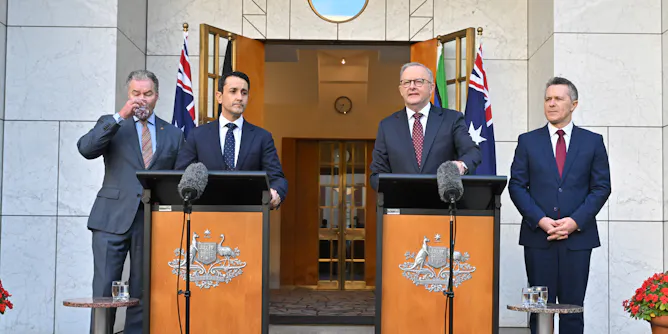
In some good news for Australian students, there is now a firm plan to ‘fully fund’ public schools by 2034.
Articles on Secondary education
Displaying 81 - 100 of 194 articles
During the election we can expect to hear about school funding. This is one of the most contentious areas of education policy – and one voters care deeply about.
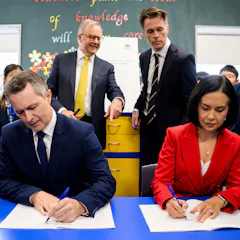
The results of the reforms will not be felt for some time. Underfunded schools will continue to be underfunded for years to come.

About 37% of Australian students now go to a non-government school.
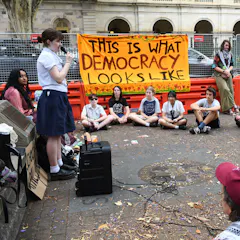
In a new civics report, only 28% of Australian Year 10 students met the ‘proficient standard’ in 2024 compared to 38% in 2019.
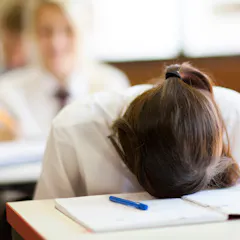
New analysis shows boys are more confident in tasks involving maps and timetables. Parents can help by telling daughters it’s OK to make mistakes in maths.
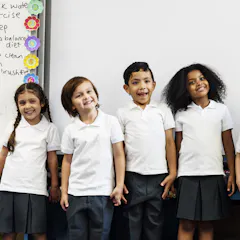
If your child is in a different class or has changed schools, they may be missing certain friends or confused if old friends are behaving differently.
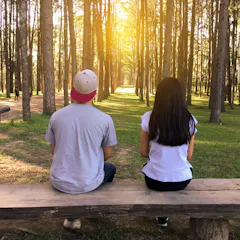
Young people have reported how consent can be painted as a simple ‘yes’ or ‘no’ act, rather than an ongoing discussion between sexual partners.
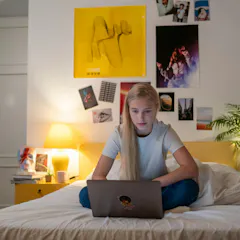
Take a moment to process your feelings – whatever they are. And remember, you don’t have to tell anyone what you got if you don’t want to.

Ask the teacher if – in their view – your child is making an expected or acceptable level of progress, and what evidence tells them this.
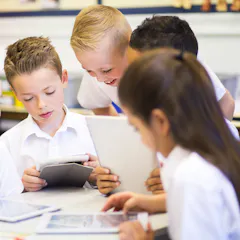
The results from the 2023 ‘Trends in International Mathematics and Science Study’ were released on Wednesday night. Year 8 students, who also did the test, held steady.
Parents can now search how their child’s school has performed in reading, writing, spelling, grammar and numeracy.
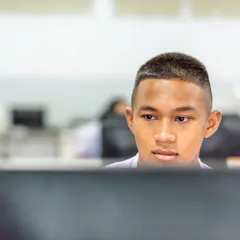
New research on New South Wales students shows many do not have access to computers and the support they need to use them. This means they risk falling behind.
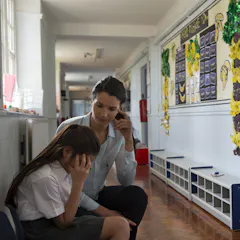
A significant part of teaching involves providing emotional support to students. But with many young people facing mental health and trauma issues, teachers are reporting compassion fatigue.
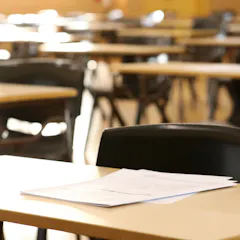
The exams include English, mathematics, biology, economics and legal studies. They also include ancient history, dance, drama, food studies, geography, media and physical education.
This week, parents in New South Wales expressed frustration about the number of pupil-free days.
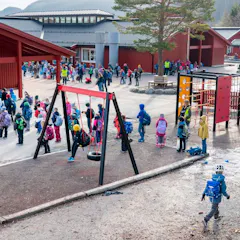
All Norwegian school children are assessed twice a year on their sense of ‘personal order and social behaviour’.
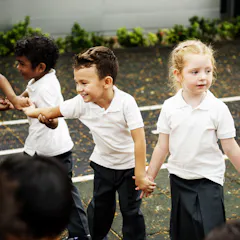
Repeating a year can harm a student’s social, emotional and academic needs. This is why schools only recommend it in ‘exceptional circumstances’.
New research shows early offers do not make a significant difference to how hard a student tries in their final exams or their results.

Our research shows some New South Wales public school students are being asked to pay for their health and physical education lessons. And those who cannot are missing out.
Top contributors
-

Associate Professor in Educational Leadership, Australian Catholic University
-
Scientia Professor and Professor of Educational Psychology, UNSW
-
Associate Professor of Education, Charles Sturt University
-
Postdoctoral Research Fellow, Centre for Inclusive Education, Queensland University of Technology
-
Senior Lecturer in Health and Physical Education, University of Tasmania
-
Professor and Director of the Centre for Inclusive Education, Queensland University of Technology
-
Lecturer in Mathematics Education, University of Sydney
-
Research Scientist, African Population and Health Research Center
-
Professor of Educational Psychology, University of Wollongong
-
Senior Research DECRA Fellow, Institute for Learning Sciences and Teacher Education, Australian Catholic University
-
Senior Lecturer in Education, Edith Cowan University
-
Lecturer (Curriculum & Pedagogy – Educational Psychology & Wellbeing)., University of Southern Queensland
-
Associate Professor of Education Policy, Australian Catholic University
-
Senior Lecturer in Education, University of New England
-
Associate Professor in Education, Deakin University