
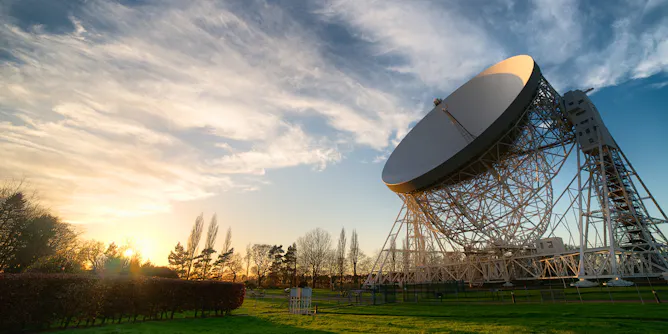
Astronomers should not try to message E.T. before international consultation has occurred.
Articles on Search for extraterrestrial intelligence
Displaying all articles
Future missions may be able to take only a small, damaged sample from space back to Earth. A simple analysis tool could help determine whether its contents suggest the presence of life.
To travel between solar systems, a spacecraft would need extremely sophisticated – if not impossible – technology.
Discoveries of molecules in space that suggest extraterrestrial life are exciting, but they need to be taken with a grain of salt – an astrochemist explains why.

Aristotle believed the planets revolved around Earth and God could not have created other worlds. Today, scientists scour the surface of Mars for ‘biosignatures’ of microbial life.
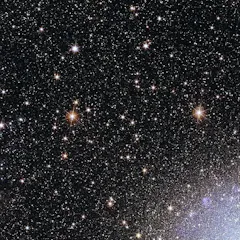
The fictional biologist in ‘Project Hail Mary’ claims that potential alien organisms might not be made of carbon or require water, unlike life on Earth.

Radio astronomy opened up the universe for scientists. They could map new elements across galaxies and also search for signals from extraterrestrial civilizations.
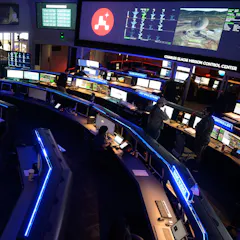
A planetary scientist walks through the sensors and systems that went into the recent detection of potential biosignatures.
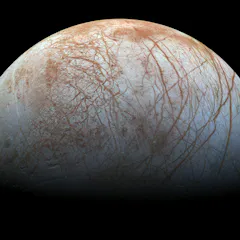
As NASA rolls out more powerful telescopes in the future, scientists will need a way to determine where to point them. A new approach could help.

An astronomer breaks down 3 key components that allow researchers to make groundbreaking discoveries – and decide when results aren’t significant.
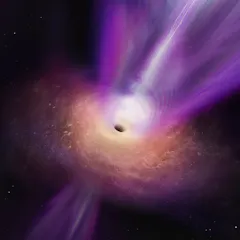
Whether a galactic environment has the right conditions for habitable planets to form could depend on how the black hole in that galaxy is rotating.

Humans evolved late in Earth history. While this timing inspired the conclusion that humanlike life is a cosmic improbability, a new study pushes back.

Whistleblower allegations that the government possesses UFOs may not be backed up by public physical evidence, but some argue that listening for extraterrestrial life is the first phase of contact.
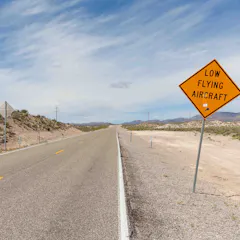
A former intelligence official claims the US government has retrieved multiple craft of non-human origin, along with the occupants’ bodies.
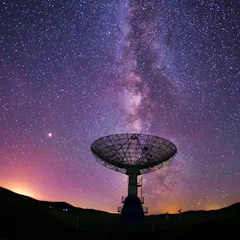
To date, we have not heard from any aliens. Nor have we seen any – but here are the fascinating projects working to change that.
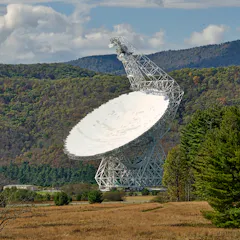
Can artificial intelligence transform the search for alien intelligence?
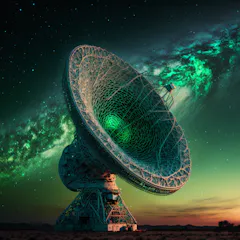
AI’s ability to identify ‘technosignatures’ missed by classical algorithms is an exciting step forward for radio astronomers.
The technology of an advanced alien civilization is likely to produce many signs that could be detected across the vastness of space. Two astronomers explain the search for technosignatures.
Top contributors
-

Professor of Astronomy and Astrophysics, Penn State
-
Ph.D. Candidate in Astronomy and Astrophysics, Penn State
-
University Distinguished Professor of Astronomy, University of Arizona
-
Sir Bernard Lovell chair of Astrophysics, University of Manchester
-
Senior research fellow, Curtin University
-
Associate Professor of Anthropology, Bowdoin College
-
Teaching Associate, School of Communication and Arts, The University of Queensland
-
Professor of Geoscience, Penn State
-
Postdoctoral Fellow at the Institute of Molecular Evolution, Heinrich Heine Universität Düsseldorf
-
Professor of Physics, Kennesaw State University
-
Associate Dean for Research and Professor of Astronomy and Planetary Sciences, University of Arizona
-
Professor of American Indian Studies, University of Minnesota
-
Guggenheim Postdoctoral Fellow, Smithsonian Institution
-
Assistant Professor of Complex Adaptive Systems, Arizona State University
-
Assistant Professor of Electrical and Computer Engineering, Georgia Institute of Technology