
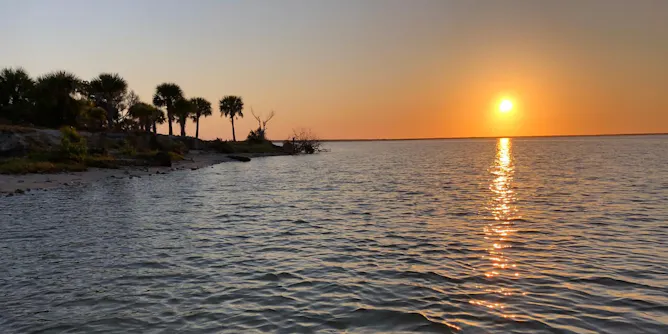
After years of collapse, seagrass in Florida’s Mosquito Lagoon rebounded unexpectedly following 2022 hurricanes, offering new insight into ecosystem resilience.
Articles on Seagrass meadows
Displaying 1 - 20 of 28 articles

Marine protected areas can’t stop pollution flowing in from the land and Northern Ireland’s seagrass meadows are paying the price.
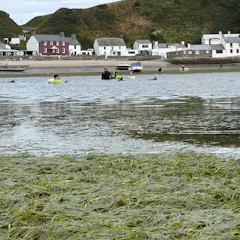
Marine biodiversity underpins human health such as at Porthdinllaen in north wales where seagrass is part of a marine social ecological system.
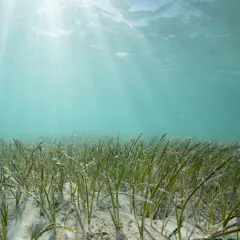
Scientists are using mollusk shells to evaluate the health of Florida’s seagrass ecosystems.
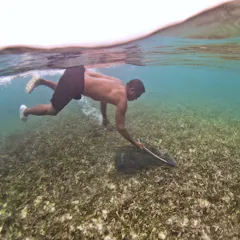
The prevalence of seagrass throughout human civilisation has fostered spiritual and cultural relations with these underwater gardens.
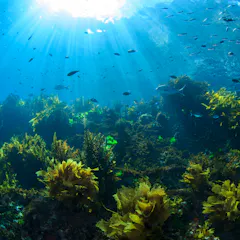
Seagrass meadows, mangroves and kelp forests are carbon sinks. Restoring or protecting them addresses both biodiversity loss and the climate crisis.

Without appropriate management, seaweed farming programmes could be dangerous for marine biodiversity and the benefits that humans get from the ocean.

A partnership that combines Western science and Traditional Owners’ ecological knowledge is restoring the seagrass meadows of Gathaagudu/Shark Bay.
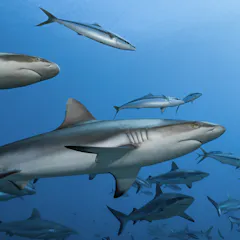
A broad review of shark research shows that sharks play critical roles in keeping ocean ecosystems such as coral reefs and seagrass beds healthy.

Recording soundscapes in seagrass is useful because it allows researchers to detect creatures that can’t be seen, because they’re camouflaged, hiding or nocturnal.
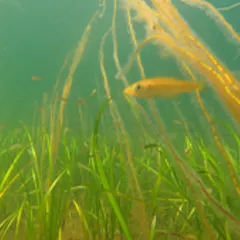
Marine ecologist Isabel Key explains what she’s finding as she listens to the sounds of underwater seagrass meadows. Listen on The Conversation Weekly podcast.

While humanity often has a negative impact, people may inadvertently play a pivotal role in this Maldivian seagrass success story.
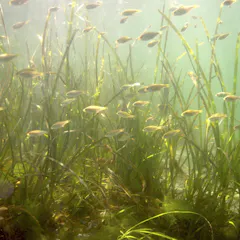
Overall, coastal habitat restoration greatly increases animal numbers and diversity. But not all projects deliver the goods and we need to find out why.
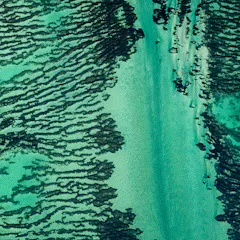
Blue carbon is stored in mangroves, seagrass and sediments. Discussions at the UN Ocean Decade conference reiterate the importance of preserving existing sea floor habitats, before it’s too late.

Seagrasses need light to remain resilient to marine heatwaves – water pollution disrupts that balance.

One meadow made enough sand to create a new island in 18 years.
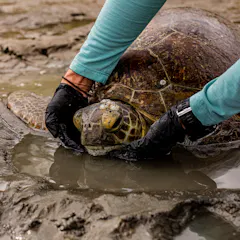
Floodwater carries dense clouds of sediment, choking the lush seagrass meadows on which these gentle grazers rely.
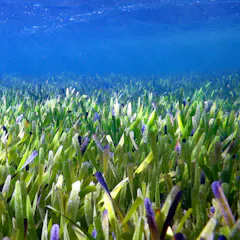
A single seagrass plant in Shark Bay is around 4,500 years old, covers 200 square kilometres of seabed, and thrives in harsh conditions.
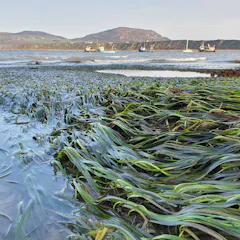
Seagrass meadows are a powerful ally in the effort to slow climate change and reverse wildlife losses.

China’s signature foreign policy is controversial for lots of reasons. But the environmental damage potentially wrought by the project has received scant attention.
Top contributors
-

Associate Professor in Marine Biology, Swansea University
-
Chief Conservation Officer, Project Seagrass & Research Affiliate, Swansea University
-
Research Fellow, Cardiff University
-
Associate Professor in Biology, Flinders University
-
Principal Researcher, Coastal Ecology, Centro de Estudios Avanzados de Blanes (CEAB-CSIC)
-
Senior Research Fellow, School of Biological Sciences and Oceans Institute, The University of Western Australia
-
PhD Candidate, Marine Ecology, University of Edinburgh
-
Research Fellow, Global Wetlands Project, Australia Rivers Institute, Griffith University
-
Gary Kendrick is a Friend of The Conversation.
Winthrop Professor, Oceans Institute, The University of Western Australia
-
Professor in Marine Science, Griffith University
-
Post-Doctoral Research Fellow, James Cook University
-
Emeritus Professor of Marine Science, Virginia Institute of Marine Science
-
Visiting Fellow, Northumbria University, Newcastle
-
Research Scientist, Smithsonian Environmental Research Center, Smithsonian Institution
-
Emeritus Professor of Environmental Governance, UCL