
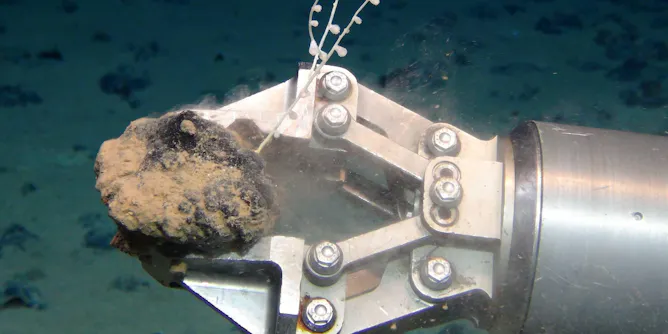
Critical minerals are found in several forms in the ocean, from potato-size nodules to brine pools. They are also in some of the least understood parts of our planet.
Articles on Seafloor
Displaying all articles
How good are our current seafloor maps?
The deep ocean is not a silent, static place – it’s active, connected to the oceans above and always changing.
CSIRO’s RV Investigator plays a huge role in finding and identifying ships that have been lost beneath the waves for decades. Here’s why it’s so well equipped for the task.
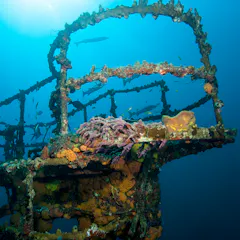
Artificial reefs are structures that humans put in place underwater that create habitat for sea life. A new study shows for the first time how much of the US ocean floor they cover.
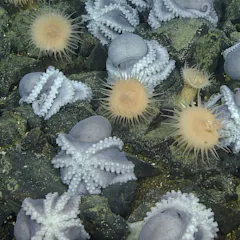
Thousands of pearl octopuses were discovered in 2018 lining thermal vents near a deep-sea volcano. Researchers now know why octopus moms gather there.
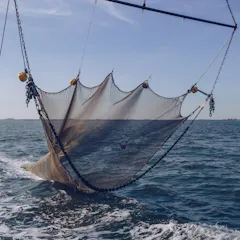
Most of the carbon disturbed by trawls is unreactive and difficult to convert to CO₂.
Millions of years of on-off ice ages have left behind a mix of different sediments.
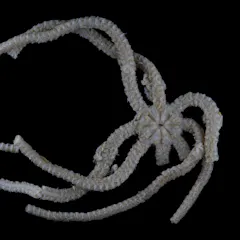
Ophiojura, discovered living on a seamount deep in the Pacific Ocean, is the last known survivor of a unique group of animals that diverged from its closest relatives way back in the Jurassic period.
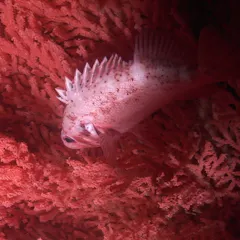
Here’s how microplastics from your clothes end up in the deep sea.
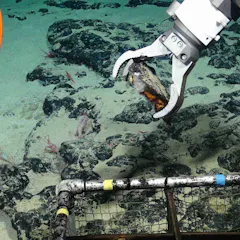
Deep sea mining could supply valuable rare minerals to green technology, but one project in the south-west Pacific is invoking the wrath of local spirits.
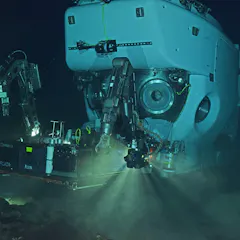
When you study volcanoes at mid-ocean ridges, doing fieldwork means becoming an aquanaut – diving thousands of feet to the ocean floor in the submersible Alvin, trading tight quarters for amazing views.
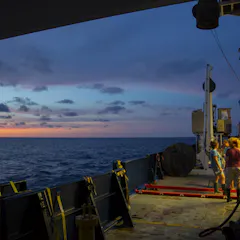
Tiny chemical clues in the ocean reveal how its role as a carbon store is changing.
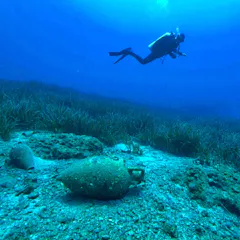
The sediments that accumulate beneath seagrass meadows can act as secure vaults for shipwrecks and other precious artefacts, by stopping water and oxygen from damaging the delicate timbers.
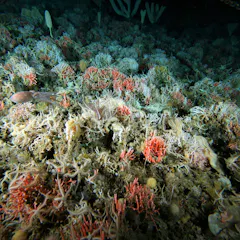
Life on the Antarctic seafloor is surprisingly diverse – and half of the species live nowhere else on Earth. Now scientists can accurately map this unique biodiversity.
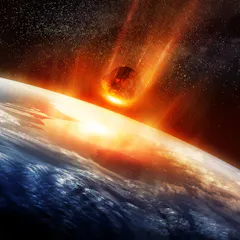
Research suggests a new threat to life on Earth from the meteorite’s crash: Via seismic waves, the impact triggered massive undersea eruptions, as big as any ever seen in our planet’s history.

The ocean floor off Australia’s east coast bears the scars of numerous subsea landslides, which have potentially triggered tsunamis over the past several millennia.
Top contributors
-

Postdoctoral Associate of Earth Sciences, University of Minnesota
-
Assistant Professor of Invertebrate Ecology at Moss Landing Marine Laboratories, San José State University
-
Associate Professor in Coastal and Marine Science, University of Newcastle
-
Associate Professor, University of Sydney
-
Adjunct lecturer in archaeology, Flinders University
-
Marine Ecologist, MBARI, San José State University
-
Research Fellow in Marine Ecology, University of Tasmania
-
Professor, Marine Ecology, Aarhus University
-
Senior Curator of Marine Invertebrates, Museums Victoria Research Institute
-
Principal Researcher, Coastal Ecology, Centro de Estudios Avanzados de Blanes (CEAB-CSIC)
-
PhD, University of Newcastle
-
Professor, University of Tasmania
-
Researcher, Institute of Oceanography, Hellenic Centre for Marine Research
-
Reader in Geology, University of Manchester
-
Assistant Professor of Earth Sciences, University of Oregon