

Pacific leaders are seeking support for regional climate-finance options that give communities better access and stronger input into global decision making.
Articles on Sea-level rise
Displaying 1 - 20 of 36 articles
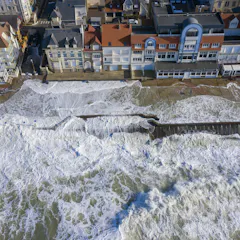
When groundwater reservoirs are replenished, the ground above rises. But the uplift is patchy because earthquake faults act like underground dams, channelling water.

For the iwi, protecting the burial site is about more than its archaeological value. It holds deeper significance through its connections to the land and stories.

Managed retreat can be traumatic and hard. But with good planning, the land left behind can serve new purposes, and make public what was once private.
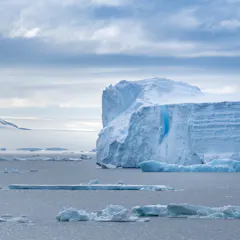
A new study found parts of Antartica could pass a tipping point for mass ice sheet losses as soon as 2050 – pushing sea levels 2 metres higher by 2300 than currently predicted.
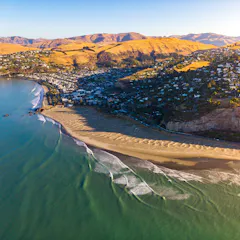
Calculating the dual effect of rising seas and sinking land gives coastal communities a more accurate projection of the impacts of sea-level rise.

New Zealand’s track record in domestic marine protection is woeful and its proposal to resume oil and gas licensing offshore has been criticised by Pacific island states.
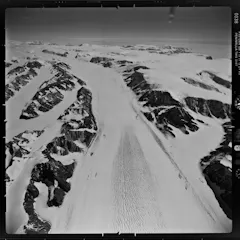
Few observations exist from before the 2002 Larsen B Ice Shelf collapse. We’ve now estimated how many billions of tons of glacier ice were lost – and what it means for the future.

Geoengineering proposals to cool the ocean would indeed reduce ice loss from West Antarctica’s glaciers, but not enough to stop sea-level rise or allow the ice sheet to regrow.

A flurry of island-building during the last two decades has furnished the rich with new properties.

Migration is considered an inevitable effect of climate change. It could also be part of the solution.

Investors seem not to care about climate risks, but they really should.

Storms are the greatest threat to beach erosion, not sea level rise, research reveals. This is the longest continuous beach monitoring survey in the Southern Hemisphere.
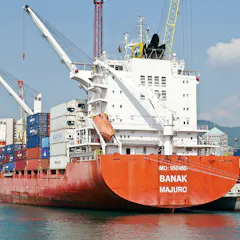
Rising sea levels threaten the low-lying island nation with the world’s third-largest shipping register. That’s why it’s leading efforts to cut shipping emissions in an equitable way.
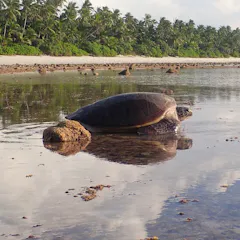
Leatherback turtles are predicted to lose half of their nesting habitat, on one beach studied.

One meadow made enough sand to create a new island in 18 years.

There is no safe limit to global warming – there is only what people deem to be acceptable damage.
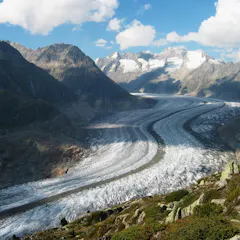
Rising temperatures and extreme weather pose an existential threat to many UNESCO World Heritage sites, but widespread discussion is needed for meaningful change.

Moving entire communities threatened by rising seas isn’t as far-fetched as it sounds.

Climate change is a game changer and our disaster response is no longer sufficient. We must begin to address the underlying causes that make some communities more vulnerable than others.
Top contributors
-

Professor in Earth Sciences, Te Herenga Waka — Victoria University of Wellington
-
Professor in Natural Hazards Planning and Resilience, Te Kunenga ki Pūrehuroa – Massey University
-
General Manager Atmosphere and Climate, Earth Sciences New Zealand
-
Research Fellow in Earth Science, Te Herenga Waka — Victoria University of Wellington
-
Directeur de recherche, Institut de recherche pour le développement (IRD)
-
Professor of Glaciology, Northumbria University, Newcastle
-
Professor of Geography, Newcastle University
-
Associate professor, Archaeology and Heritage, La Trobe University
-
Professor in Applied Mathematics, Te Kunenga ki Pūrehuroa – Massey University
-
Professor of Applied Economics, Lincoln University, New Zealand
-
Senior Lecturer in Human Geography, University of Exeter
-
Professor in Environmental Psychology, University of Waikato
-
Senior postdoctoral research fellow, Institut de recherche pour le développement (IRD)
-
Emeritus Professor, UNSW Canberra, Australian Defence Force Academy
-
Associate Professor of Structural Engineering, University of East London