
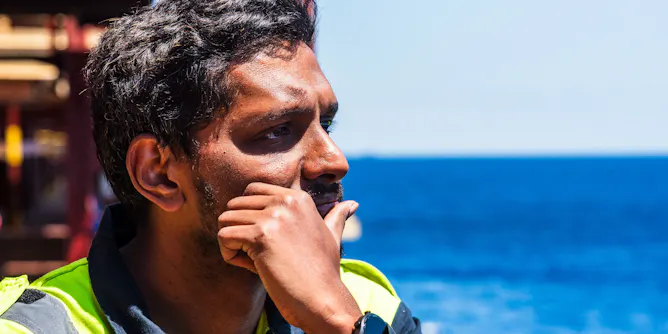
Research links unsafe conditions, long hours and poor sleep with worse mental health at sea. Conflict can intensify each of these pressures.
Articles on Sea
Displaying 1 - 20 of 30 articles

With the declining power of financial sanctions, many countries are now physically boarding ships to enforce scattershot rules of trade, conflict and commerce.

While many Indonesian reefs have remained surprisingly stable despite decades of ocean warming, this resilience has its limits.
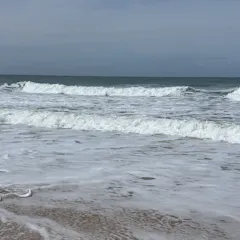
Colour, smell and duration of sea foam are all signs of local environmental health.

Seabirds are washing up on Europe’s beaches in large numbers after weeks of bad weather.

For centuries, people have found peace and restoration in the sea. Science backs up this vision of ‘blue health’.
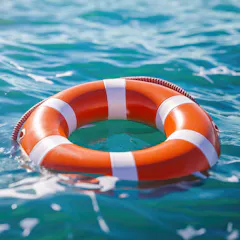
Around 40% of drownings occur when people aren’t planning to be in the water, and men are 80% more likely to drown than women.

When human remains are found underwater, forensics needs a different approach. To understand what happens at sea, we need to study it.

Suez Canal ship traffic has dropped sharply due to frequent attacks at sea.

As seas rise, it is clear that traditional coastal defence approaches are unable to keep pace. Nature-based solutions offer considerable potential to protect coasts, people and biodiversity.

More than 800 lives were lost in the Royal Charter storm but it also led to improvements in weather forecasting.

New research shows European lobsters are using the deposits of rocks and boulders at the base of wind turbines as shelter.
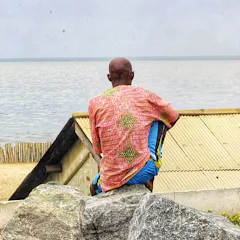
The ban on noisemaking in Accra has been known to cause tension in the city.
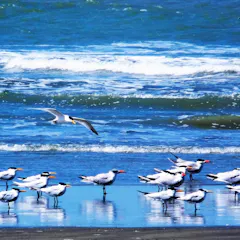
There is only a single mooring managed by French researchers that monitors the impacts of climate change on West African Canary Current.
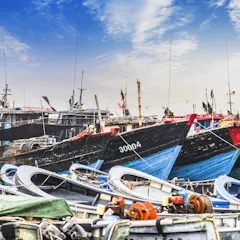
Every year, it’s estimated as many as 24,000 fishers die in fishing vessel accidents. That’s more than 10 times more lives claimed than on merchant ships, carrying cargo or passengers. Why?
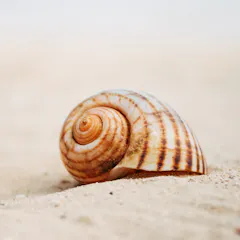
Seashells don’t make the noise of the ocean. Here’s what’s really going on.

Drinkable water resources are becoming increasingly scarce. Are technologies such as desalination capable of averting such a crisis?
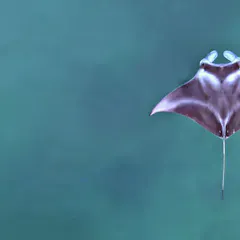
This research provides the most comprehensive and up-to-date description of how young reef manta rays use Wayag Lagoon in Raja Ampat as their nursery habitat.

The ocean is often considered a silent universe. But many recent studies highlight the importance of the soundscape for many marine species, both large and small.
The work of the authors reveals a world that is outward-looking, full of movement, border-crossing and south-south interconnection.
Top contributors
-

Assistant Professor of International Relations, American University
-
Doctorante en neuroéthologie, Université de Caen Normandie
-
Chercheur Associé, Institut de physique du globe de Paris (IPGP)
-
Phd candidate in Oceanography, Université du Québec à Rimouski (UQAR)
-
Associate Researcher in Biology, University of St Andrews
-
Associate Professor of Forensic Science, Murdoch University
-
PhD Candidate, Department of Life Sciences, Aberystwyth University
-
Research Director, CNRS, Institut de physique du globe de Paris (IPGP)
-
Geography Lecturer, Aberystwyth University
-
Climate Scientist, Australian Bureau of Meteorology
-
PhD Researcher in Biology, University of Southern Denmark
-
Senior Lecturer, University of Pretoria
-
Professor of Law, University of Waikato
-
IDPhD Student, School for Resource and Environmental Studies, Dalhousie University
-
Professor of the Public International Law of the Sea and former Director of the Institute of Maritime Law, University of Southampton