

Most research on kids’ screen time has focused on a child’s behavior. Far less attention has gone to parents and their role in their children’s media use.
Articles on Screentime
Displaying 1 - 20 of 32 articles

In today’s classrooms, pens and exercise books are increasingly having to make way for screens and keyboards. Does technology help pupils write as efficiently?

This commercialised form of abstinence rarely extinguishes digital cravings – instead merely acting as a temporary pause.
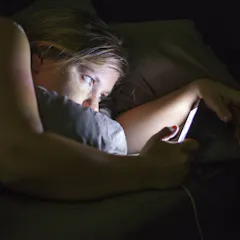
Research suggests that how often people check social media − and how emotionally engaged they are with it − can influence sleep even more than how much time they spend online.

Up to 50% of computer users face symptoms of digital eye strain. This condition isn’t just a matter of discomfort, it can significantly affect your quality of life.

We’re all familiar with a green ‘G’ or a red ‘MA’ on a movie poster, but those ratings don’t have any basis in what we know about child development. They’d be much more useful for parents if they did.

While working from home can have advantages, new research shows that there can also be a wide range of negative effects, including psychological reactions such as emotional exhaustion.

Children learn more science when they watch an AI-powered cartoon character than with a regular Mickey Mouse or Dora the Explorer, a new study finds.

Factors such as having supportive family and friends, safer communities, positive school environments and adequate resources, are often associated with more physical activity.
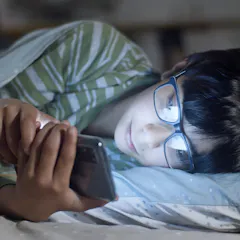
Parents may well feel the need to ‘crack down’ on kids’ screentime. But a whole-family approach might be more successful.

Findings from a Victorian coroner’s report remind us we still don’t fully understand how problematic gaming ties into other factors in a person’s life.
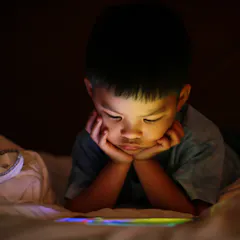
Persuasive design in kids’ apps is often overlooked in the screen-time debate.

Increased digital screen use, face masks and winter weather combine to form a triple threat to eye health: The dry eye triad. Here’s how to combat the resulting eye fatigue, irritation and discomfort.

Every small change to promote healthy levels of screen time is a step in the right direction for the health, wellbeing and development of children.
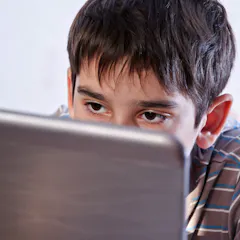
A widely reported study didn’t ring any alarm bells for children’s increasing screen time, but neither did it give heavy use of devices the all-clear.

Studies have shown a drop in physical activity for kids during lockdowns, which could impact their long term health. But their mums are getting more active.

Analysis of 46 studies indicates that there’s still a lot of uncertainty about the long-term impacts of digital device use on cognition.

Social media isn’t just mirroring conflicts happening in schools and on streets – it’s intensifying and triggering new disputes.

Young children may find it harder to control their attention if they use touchscreens regularly.

Too much screen time doesn’t leave enough time for other important parts of growing up. Predicting which little kids will likely grow into heavy tech users could help target educational campaigns.
Top contributors
-

Researcher, Digital Wellbeing, Western Sydney University
-
Reader in Occupational Therapy, Brunel University of London
-
Director of Research of the Crane Center for Early Childhood Research and Policy, The Ohio State University
-
Research Fellow, ARC Centre of Excellence for the Digital Child, University of Wollongong
-
Associate Professor in Sport Science, University of KwaZulu-Natal
-
Professor of Health Sciences, Adelaide University
-
Assistant Professor, Psychology, University of Waterloo
-
Senior Lecturer of Rhetoric, Boston University
-
Senior Lecturer, Stellenbosch University
-
Lecturer in Marketing and Consumption, Department of Marketing and Strategy, University of Leicester
-
Assistant Professor of Social Work, University of Connecticut
-
Elizabeth Handsley is a Friend of The Conversation.
Adjunct Professor of Law, Western Sydney University
-
UOW Graduate, University of Wollongong
-
Associate Professor at MRC/Wits Developmental Pathways for Health Research Unit, University of the Witwatersrand
-
Lecturer in Psychology and Special Educational Needs, UCL