
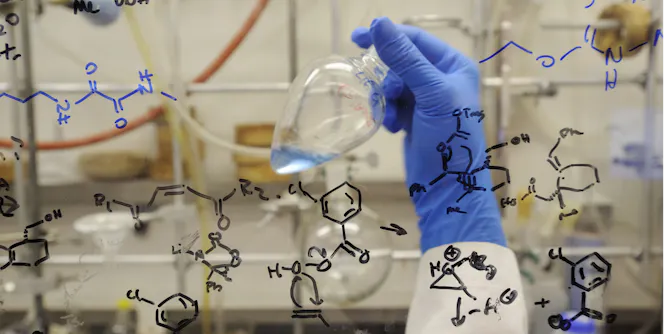
Science isn’t cold, hard facts uncovered by emotionless robots. Acknowledging how and where values play a role promotes a more realistic view and can advance science’s reputation for reliability.
Articles on Scientists
Displaying 81 - 100 of 115 articles

Academies simply don’t know how they’re doing when it comes to the representation of women compared to their counterparts within the science-policy environment.

Scientists who engage with the public may have goals about influencing policy or behavior. But they also need to think about the short-term objectives that will help get them there.
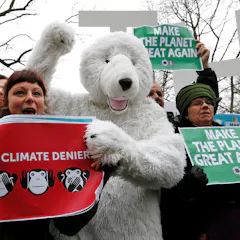
Scientists are marching in 500 cities across the globe to protest US president Donald Trump’s anti-science policies and make their voices heard.
If you’ve only ever paired the idea of ‘rhetoric’ with ‘empty,’ think again. Rhetoricians of science have concrete techniques to share with researchers to help them communicate their scientific work.
Here’s why I’m supporting this weekend’s March for Science.
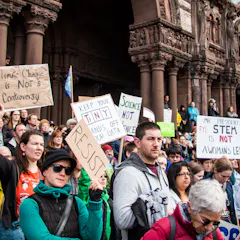
The research community tends to assume advocacy doesn’t mix with objectivity. One study suggests there’s room for scientists to make real-world recommendations without compromising their trusted status.
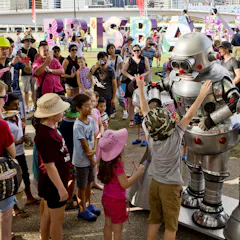
If you make science entertaining then people are prepared to pay attention.

Health reporting requires asking the right questions and doing quality research. But specialist skills are also handy, especially when it comes to knowing the language and processes of science.
Thomas Barlow is more used to writing factual reports on science innovation, so his first novel gives an entertaining insight into the science community.

Now that we’re in a post-truth world, a timely report from the National Academies of Sciences, Engineering and Medicine highlights evidence for what works and what doesn’t when talking about science.
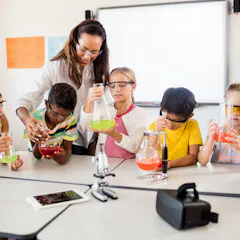
Australia’s performance in science continues to slide due to ineffective, traditional teaching practices and an outdated curriculum. Here’s what needs to change.
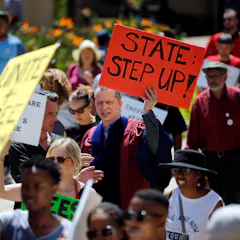
South Africa must address the root factors contributing to nationwide protests in the higher education sector or face dire consequences

There is broad acknowledgement that the way science is taught and practised in Africa is not socially inclusive.

The recent NHMRC funding announcement has renewed criticism about how medical research is funded in Australia. Is the system fair? Or is it stacked against some researchers?
The scientific community enjoys one of the highest levels of trust among American institutions. But engaging in the political arena during a contentious election season comes with dangers.

Scientists from the developing world perceive current visa rules as a major impediment to professional travel. They miss out on opportunities to collaborate globally.
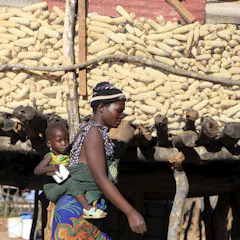
Economic growth alone won’t end hunger. Good policies and programmes are needed, too. Scientists and researchers have a role to play in these initiatives.
Science communication has grown in leaps and bounds over the past 60 years. It plays a crucial role in democratising science and making it less mysterious.

The public loses when their only choices are inaccessible, impenetrable journal articles or overhyped click-bait about science. Scientists themselves need to step up and help bridge the divide.
Top contributors
-

Science Communication Researcher, Stellenbosch University
-
Professor of Public Relations, Michigan State University
-
Open Research Communications Specialist, University of Sheffield
-
Associate Professor of Higher Education, Georgia State University
-
Professor, Stellenbosch University
-
Chancellor's Professor of Medicine, Liberal Arts, and Philanthropy, Indiana University
-
Previous Vice President of the Academy of Science of South Africa and DSI-NRF SARChI chair in Fungal Genomics, Professor in Genetics, University of Pretoria, University of Pretoria
-
Professor of Physics, University of the Witwatersrand
-
Associate Professor of Advertising and Public Relations, The University of Texas at Austin
-
Paleoanthropologist, University of Wisconsin-Madison
-
Associate Professor, School of the Environment, The University of Queensland
-
Rural Sociologist/Criminologist, Coventry University
-
Senior Lecturer in Science Communication at the Australian National Centre for the Public Awareness of Science, and Founder of Popsicule, ANU’s Science in Popular Culture and Entertainment Hub, Australian National University
-
Assistant Professor of Public Relations, Northern Illinois University
-
Professor and Chair, Southwestern Environmental Science and Policy, Northern Arizona University