

Broader goals like building trust, fostering excitement about science and influencing policy decisions don’t necessarily just fall into place when researchers focus only on describing their work.
Articles on Scientists
Displaying 101 - 115 of 115 articles
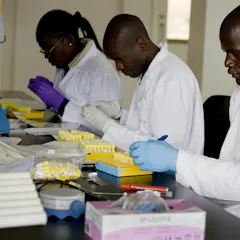
Successful economies are led by innovation and driven by knowledge. For Africa to advance, it needs to make more substantial investments in its research and development sector.
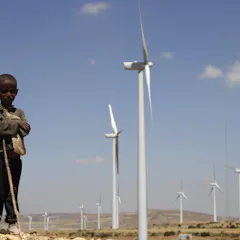
African mathematicians and scientists have an important role to play in establishing and protecting a democratic continent.

Most scientists have found a way to make religion and evolution compatible, but not in the way you might think.
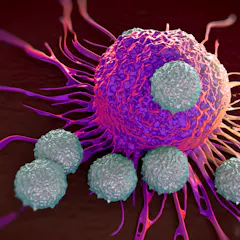
Innovative initiative aims to inspire pupils on the continent to take up careers in science.
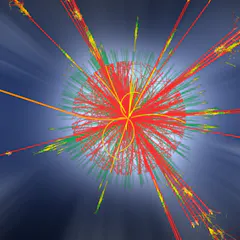
Big data is about processing large amounts of data. It is often associated with multiplicities of data. But the ability to generate data outpaces the ability to store it.

Glamorous award ceremonies and popular TV shows can only get you so far – finding the time to do the science is still the most important thing.
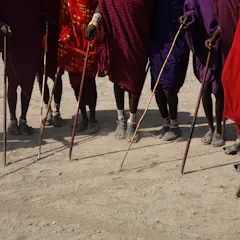
Africa’s soil crisis calls for quick and creative action. This includes deepening farmers’ knowledge about soil microbes.

The Nobel Prize-winning research on neutrinos is expected to push the boundaries of science and technology.

The discovery of Homo naledi has been a social media sensation, recording an extraordinary number of views – more than 170,000 – for a scientific paper.
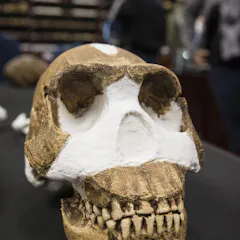
Despite claims about its age, puzzling combinations of features from Homo naledi gives it an uncanny resemblance to human beings.

Africa is a developing continent but there’s ample opportunity for careers in science that can contribute to science advancement as well as uplifting the socio-economic status of the continent.

Researchers have suggested a new theory for why neurotic unhappiness and creativity are often found in the same person. But is the assumption that creative people are more neurotic actually true?

How successful a mother or career scientist one can become depends on how one’s available time is divided between the two activities.

Globally, evidence points to children becoming less active because they would rather play computer games than be outdoors.
Top contributors
-

Science Communication Researcher, Stellenbosch University
-
Professor of Public Relations, Michigan State University
-
Open Research Communications Specialist, University of Sheffield
-
Associate Professor of Higher Education, Georgia State University
-
Professor, Stellenbosch University
-
Chancellor's Professor of Medicine, Liberal Arts, and Philanthropy, Indiana University
-
Previous Vice President of the Academy of Science of South Africa and DSI-NRF SARChI chair in Fungal Genomics, Professor in Genetics, University of Pretoria, University of Pretoria
-
Professor of Physics, University of the Witwatersrand
-
Associate Professor of Advertising and Public Relations, The University of Texas at Austin
-
Paleoanthropologist, University of Wisconsin-Madison
-
Associate Professor, School of the Environment, The University of Queensland
-
Rural Sociologist/Criminologist, Coventry University
-
Senior Lecturer in Science Communication at the Australian National Centre for the Public Awareness of Science, and Founder of Popsicule, ANU’s Science in Popular Culture and Entertainment Hub, Australian National University
-
Assistant Professor of Public Relations, Northern Illinois University
-
Professor and Chair, Southwestern Environmental Science and Policy, Northern Arizona University