

If you have young kids, the solar eclipse on April 8, 2024, represents a rare opportunity to teach them about science.
Articles on Scientific inquiry
Displaying all articles
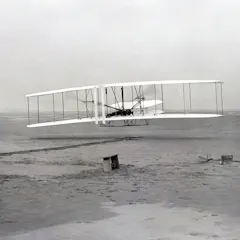
An intellectually humble person may have strong commitments to various beliefs − but balanced with an openness to the likelihood that others, too, may have valuable insights, ideas and evidence.

Through a blend of perseverance, technology, and a touch of serendipity, it was possible to solve a decades-old mystery.

While some worry “wokeist” ideology could corrupt scientific merit, it could be our problematic understanding of the latter poses an even greater threat to science, two philosophers argue.

A university course teaches students why people believe false and evidence-starved claims, to show them how to determine what’s accurate and real and what’s neither.

The joint award recognizes the long road to deciphering the biology behind the brain’s ability to sense its surroundings – work that paves the way for a number of medical and biological breakthroughs.

Students who took part in the program scored 8% higher on the state science test than students who received traditional instruction, and demonstrated greater social and emotional learning.

The scientific community is churning out vast quantities of research about the coronavirus pandemic – far too much for researchers to absorb. An AI system aims to do the heavy lifting for them.

Free inquiry has always been a fraught business, from Eden to Facebook, but is a key component of any open society. It shouldn’t be taken for granted.
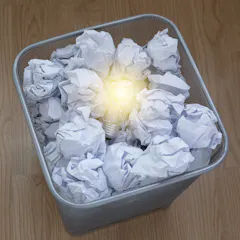
We don’t know much about the origins of most human achievements – scientific and otherwise. Like evolution, does progress occur as random insights are selected for or against?
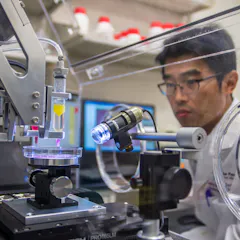
There’s a big difference between science and pseudoscience. But if people don’t understand how science works in the first place, it’s very easy for them to fall for the pseudoscience.
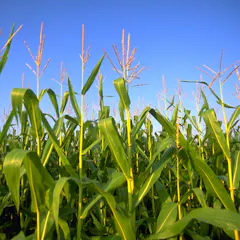
Science and technology has always helped us feed the world. GM has more to offer, if we let it.
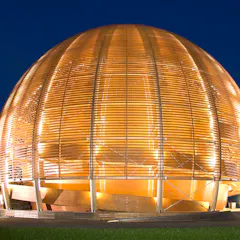
There have been squabbles of course, but the science project in Geneva is an example of putting differences aside to pursue common goals.

Scientists being wrong is not a bug or a glitch – it’s a feature of science and mistakes can actually lead to new, deeper discoveries.

Some activists use open records requests to bully researchers – distracting them from their actual work and silencing others who don’t want to draw attention.
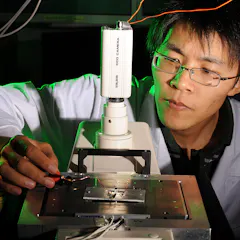
In a recent article in Times Higher Education, it was argued that crowdfunding could threaten government investment in science and research. Joe Cox, an economist from the University of Portsmouth suggested…
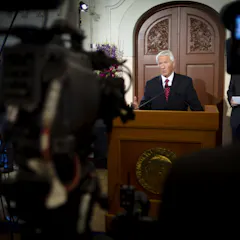
“China is at the forefront of medicine and hi-tech and computing.” So said UK Chancellor George Osborne, who recently visited the country. Global tests for 15-year-olds show the youth of Shanghai are comfortably…
Top contributors
-

Professor and Deputy Director, MRC Laboratory of Molecular Biology, University of Cambridge
-
Research Professor and Director of the International Institute for Accelerator Applications, University of Huddersfield
-
Professor of Experimental Psychology, University of Iowa
-
Special Assistant for Communications, University of Florida
-
Senior Lecturer in Philosophy and Education; Curriculum Director, UQ Critical Thinking Project, The University of Queensland
-
Associate Professor and Reader, University of Nottingham
-
Professor of Mathematical Physics, University of Cape Town
-
Senior Vice President for Agriculture and Natural Resources and Professor of Wildlife Ecology and Conservation, University of Florida
-
South African Research Chair in Physical Cosmology, Department of Mathematics and Applied Mathematics, University of Cape Town
-
Science Author & Chemistry Lecturer, University of California, Los Angeles
-
Professor of Philosophy, University of South Carolina
-
Senior Lecturer in Innovation, University of Southampton
-
Directeur de recherche CNRS, Institut d'histoire et de philosophie des sciences et des techniques, Université Paris 1 Panthéon-Sorbonne
-
Professor, Advisor to the Executive, University of Pretoria, University of Pretoria
-
Professor of Pharmacology and Therapeutics, University of Florida