

While direct evidence of multiple universes is hard to come by, indirect evidence raises intriguing possibilities.
Articles on Philosophy of science
Displaying 1 - 20 of 48 articles

While AI can streamline certain parts of the scientific process, a philosopher argues that it cannot replace human expertise and collaboration.
AI enthusiasts are right that projects like AlphaFold are a huge leap forward, but the philosophy of science shows why excluding humans undermines it.

Figuring out whether de-extinction is possible is as much a technical puzzle as a philosophical one. Add two kinds of DNA to the mix, and it gets even more complex.

An object’s color appears differently under different lighting and against different backgrounds − for different viewers. But that doesn’t mean colors are subjective.
Looking at the history of ‘biosignature’ discoveries shows why they can be problematic.

Unrealistic, outdated ideas that idealize science can set the public up to distrust scientists and the research process. A philosopher of science describes 3 aspects of how science really gets done.

An intellectually humble person may have strong commitments to various beliefs − but balanced with an openness to the likelihood that others, too, may have valuable insights, ideas and evidence.

Science is essential for human flourishing. So why does so much science communication paint a bleak, nihilist picture of the world?

Everybody thinks they know what drugs are, but a clear definition is surprisingly elusive.

While some worry “wokeist” ideology could corrupt scientific merit, it could be our problematic understanding of the latter poses an even greater threat to science, two philosophers argue.

Some physicists don’t believe that quantum mechanics is a perfect description of objective reality.

Scientists aren’t always right, and new evidence can always emerge to disprove a theory. Still, philosophy helps explain why there is good reason for us to trust science regardless.
Two simple rules can help us identify future-proof science.
Some scientists believe the ‘free energy principle’ can explain the behaviour of all living things – but others say it paints the world with too broad a brush to be useful.
Cutting-edge theories of physics suggest time may not be real – but even if they’re right, life can still go on as usual.

Scientists need to be good at asking questions, investigating the world to find answers, and keeping in mind that no matter how much they know, there’s always more to learn.
Did humans invent mathematics or does it exist independently?
‘Reality, including ourselves, is nothing but a thin and fragile veil’: a new interpretation of quantum physics says objects have no independent existence.
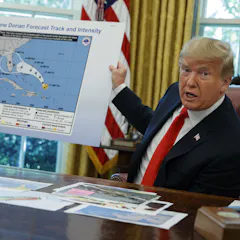
Politics always influences what questions scientists ask. Their intertwined relationship becomes a problem when politics dictates what answers science is allowed to find.
Top contributors
-

Professor, Philosophy of Science, The University of Melbourne
-
Lecturer, The University of Queensland
-
Professor in Philosophy of Science, Durham University
-
Senior Research Fellow, Uehiro Centre for Practical Ethics, University of Oxford
-
Professor of Philosophy, Auburn University
-
James Martin Research Fellow, Future of Humanity Institute & Oxford Martin School, University of Oxford
-
Professor of Ethnography, UNSW
-
Honorary Associate in Philosophy, University of Sydney
-
Professor in Lyman Briggs College, Fisheries & Wildlife, and Philosophy, Michigan State University
-
Visiting Fellow, Crawford School of Public Policy, Australian National University
-
Honorary Fellow, School of Historical and Philosophical Sciences, The University of Melbourne
-
Associate Professor (hon) at the Centre for Public Awareness of Science, Australian National University
-
Associate Professor (Strategy and Organisation), School of Management, University of Bath
-
Professor, Dept of Modern History, Politics and International Relations, Macquarie University
-
Professorial Fellow, University of Wollongong