

A century-old French archaeological scandal was sensationalized in the press at the time – but responsible scientists also relied on careful reporting to get the truth out.
Articles on Scientific fraud
Displaying all articles
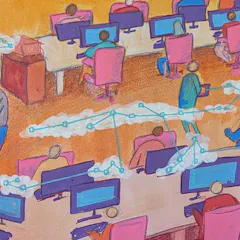
An AI audit of scientific research would likely expose some fraud and widespread inconsequential work. But we need to be careful it doesn’t discredit science in general.

Publications drive university rankings and career progression. But the relentless pressure to publish has contributed to an increase in fraudulent data.

Scholars have long measured the impact of a paper by counting the number of times other scientific articles cite it. Researchers have just detected a new kind of citation fraud.
Theranos was dissolved years ago, and its CEO, Elizabeth Holmes, is in prison, but the company’s patents based on bad science live on – a stark example of the persistence of faulty information.
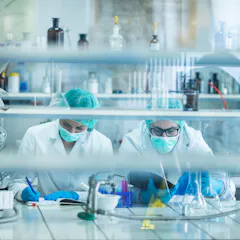
A new screening tool to help study reviewers identify what’s fake or shoddy in research may be on the horizon. And everyday people can apply some of the same critical analysis tools.
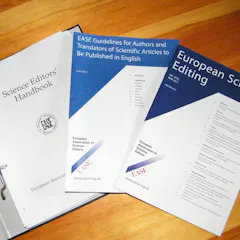
How is a scientific article accepted for publication in an academic journal? What is the role of peer reviewers? Where does the system go astray?
Scientists need funding to do their work. But a new study finds turning to industry partners taints perceptions of university research, and including other kinds of partners doesn’t really help.

A century-old case of scientific fraud illustrates how hard it is to untangle the truth when access to new discoveries is limited.
Top contributors
-

Professor of History, UMass Amherst
-
Professor in Lyman Briggs College, Fisheries & Wildlife, and Philosophy, Michigan State University
-
Professor of Public Relations, Michigan State University
-
Assistant Professor of the History of Science and Technology, Durham University
-
Directeur de recherche au CNRS, physicien, spécialiste d’optique, lasers et nanotechnologies, Université Sorbonne Paris Nord
-
Professor of Sociology, Michigan State University
-
PhD Student in Media and Information Studies, Michigan State University
-
Professor of Computer Science, Institut de Recherche en Informatique de Toulouse
-
Associate Professor of Law, Fordham University
-
Assistant Professor in Data Visualization, Linköping University
-
Directeur de Recherche Inria en charge de la médiation scientifique, Inria
-
Professor of Medicine and Public Health, University of Colorado Anschutz
-
Associate Professor, School of Biomedical Engineering, University of Technology Sydney
-
Professor of the History of Science, Harvard University
-
PhD Candidate in Science and Society, Te Herenga Waka — Victoria University of Wellington