

New research provides direct evidence that seafarers travelled along the equator to reach islands off the coast of West Papua more than 50 millennia ago.
Articles on Science + Environment
Displaying 21 - 40 of 88 articles
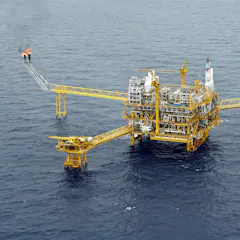
New Zealand’s natural gas supply is forecast to drop by half within six years. The flow-on effects of scarcity will include rising costs, but this could shift demand to other energy sources.
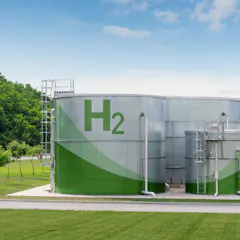
Hydrogen is expected to play an important role in New Zealand’s energy strategy. But the government and industry need to focus on its best uses for decarbonisation.
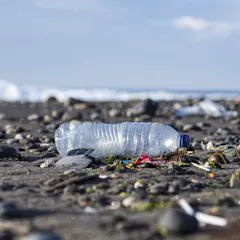
A new study shows up to 90% of floating plastic rubbish is captured in estuaries and inner shorelines. Local community cleanups can make a real difference by stopping pollution at its source.
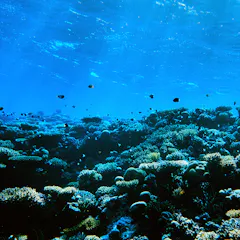
By the end of the century, half the world’s deep ocean could be acidic – with serious consequences for some marine animals.

Many datasets have gaps and biases due to how the information was gathered. Developers must account for this to avoid embedded wrong assumptions being carried across to train future AIs.

As the digital economy accelerates, New Zealand needs new rules to regulate how we develop new services– and who develops them.
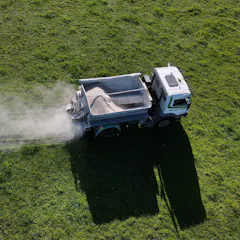
Only about 61% of dairy farm operators had reported their use of synthetic nitrogen a year after reporting rules came into force.

About a third of insects attracted to artificial lights die by morning, often from exhaustion. But we can help them, and the vital ecosystems they serve, by reducing light pollution.
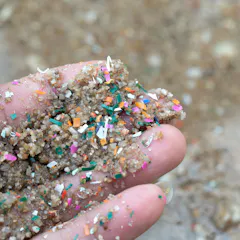
We know some marine microbes produce enzymes that can break down certain types of plastics. But new research found areas of high plastic pollution don’t show high concentrations of these enzymes.

While they can travel vast distances, our research revealed reef manta rays in Raja Ampat live mostly within a relatively small underwater ‘town’ – which urgently needs better protection.
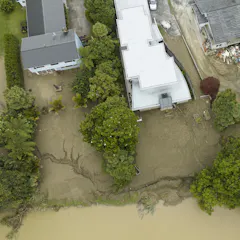
The government’s priorities are shifting towards adaptation to protect communities, jobs and industries. But the longer we wait to cut emissions, the more the costs of climate change will compound.

Even the big oil companies are predicting global demand will decline within decades. With investment in oil exploration projected to decline too, New Zealand should be putting its energy elsewhere.

Earth’s climate system is connected across hemispheres. When the Atlantic Meridional Overturning Circulation weakens and Europe cools, warming in New Zealand and southern mid-latitudes accelerates.
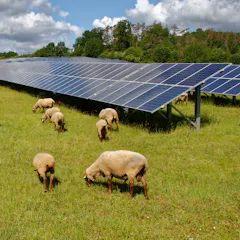
The major benefit of agrivoltaics is that solar panels shelter crops and animals from the heat, while providing more warmth at night. Soils also retain more moisture and some crops grow better.
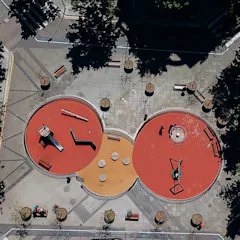
New Zealand tends to focus on big infrastructural projects such as tunnels or light rail to change cities. But there are cheaper ways to add public spaces to urban design.

Any decision to authorise offshore drilling and other activities contributing to climate change will now need to be assessed under the law of the sea in addition to international climate agreements.

AI chatbots offer unconditional support, but this could lead users to develop an inflated self image – and impede their chances of positive social interactions with real people.
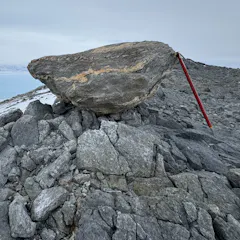
When landslides or glaciers bring rocks to the surface, cosmic rays bombard them, smashing common atoms into rarer forms and acting as a chronometer of the changing Earth.
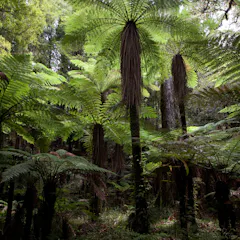
The rights-of-nature movement emerged as a response to economic pressures on ecosystems. But the success of projects depends on how well legal liability is defined.
Top contributors
-

Senior Lecturer in Physical Geography, Te Herenga Waka — Victoria University of Wellington
-
Morgan Foundation Senior Research Fellow in Freshwater Ecology and Environmental Science, Te Herenga Waka — Victoria University of Wellington
-
Senior Lecturer in Mechanical Engineering, University of Auckland, Waipapa Taumata Rau
-
Senior Research Fellow, University of Canterbury
-
Professor in Applied Mathematics, Te Kunenga ki Pūrehuroa – Massey University
-
Associate Professor in Botany, University of Otago
-
Professor of Applied Geology, University of Auckland, Waipapa Taumata Rau
-
Professor in Marine Biology, Nord University
-
Professor in Ocean Physics, University of Auckland, Waipapa Taumata Rau; Earth Sciences New Zealand
-
Associate Professor of Ecology, Lincoln University, New Zealand
-
Professor of Glaciology, Te Herenga Waka — Victoria University of Wellington
-
Distinguished Scholar, National Center for Atmospheric Research; Affiliate Faculty, University of Auckland, Waipapa Taumata Rau
-
Ice Sheet & Climate Modeller, Te Herenga Waka — Victoria University of Wellington
-
Adjunct Senior Fellow in Renewable Energy Systems Engineering, University of Canterbury
-
Associate Professor in Ancient DNA, University of Otago