

Preliminary findings show that managed retreat, structural flood protection and climate-resilient development projects are most at risk of maladaptation.
Articles on Science + Environment
Displaying 61 - 80 of 88 articles
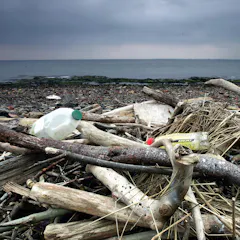
Stringent measures are needed to prevent plastic pollution. But concerns about carbon leaching from plastic waste would be better aimed at emissions from producing more plastic in the first place.
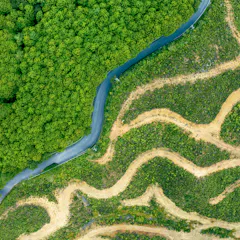
Ecological overshoot is driven by human consumption and a belief in endless economic growth. Could the marketing and media industries that feed those habits also help change them?
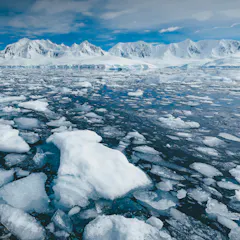
The rapid changes in the Southern Ocean and Antarctica highlight the urgency of better direct observations and measurements, beyond satellite monitoring and modelling.
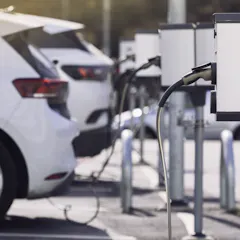
Policies and funds to decarbonise high-emitting industries and electrify transport are already delivering emissions cuts. But they are at risk of being disestablished or weakened.
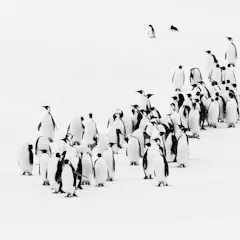
If we want to live in a world with Emperor penguins, we need to cut emissions steeply and protect parts of the ocean around Antarctica where climate change will have the biggest impact.
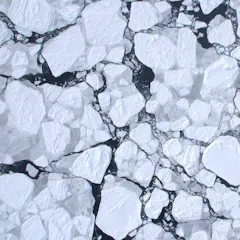
Antarctic sea ice is now nearly 9% below normal. But the dramatic decline is not universal around the continent, which makes it difficult to predict the overall impact of climate change.

Despite its importance, water management has been largely absent from the election campaign. But using trading markets to improve freshwater quality in smaller catchments deserves wider debate.

As the atmosphere warms, it can hold more moisture. This brings more intense downpours but also accelerates warming – because water vapour is a powerful greenhouse gas.

New Zealand’s kelp forests provide food and shelter for many marine species of commercial and cultural value. But they are at risk from warming oceans, run-off from land and marine invaders.

A new machine learning model can pinpoint anomalies in sports results – whether from match fixing, strategic losses or poor player performance. It could be a useful tool in the fight against cheating.
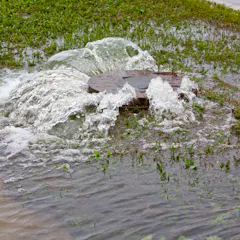
New or improved flood protection can give a false sense of security – the so-called ‘levee effect’. But climate change is unpredictable, meaning ‘residual risk’ always exists and must be planned for.
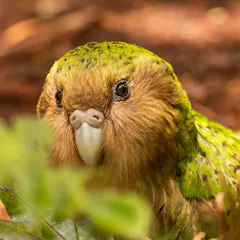
Kākāpō are prone to disease and infertility. Only intensive species management has saved the flightless parrots from extinction. Genome data now reveals the genetic reasons behind these problems.
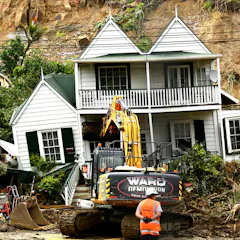
Some New Zealand universities have proposed staff and course cuts in earth sciences. This could leave the country ill prepared to deal with natural hazards and extreme weather.

Both major parties are promising major road projects this election. Meanwhile, the potential for passenger and freight rail to help meet the country’s climate goals seems stuck at the station.

Space exploration is often propelled by competition, driven by national pride and with little thought about consequence. It is time to consider space as a commons, not just a resource to exploit.

The first sign of a new bird flu might be a dead seabird or marine mammal. Better surveillance of migratory birds and wildlife – and better public awareness – is crucial.
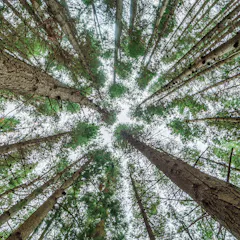
Access to fossil fuels allowed humanity to overshoot Earth’s biophysical limits. The crises we now face are all symptoms of this overshoot, and the only fix is to cut our demands on the biosphere.

Humans have been making symbols for numbers for thousands of years. Different cultures developed their own symbols, but all use addition and multiplication, suggesting arithmetic is a universal truth.
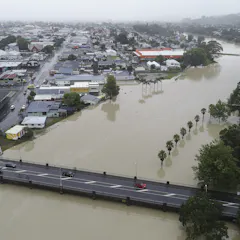
A new report sets out the practical ways New Zealand can improve its urban resilience to flooding due to climate change. But time, rather than money, is of the essence.
Top contributors
-

Senior Lecturer in Physical Geography, Te Herenga Waka — Victoria University of Wellington
-
Morgan Foundation Senior Research Fellow in Freshwater Ecology and Environmental Science, Te Herenga Waka — Victoria University of Wellington
-
Senior Lecturer in Mechanical Engineering, University of Auckland, Waipapa Taumata Rau
-
Senior Research Fellow, University of Canterbury
-
Professor in Applied Mathematics, Te Kunenga ki Pūrehuroa – Massey University
-
Associate Professor in Botany, University of Otago
-
Professor of Applied Geology, University of Auckland, Waipapa Taumata Rau
-
Professor in Marine Biology, Nord University
-
Professor in Ocean Physics, University of Auckland, Waipapa Taumata Rau; Earth Sciences New Zealand
-
Associate Professor of Ecology, Lincoln University, New Zealand
-
Professor of Glaciology, Te Herenga Waka — Victoria University of Wellington
-
Distinguished Scholar, National Center for Atmospheric Research; Affiliate Faculty, University of Auckland, Waipapa Taumata Rau
-
Ice Sheet & Climate Modeller, Te Herenga Waka — Victoria University of Wellington
-
Adjunct Senior Fellow in Renewable Energy Systems Engineering, University of Canterbury
-
Associate Professor in Ancient DNA, University of Otago