
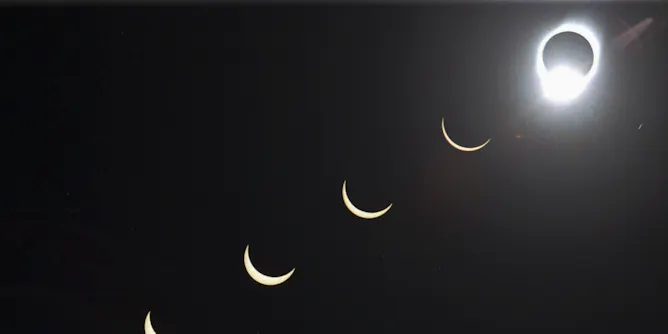
Eclipses are rare, fantastic celestial events. Here’s how educators can help visually impaired students enjoy eclipses alongside their sighted peers.
Articles on Science education
Displaying 21 - 40 of 141 articles
Jokes can be a healing contagion as they expose hypocrisy, spark laughter and open minds.
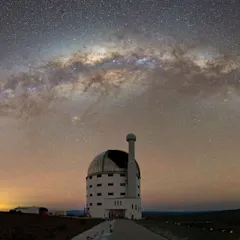
The astronomical community has thrived and world-class astronomical facilities have been established in South Africa.
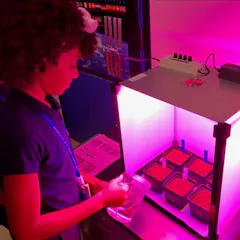
Astronauts living and working on the Moon will need something to eat. The Growing Beyond Earth program supports international space crop research.
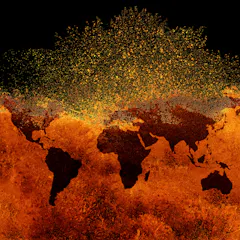
Poetry and prose are prominent features in this course about how climate change is affecting the world.

‘Don’t Say Gay’ bills claim to use science to justify a binary definition of sex based on certain traits. But the biology of sex and gender is not so simple.

Children learn more science when they watch an AI-powered cartoon character than with a regular Mickey Mouse or Dora the Explorer, a new study finds.
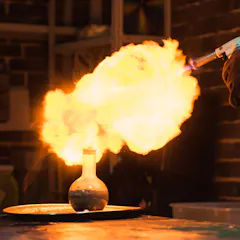
Inspiring our children to value and connect with science is key to improving society – and there are ways to do this safely in the classroom.
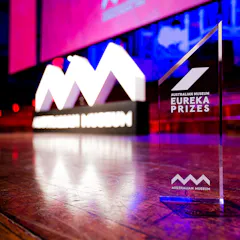
A microscope slide that can diagnose cancer, mapping how what we eat affects the environment, and an effort to track bushfire damage are among the winners at Australia’s leading scientific awards.

College science classes often fall short of helping students see connections across subjects. Can a new approach make a difference?
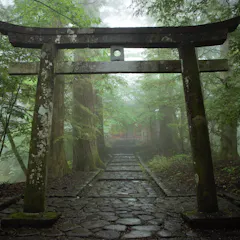
As New Zealand considers how and whether to incorporate traditional Māori knowledge in the science curriculum, what might we learn from the experiences of Japan?

Children often aren’t aware of how much has been lost in recent generations.
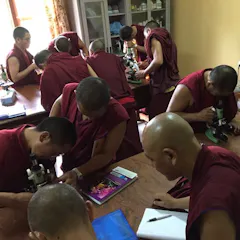
Religious beliefs and modern biology sometimes seem to collide. But exploring those ideas with compassion and an open mind can lead to deeper learning across cultures.
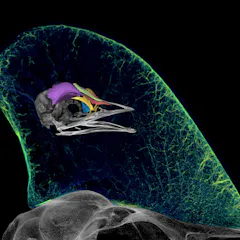
Scientists have been using art to illuminate and share their research with the public for centuries. And art could be one way to bolster K-12 science education and scientific literacy in the public.
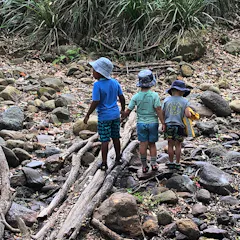
New research demonstrates the many aspects of nature play that make it a great way for young children to gain STEM knowledge.

A greater understanding of interconnectedness created by river maps could influence people to become more engaged with conserving river systems.

Science and comic books have been cross-pollinating each other for some time (think Spider-Man). But kids can learn a lot of valuable science information from comics books too.
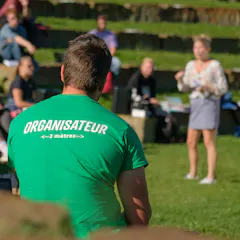
Université de Sherbrooke introduced 10 new outdoor classrooms during COVID-19 and created a guide about outdoor teaching. It will fine-tune outdoor teaching in response to student feedback.
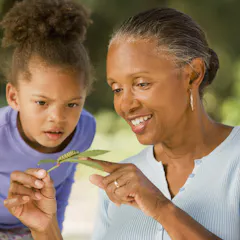
Insects are plentiful and inexpensive. Even when children aren’t attending school in person, they can learn from the encounters they have with insects outside.
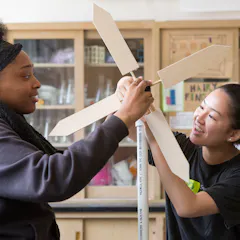
Teachers could better support young people’s scientific inquiry into urgent planetary and social issues if school testing valued practical science.
Top contributors
-

PhD; Lawrence Berkeley Laboratory (retired) and Research Fellow, University of California, Davis
-
Laureate Professor of Mathematics, University of Newcastle
-
Distinguished Professor, Australian National University
-
Distinguished Teaching Fellow, Western Sydney University
-
Professor, Australian Catholic University
-
Emeritus reader in science education and communication, University of Sussex
-
Chair, The Conversation Media Group
-
Maseno University
-
Research fellow, University of York
-
Professor of Science Education, The University of Western Australia
-
Assistant Curator of Museum Education, University of Florida
-
Science communicator and communication consultant to Questacon, and alumni, CSIRO
-
Professor of science education, Deakin University
-
Professor, STEM Education, North Carolina State University
-
Vice-Chancellor and Prinicipal, Brunel University of London