

NSW’s proposed new rigorous physics syllabus refocuses on the fundamentals, but it’ll require investment in teaching skills so all students can benefit from it.
Articles on Science education
Displaying 61 - 80 of 141 articles
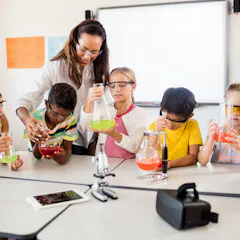
Australia’s performance in science continues to slide due to ineffective, traditional teaching practices and an outdated curriculum. Here’s what needs to change.
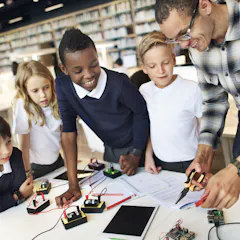
Science that students learn in context - rather than science as isolated knowledge items - can deliver both scientific literacy and positive learner interest.

Neither major party has made science and engineering issues a big part of its platform. But research – and its funding – are crucial if the U.S. wants to maintain status as a global leader.

Research shows that students feel motivated when they learn more about the struggles and failures of the world’s greatest scientists.

The drive the get more women involved in science should start at an early age. But as one space researcher found out, girls can get nudged out of science at school.
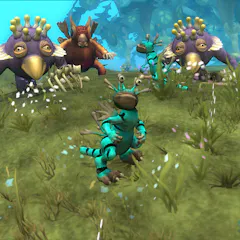
Many digital games claiming to simulate evolution are inaccurate. These errors can undermine the games’ potential educational benefits.

It’s a mistake to allow teenagers to drop maths – it should be made compulsory at A-Level.
Science and technology research has become so complicated and expensive that a gap has grown between the experiments scientists would like to do and what they have the means to do.
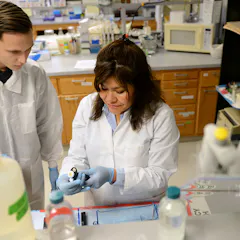
A scientist explains how a liberal arts education made ‘subtle yet significant contributions’ to his understanding of what science is, how it’s done, and how advancements are made.
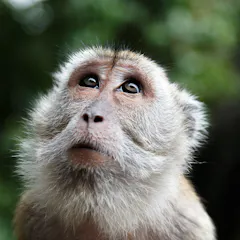
Why do so many people question evolution and not other scientific theories?
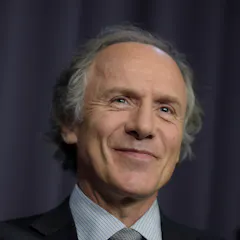
Dr Alan Finkel took over as Australia’s Chief Scientist in January this year. In this exclusive interview, he describes his approach to science, and to issues such as renewable energy and STEM jobs.
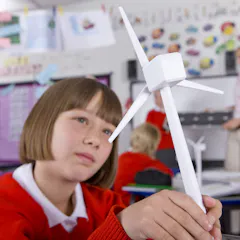
To get children to think creatively, teachers need to be creative, too.
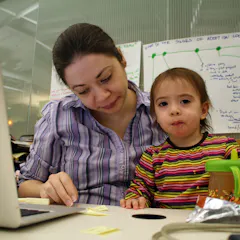
The limits of fertility and an elongated academic career path are currently at odds. If the choice to bear children contributes to the ‘leaky pipeline’ of women in STEM, what can be done?

Through creating entrepreneurs and boosting global collaboration, science has the potential to drive economic growth and innovation – if only the government would properly fund it.
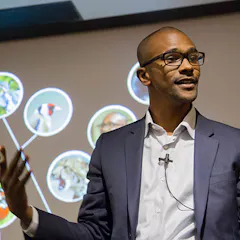
The president of one of the country’s leading research university systems argues that the academic community has to make sure researchers and scientists engage with the general public.

Is a novella published 130 years ago our best bet for explaining the worlds of 4D and beyond?

To achieve science becoming part of everyday entertainment, one needs to take science out of its usual academic context.
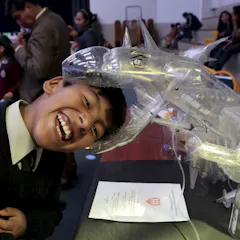
Using more than one language when teaching and learning science in schools can greatly enhance concept development. This in fact goes to the heart of science.
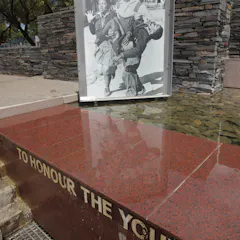
There’s an ongoing debate about how best to promote multilingualism in schools. But is this debate relevant when it comes to teaching science?
Top contributors
-

PhD; Lawrence Berkeley Laboratory (retired) and Research Fellow, University of California, Davis
-
Laureate Professor of Mathematics, University of Newcastle
-
Distinguished Professor, Australian National University
-
Distinguished Teaching Fellow, Western Sydney University
-
Professor, Australian Catholic University
-
Emeritus reader in science education and communication, University of Sussex
-
Chair, The Conversation Media Group
-
Maseno University
-
Research fellow, University of York
-
Professor of Science Education, The University of Western Australia
-
Assistant Curator of Museum Education, University of Florida
-
Science communicator and communication consultant to Questacon, and alumni, CSIRO
-
Professor of science education, Deakin University
-
Professor, STEM Education, North Carolina State University
-
Vice-Chancellor and Prinicipal, Brunel University of London