
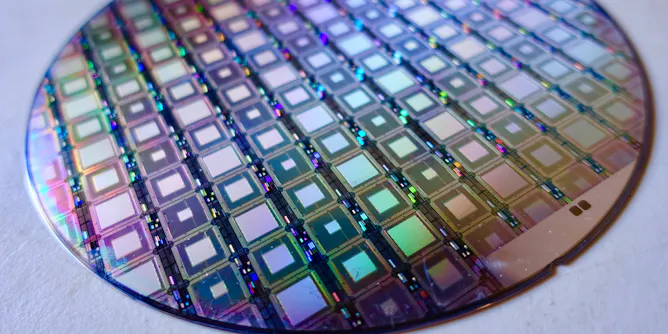
Semiconductor chips are electronic devices that store and process information. Today they can contain billions of microscopic switches on a chip smaller than a fingernail.
Articles on Science
Displaying 361 - 380 of 796 articles
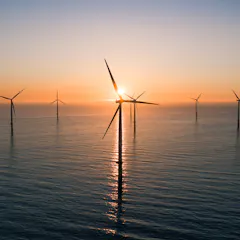
While a US transition to renewable energy by 2030 is possible, streamlined policies with clear goals and incentives are necessary to get there, says an industrial engineering professor.
No, it’s not like donating a kidney. But it is still a gift.
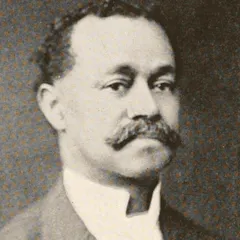
The son of a formerly enslaved mother, Charles Henry Turner was the first to discover that bees and other insects have the ability to modify their behavior based on experience.
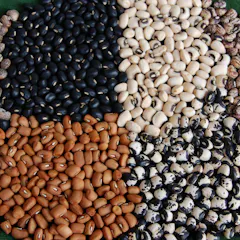
Cowpea is an important crop in Ghana. What will a genetically modified version mean for the country’s farmers?
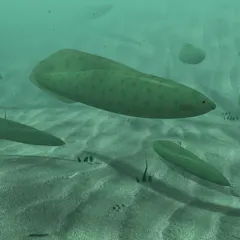
A biologist explains how researchers nail down the age of ancient fossils thanks to a physical process called radioactive decay.
There’s no one-size-fits-all approach to boosting innovation – but we can learn a lot from what has worked and failed in the past.
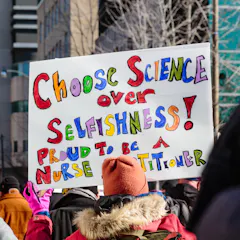
To communicate scientific findings that are relevant to the public, science communicators need to understand how to overcome attitudes that are anti-science.

Scientific research done through international collaboration has boomed in the past 30 years. But recently, powerful countries are using science as a tool of politics, threatening that work.
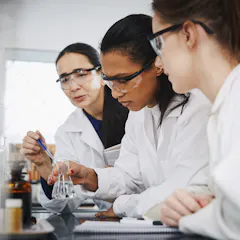
College science classes often fall short of helping students see connections across subjects. Can a new approach make a difference?
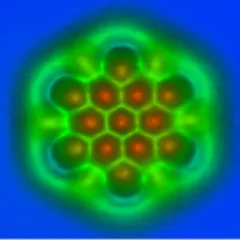
A physicist explains how atoms arrange themselves into molecules – and how scientists are able to image these tiny bits of matter that make up everything around you.

Peer review of research sounds like it should be a conversation between equals. Instead, it can be patronizing, demanding and simply unkind. A group of journal editors thinks this should change.

Rotting seaweed has plagued the Caribbean, Gulf of Mexico, US and West African coasts for a decade. So we’ve developed a new approach to turn what’s now rubbish into green electricity and fertiliser.
There’s a special type of particle called a ‘tachyon’ which would have to travel faster than the speed of light. But here’s the hitch – we can’t prove tachyons even exist.

New research found that consumers were less likely to buy a product associated with pleasure if marketers emphasized it was developed with science.

The multiverse has been the topic of multiple recent films, such as Dr Strange in the Multiverse of Madness and Everything Everywhere All At Once: but what does science know about the multiverse?
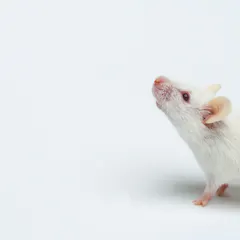
There remains a crucial need for animal models to understand health and disease and to develop medicines.
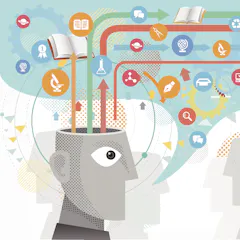
Starting in 2023, all research proposals funded by the NIH will need to include a data sharing and management plan. An expert on open science explains the requirements and how they might improve science.
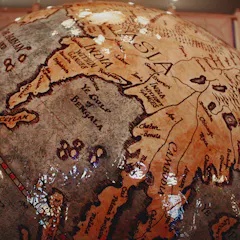
The decolonisation of science is an essential step for the academic community in Indonesia to find their voice.
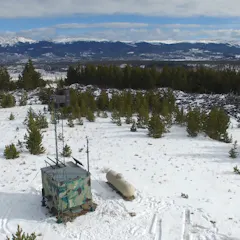
Several states are experimenting with weather modification to try to generate snow as water supplies shrink. An atmospheric scientist explains the history behind it – and the challenges.
Top contributors
-

Professor and Deputy Vice-Chancellor (Research), University of Sydney
-
Professor in Applied Cognitive Psychology, Manchester Metropolitan University
-
Senior Lecturer and Researcher in Cognitive and Parapsychology, Manchester Metropolitan University
-
Open Evidence Research, UOC - Universitat Oberta de Catalunya
-
Professor of Public Affairs, The Ohio State University
-
University Distinguished Professor of Astronomy, University of Arizona
-
Professor of Natural Philosophy in the Department of Physics, University of York
-
Professor, Philosophy of Science, The University of Melbourne
-
Professor of Creative Pedagogies, Edinburgh Napier University
-
Professor of Natural Resources and Environmental Science, University of Vermont
-
Associate Professor in Astronomy, Monash University
-
Dean of Science, University of California, Santa Cruz
-
Professor of Environmental Engineering, North Carolina State University
-
Senior Lecturer in Physics, Nottingham Trent University
-
Honorary Associate, School of Physics, University of Sydney