
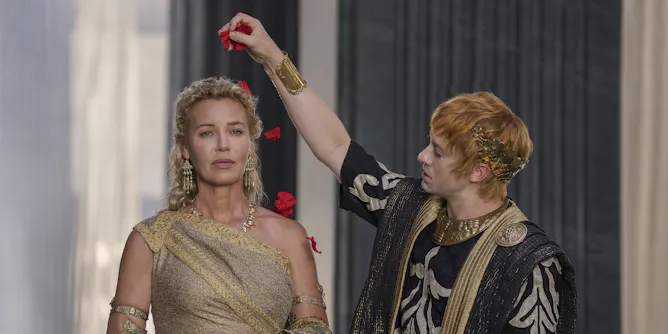
It’s clear Caracalla and Geta had an intense rivalry. This was kept in check while their father Septimius Severus was emperor. But once he died, their relationship devolved into outright hostility.
Articles on Roman Empire
Displaying 21 - 40 of 85 articles
This doomed romance ended abruptly in 44 BCE when Caesar was quite literally stabbed in the back (and from all sides) by his enemies in Rome. She pretty soon hooked up with one of his closest allies.
The scene shows two warships at a face-off while sharks circle in the waters below.
Wars have always required false dichotomies: Christian and Muslim, civilization and barbarism, West and East to justify violence against the other.

Hannibal remains a towering figure in military history, not only for his tactical brilliance but also for the profound impact he had on Rome. He continues to inspire military leaders today.
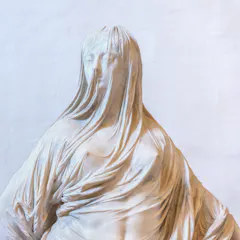
The inviolability of Vestals was predicated on their virginity, which entirely defined their social powers. The control of their sexuality was synonymous with the welfare and politics of the state.
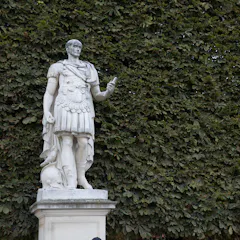
Renaissance philosopher Niccolò Machiavelli dissected the threats authoritarian figures pose to representative government.
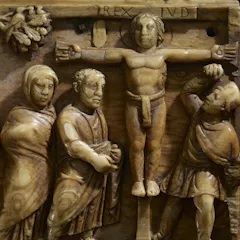
Each Easter we see many images of Jesus on the cross – inevitably wearing a loincloth. But the historical evidence shows victims of crucifixion were fully naked to maximise shame as well as pain.
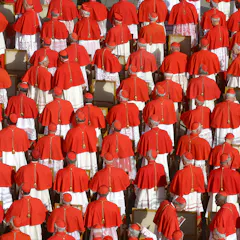
Purple was highly valued and associated with royalty, power, and prestige in various ancient cultures, including the Roman and Byzantine Empires. So how did red creep its way in?

Fighting for voter access is an inevitable part of any democracy, from ancient Rome to the US today. Roman legislators were able to thwart elite political sway by introducing written ballots.
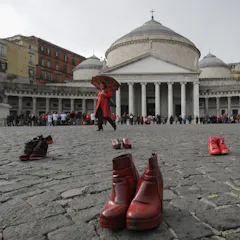
A spate of recent high-profile murders has put focus on the role of patriarchy and misogyny in persistent rates of anti-woman violence in Italy.
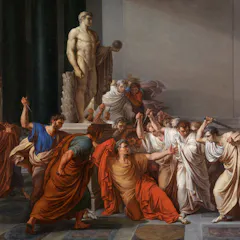
Historian and complexity scientist, Dan Hoyer, examines why past societies collapsed when faced with crisis, while others founds ways to survive and flourish.

A formidable woman born in the second half of the fourth century and widowed at around 17, Olympias was not afraid to advocate for herself – or her friends.
Nos Galan Gaeaf on October 31 in Wales is steeped in folklore and tradition.
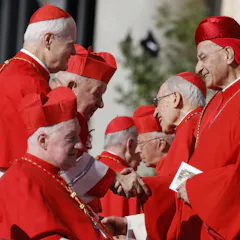
The College of Cardinals is an important part of the church’s governance structure. Its members elect the next pope and help develop future policies for the church.

Following a number of films featuring debauched emperors, it is nowadays commonplace to associate the Greek-Roman antiquity with orgies. But is this historically accurate?

The ethnicity outcry says more about today’s preoccupations with race than ancient Egypt’s.
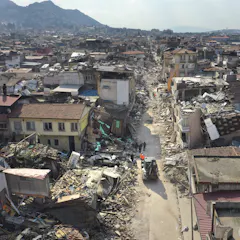
A historian of the late Roman world, who visited earthquake-devastated Antakya several times, writes about the city’s rich history and recovery after being devastated in the past.
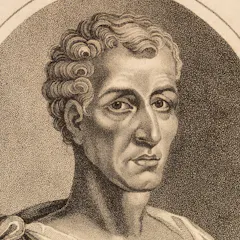
Lucian’s work provides insight into the second-century Roman world, which fostered multilingualism and multiculturalism.

A scholar who studies biblical texts explains how the Bible, its laws, and ancient debates were set within a complex vision of society at that time.
Top contributors
-

Associate Professor in Ancient History, Macquarie University
-
Professor Emerita of Religious Studies, College of the Holy Cross
-
Honorary Fellow, School of Historical and Philosophical Studies, The University of Melbourne
-
Senior Researcher, Historian and Complexity Scientist, University of Toronto
-
Gale Research Fellow in Ancient Glass and Material Culture, Macquarie University
-
Professeur d'histoire ancienne, Université de Lorraine
-
Professor of Classics and Head of the Centre for Classical Studies, Australian National University
-
Professor of Archaeology, Durham University
-
Professor of Ancient History, Macquarie University
-
Head, Public Engagement, Chau Chak Wing Museum, University of Sydney
-
Teaching Fellow, School of Archaeology and Ancient History, University of Leicester
-
Professor of Roman Archaeology, University of Glasgow
-
Senior Lecturer in Ancient History, University of Leicester
-
Lecturer in Ancient History, Cardiff University
-
Senior Lecturer of Archaeology, University of Exeter