
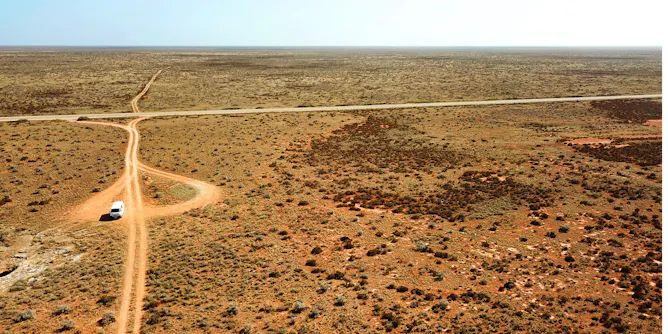
When borders reopen, take an Aussie road trip and explore the continent’s unique geology, from meteorites in the Nullarbor Plain to rock formations that are billions of years old.
Articles on Rocks
Displaying 21 - 38 of 38 articles
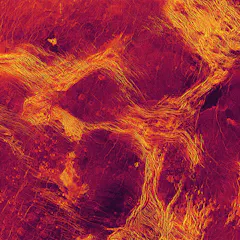
Researchers used decades-old radar data and found that some low-lying areas of Venus’ crust are moving and jostling. This evidence is some of the strongest yet of tectonic activity on Venus.
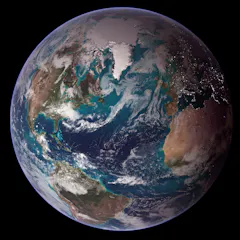
The presence of water on the Earth’s surface is the result of a subtle balance between different mechanisms in the atmosphere and below the surface.
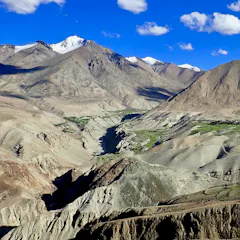
Earth’s magnetic field locks information into lava as it cools into rock. Millions of years later, scientists can decipher this magnetic data to build geologic timelines and maps.
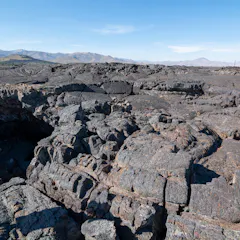
To avoid global warming on a catastrophic scale, nations need to reduce emissions and find ways to pull carbon from the air. One promising solution: spreading rock dust on farm fields.
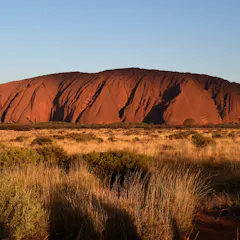
There are memorial stones scattered along songlines throughout the Australian landscape, victims and transgressors transformed into rock following epic struggles to stand as cautionary tales.
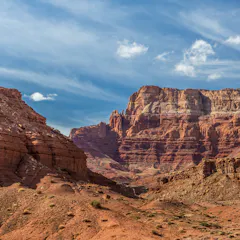
As strange as it sounds, rocks are made from stardust.
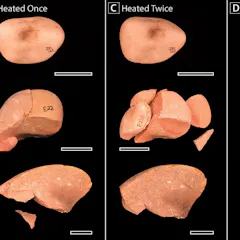
Researchers can more easily compare heated rocks from different studies and areas.
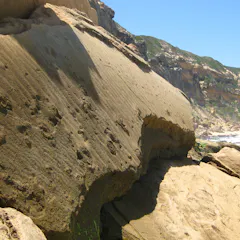
Trackways made by vertebrates during the Pleistocene era, dating back to between 36 000 and 140 000 years helps with research into ancient animals.
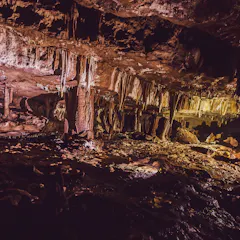
2018 brought the announcement of a new geologic age that covers the last 4,200 years. How do scientists divide up Earth’s timeline and what do these demarcations mean?
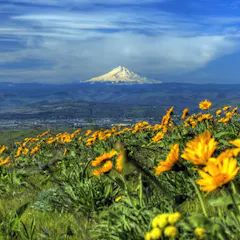
A new array of seismometers provides a glimpse of what’s happening deep beneath this geologic fault. New data help explain why the north and south of the region are more seismically active than the middle.
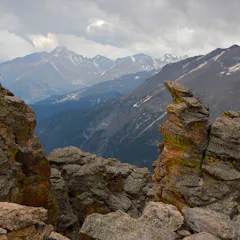
Scientists have long thought most nitrogen in Earth’s ecosystems comes from the air, but new research shows it also is released as rocks weather. This could boost plant growth and help sequester carbon – but not fast enough to avert climate change, as some pundits have claimed.
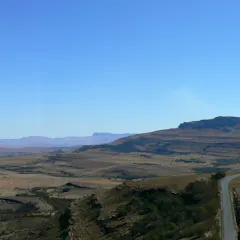
The earth’s own magnetic field offers a useful way to measure the age of rocks - information that can help unpack ancient events and aid our understanding of the present.
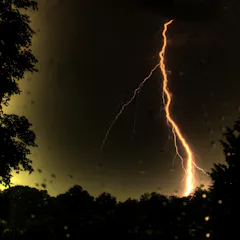
Lightning strikes are powerful – but we haven’t had solid estimates of their energy until now. Researchers turned to the hollow stone tubes they create by vaporizing sand for more precise calculations.
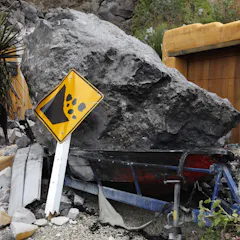
A new study of the 2011 Christchurch earthquake shows boulders from rockfalls fell much further than in earlier quakes that happened before humans arrived and changed the landscape.

On printed maps, piling on the detail risks obscuring the meaning. This new digital map is really more of a database from which users can create different versions that match their own interests.

The Karoo provides not only a historical record of biological change over a period of Earth’s history but also a means to test theories of evolutionary processes over long periods of time.
A new mineral – dubbed “putnisite” – has been discovered in Western Australia. Mineralogy researcher Dr Peter Elliott…
Top contributors
-

Professor of Geochronology, Curtin University
-
Lecturer in Geosciences, University of Montana
-
Professor of Global Environmental Studies, Chancellor's Fellow and Director, John Muir Institute of the Environment, University of California, Davis
-
Research Associate, African Centre for Coastal Palaeoscience, Nelson Mandela University
-
Researcher and curator, Jurassica Museum
-
PhD candidate in geology, University of Canterbury
-
Professor of Earthquake Science, The University of Melbourne
-
Postdoctoral Research Fellow in Isotope Geochemistry, Adelaide University
-
Professor of Earth Sciences, University of Oregon
-
Postdoctoral Fellow, Evolutionary Studies Institute, University of the Witwatersrand
-
PhD Student in Earth Sciences, University of Oregon
-
Associate Professor of Geosciences, University of South Florida
-
Professor of Geosciences, Boise State University
-
Cosmochimiste, chargée de recherche CNRS au Centre de Recherches Pétrographiques et Géochimiques (CRPG) de Nancy, CNRS, Université de Lorraine
-
Director, Centre of Excellence in Palaeosciences, University of the Witwatersrand