

By observing the tree-ring-like growth records present in volcanic crystals, geologists are able to track volcanic activity and reconstruct the steps leading up to eruptions.
Articles on Crystals
Displaying 1 - 20 of 22 articles
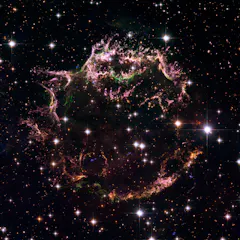
Vaporising crystals with a laser allows us to look deep into Earth’s past.

It’s very metal.
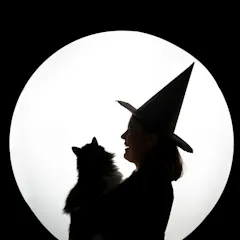
Sociologists who measured supernatural beliefs in the US found that higher education and higher income are associated with lower levels.

Crystals are supposed to be hard and brittle. But when we make them bendy, they help reveal the secrets of how elastic materials work.
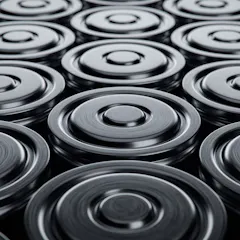
Discovering new materials could drive forward areas such as green technology and advanced electronics.

Decoding volcanic ‘crystal balls’ can help scientists tell ahead of time when a volcano is going to erupt
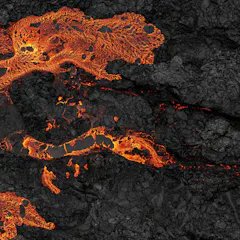
Life depends on Earth’s ancient continental crust – but there are only a few places where remnants of it can still be seen today.
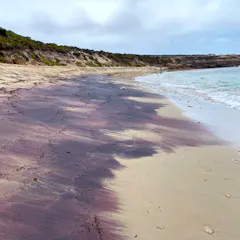
The hunt for the origin of garnet crystals found on South Australian beaches took researchers thousands of kilometres and half a billion years back in time to a hidden Antarctic mountain range.
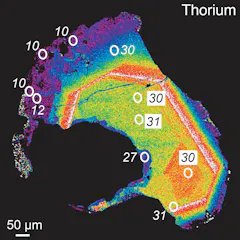
Measuring the concentration of radioactive elements in a single, sand-size crystal reveals the growth of the Himalayan mountain range over time.
There are an infinite number of paths an ice crystal can take before you touch it.
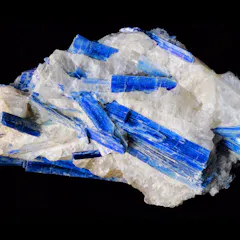
There are a lot of myths about crystals − for example, that they are magical rocks with healing powers. An earth scientist explains some of their amazing true science.
Since the earliest days of the written word, students and scholars have pleaded for help from higher powers, a sure sign that writing and frustration always have – and always will – go hand in hand.
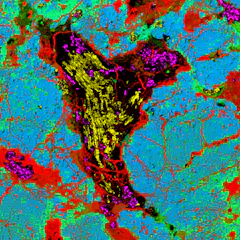
An unusual folded shape in a meteorite prompted scientists to dive deep into a rabbit hole – discovering a potential new way to make specially shaped diamonds in the lab.
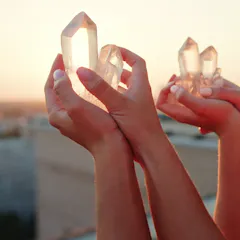
Crystals are part of a larger tradition of metaphysical religions that have a long history in the U.S.
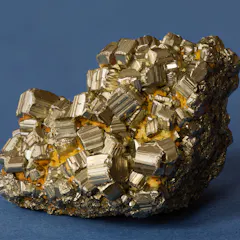
Fool’s gold, or pyrite, is made of worthless iron disulfide, but can contain tiny amounts of the real thing. Using an ‘atom probe’, research has uncovered a new way gold atoms can hide in pyrite crystals.
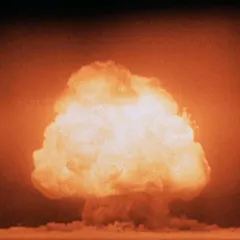
The quasicrystals were ‘accidentally’ synthesised during the first test of a nuclear bomb in July 1945.
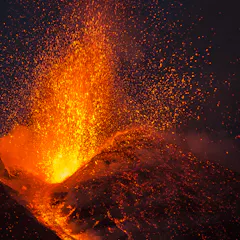
A new study has found a way to predict eruptions at Mount Etna within two weeks.
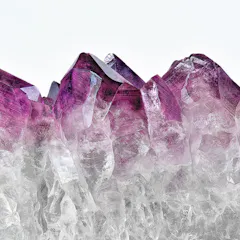
It’s a crystal - but not as you’ve seen it before. A new crystal can be bent and flexed, and is expected to deliver new responsive materials for emerging technologies.
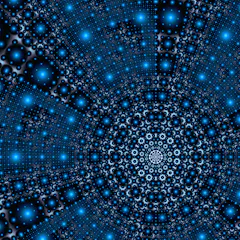
Scientists theorised, disproved, revamped and finally created a bizarre new form of matter in just five years.
Top contributors
-

ARC Future Fellow and Associate Professor in Igneous Petrology/Volcanology, The University of Queensland
-
Professor of Inorganic Chemistry, The University of Queensland
-
Professor of Inorganic Chemistry, Queensland University of Technology
-
Professor of Geochronology, Curtin University
-
Geologist, Monash University
-
Professor of Geosciences, Boise State University
-
Associate Professor, Northumbria University, Newcastle
-
Lecturer in Geology, Adelaide University
-
Professor of Applied Biochemistry, University of Nottingham
-
Associate Professor, Earth and Planetary Sciences, Curtin University
-
Adjunct Research Fellow, School of Earth and Planetary Sciences, Curtin University; Georg-August-Universität Göttingen
-
Professor, RMIT University
-
Associate Professor of Geology, Adelaide University
-
PhD Researcher, RMIT University
-
Associate Professor of Religious Studies, Texas State University