
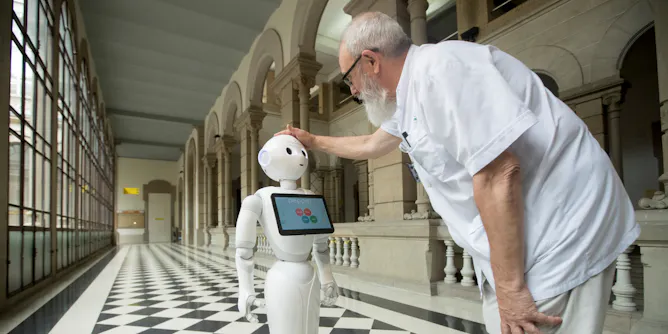
Using robots to provide companionship is a slippery slope in removing the aged and infirm still further from human interaction.
Articles on Robots
Displaying 121 - 140 of 397 articles
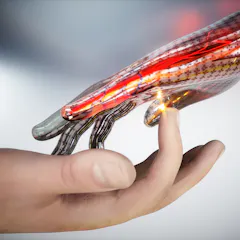
A new silicone ‘skin’ contains electronics that mimic the human body’s lightning-fast response to pain, potentially paving the way for smart prosthetics that can detect painful sensations.
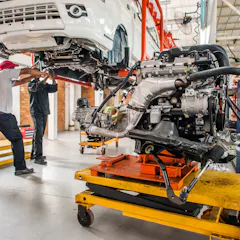
Increased capital investment and productivity need not result in job losses. Government can use industrial policy to link investment incentives to job preservation and even job creation.
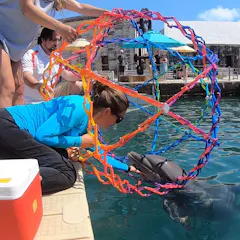
Wild dolphins are fast, smart and hard to study, but it is important to understand how human actions affect their health. So we are building a drone to sample hormones from the blowholes of dolphins.

That gentle voice coming from your smart speaker is more complex than she seems.
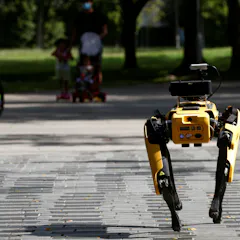
Smart city solutions have proved handy for curbing the contagion, but recent experience has also shown how much they rely on public trust. And that in turn depends on transparency and robust safeguards
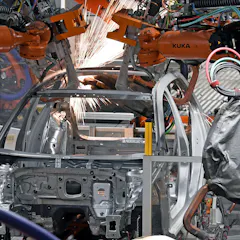
Amazon’s planned upcoming ‘Just Walk Out’ technology will let customers take items off a store’s shelf, bag them, and walk straight out.

Algorithms are only as good as the people who make them.

Robots can’t get COVID-19, so employing them in some jobs could help ease the limitations of stay-at-home orders and keep frontline workers protected.

Lightweight, flexible materials can be used to make health-monitoring wearable devices, but powering the devices is a challenge. Using fuel cells instead of batteries could make the difference.
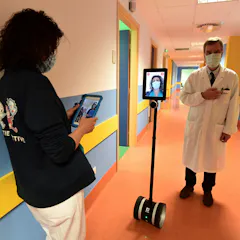
Robots are helping health care workers and public safety officials more safely and quickly treat coronavirus patients and contain the pandemic. They have something in common: They’re tried and tested.

AI can supplement the efforts of available medical personnel - and help keep them safe.
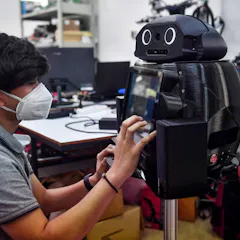
With the enhanced capabilities of today’s robots and drones, recent examples from China and Thailand and ongoing research show that they have the potential to help us navigate disasters.

Having robots and other AI systems tell people what the AIs are doing makes them more trustworthy. A study finds that how a robot explains itself matters.

Sex technologies and ‘erobots’ could help address issues related to human desire, and physical and emotional needs of astronauts in space.

At Christmas shopping, you may have noticed toys are becoming very complex. They fly, hop, jump and follow you around – some even need to be ‘connected’. But why are we seeing such technical advances?

At the heart of the debate is that most fundamental question: what does it mean to be human?
As machine automation and artificial intelligence surge, there’s paranoia our jobs will be overrun by robots. But even if this happens, work won’t disappear, because humans need it.

Sexbot advertising promises more than just sex toys. It is also trying to sell us a soulmate or trusted friend.
Automation does threaten jobs, but the most widely cited study exaggerates the effect and pointed to job losses in places where they didn’t happen.
Top contributors
-

Professor in Robotics, Queensland University of Technology
-
Adjunct Senior Lecturer, Applied Ethics and CyberSecurity, Griffith University
-
Professor, Director of the Centre for Robotics, Queensland University of Technology
-
PhD in machine ethics, University of Canterbury
-
Senior Lecturer, Department of Engineering, Nottingham Trent University
-
Professor of AI, Research Group Leader, UNSW
-
Senior Research Fellow and Deputy Director, Centre for Biomedical Technologies, Queensland University of Technology
-
Reader in Autonomous Intelligent Robotics, University of Birmingham
-
Lecturer in Computer Science, Edinburgh Napier University
-
Lecturer in Digital Media and Cultures, The University of Queensland
-
James Martin Research Fellow, Future of Humanity Institute & Oxford Martin School, University of Oxford
-
Researcher in Artificial Intelligence Regulation, Australian National University
-
Associate professor, Australian Catholic University
-
Professor of Orthopaedic Research, Queensland University of Technology
-
Leverhulme Fellow and Lecturer, Faculty of Law, University of Cambridge