
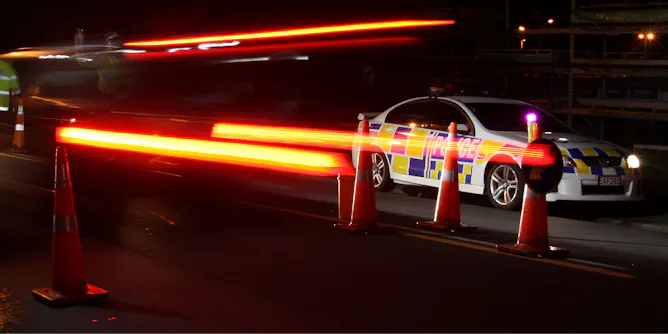
Police will soon be able to orally test drivers for four drugs. But impairment from prescription medications is far more common and remains largely self-policed.
Articles on road rules
Displaying all articles

Despite loud calls for tough policing of e-scooters and even outright bans, the problems can be better managed with technology and public education.
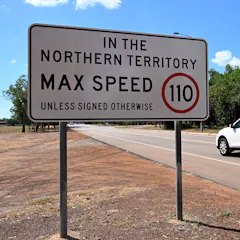
Would copying other states and dropping the default limit by just ten kilometres on country roads in WA and NT make a difference? And how might it be enforced?
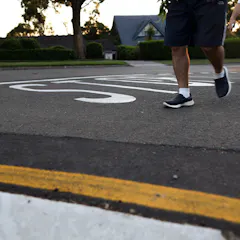
Some councils have installed zebra crossings at selected T-intersections, where they do improve safety. The problem is they also add to the existing confusion at other intersections.
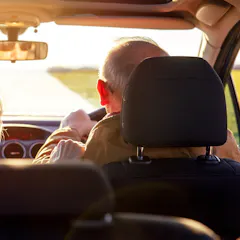
Deciding when someone no longer has the ability to drive safely can be difficult – and it’s not just a matter of age. But there are practical steps we can take to ensure older drivers are safe.
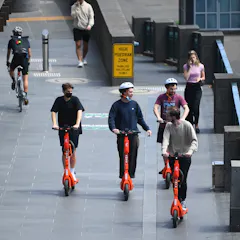
We need a uniform regulatory framework balancing the risks and benefits of e-scooters, and clarifying avenues for compensation.
New evidence suggests some motorists recognise the risks associated with speeding, but continue to offend anyway.
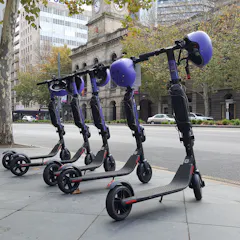
Are debates about e-scooters too narrow? Perhaps it is time to focus more on revitalising urban spaces and retrofitting road infrastructure.
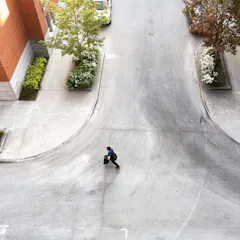
Most people do not know the right-of-way rules, but a starting point should be that pedestrian needs and safety take priority. Current road rules are biased towards driver convenience
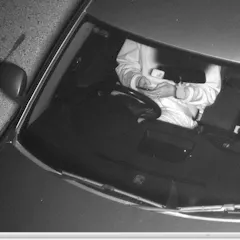
Trials of the program found about 5% of offending drivers used their mobile phone with both hands, while the vehicle was moving.

Bike helmet laws are meant to be about safety. But the hefty penalties and huge number of fines are causing resentment – made worse by some police abusing the law to stop, question and search riders.

Of course people need ethics. But the current troubles in the technology industry are not evidence of an ethics crisis; it is a public-policy crisis.

The primacy given to the car has shaped our cities, the roads that serve them and our very thinking about the place of driving in our lives. And it’s a mindset that leaves cyclists highly vulnerable.
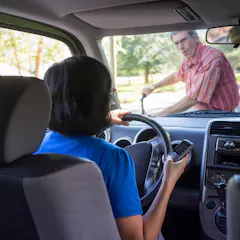
Because Australian roads were built and designed with motorists in mind, it is easy for Australian motorists to feel cyclists are using ‘their’ roads and disrespecting the natural order.

As self-driving cars proliferate, we need a system to handle difficult situations.
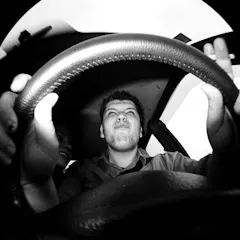
Personality traits can be used to predict a lot about a person. They can tell about their probable career success, if they’re likely to get divorced, their risk at dying early from disease – and now, how…
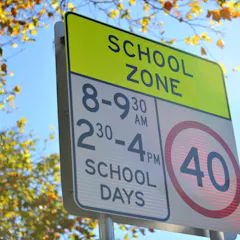
Blaming motorists for their speeding may at times be undeserved. We have recently shown that, rather than intentional wrong-doing by drivers, cognitive factors can explain speeding behaviour. Policies…
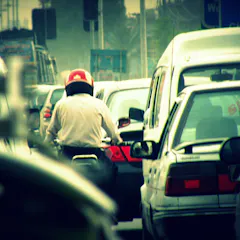
Motorcyclists are about to get a green light to “filter” through traffic on New South Wales roads. But what does that mean, for them and others sharing the road? And what are the rules for motorcycles…
Top contributors
-

Adjunct Fellow in Psychological Sciences, Macquarie University, Macquarie University
-
Senior Lecturer in Psychology, Director of Undergraduate Studies in Psychology, Macquarie University
-
Senior Lecturer in Political Science, The University of Queensland
-
Senior lecturer, Australian National University
-
Lecturer in Anthropology, Australian National University
-
Swinburne University of Technology
-
PhD researcher, Centre for Emotional Health, Macquarie University
-
Postdoctoral Fellow in Studying Complex Systems, Stanford University
-
Postdoctoral Research Fellow, Melbourne School of Design, The University of Melbourne
-
Professor of Transport, University of Sydney
-
Elaine Stratford is a Friend of The Conversation.
Professor, School of Geography, Planning, and Spatial Sciences, University of Tasmania
-
PhD Candidate, University of the Sunshine Coast
-
Honorary Professor, Faculty of Law, UNSW
-
Professor of Law, University of Wollongong
-
Senior Lecturer in Law, Adelaide University