

Pressure to ‘publish or perish’ and get results out as quickly as possible has led to weak study designs and shortened peer-review processes.
Articles on Research quality
Displaying all articles

A comprehensive review of research into the economic consequences of controversial water buybacks in the Murray-Darling Basin reveals many studies are of poor quality. Better standards are needed.
The project, spanning researchers across science and the humanities, looks at how ‘research assessment’ affects research in Australia.

Indonesian policymaking is predominantly informed by research with poor theoretical engagement, with no strong tradition of peer review and with legal threats to academic freedom.

Money always seems tight for university scientists. A sociologist conducted hundreds of interviews to see how they think about funding sources and profit motives for basic and applied research.

Engagement and impact will be part of research performance assessment starting in 2018, signalling a shift in what kind of research we value and why.

South Africa must act to halt the decline and save its universities’ well deserved global reputation of excellence.

A team of archaeologists strived to improve the reproducibility of their results, influencing their choices in the field, in the lab and during data analysis.

Partly in response to the so-called ‘reproducibility crisis’ in science, researchers are embracing a set of practices that aim to make the whole endeavor more transparent, more reliable – and better.

There are major systemic problems associated with peer review that are negatively affecting scientific credibility.

There is a very real risk that South Africa’s major research projects will stumble and the whole research machine will be shut down by ongoing student protests.

Embracing more rigorous scientific methods would mean getting science right more often than we currently do. But the way we value and reward scientists makes this a challenge.

South Africa must examine how science funding is allocated to universities. It also needs to acknowledge that not all universities should be focusing on research and development.

Recommendations in a new report aim to stamp out game-playing when it comes to the Research Excellence Framework.

Engagement is not impact, and simple measures such as non-government research income tell us very little about genuine external engagement between universities and industry.
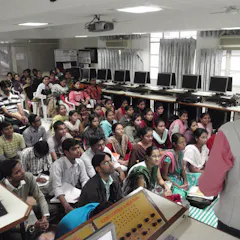
India has invested hugely in to reforming its higher education sector – Australia must view this as an opportunity to capitalise on this growth through partnerships and training schemes.

The new impact framework will improve some of the problems arising out of the ERA’s university research audit, but major challenges will remain.
Top contributors
-

Previous Vice President of the Academy of Science of South Africa and DSI-NRF SARChI chair in Fungal Genomics, Professor in Genetics, University of Pretoria, University of Pretoria
-
Professor of Chemistry, Lectures and research Inorganic Chemistry; sustainable biomass and water desalination, University of KwaZulu-Natal
-
Curtin University
-
Professor, University of Wollongong
-
Data and Policy Research Fellow, Queensland University of Technology
-
Reader in Education, University of Bath
-
Assistant Professor of Cognitive and Information Sciences, University of California, Merced
-
Emeritus Professor , UNSW
-
Co-Director: Centre for Competition Law and Economics, Stellenbosch University
-
Senior Research Fellow, Max Planck Institute for Innovation and Competition
-
Postdoctoral Research Fellow in Psychiatry and Behavioral Sciences, Medical University of South Carolina
-
Associate Professor of Higher Education, Georgia State University
-
Professor of Archaeology, University of Washington
-
UTS Distinguished Professor of Accounting, University of Technology Sydney
-
Deputy Vice-Chancellor (International) and Senior Vice-President, Monash University