

Academic freedom grew strongly after World War II, with greater university funding, protections and autonomy, yet global data now shows a decline.
Articles on Research collaboration
Displaying 1 - 20 of 30 articles

The cycle of opportunity and prestige for historically advantaged institutions leaves historically Black institutions on the back foot.

The European Union’s 10-year Human Brain Project is coming to a close. Whether this controversial 1 billion-euro project achieved its aims is unclear, but its online forum did foster collaboration.

Australia’s R&D expenditure as a percentage of gross domestic product has declined over the past decade.

It’s all in the details: the wide-ranging powers hinge on the yet-to-be-defined ‘institutional autonomy’ of foreign partners that enter into agreements with Australian public universities.

Changes caused by COVID-19 in the higher education sector could alter the power dynamics between African researchers and those from developed countries.

Through their exposure to new trends in knowledge production, African academics in the diaspora can contribute to equipping African students for the global economy.
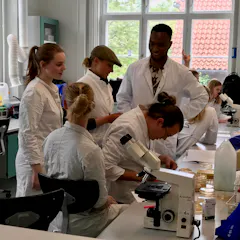
Global research funding, such as that offered by Denmark’s government, can open doors for African researchers to study abroad and then take their skills home.

Monash will be the first foreign university to open a branch campus in Indonesia. However, academics are divided on how the planned campus will impact the country’s higher education sector.

We wanted to investigate how the People’s Republic of China and countries in Africa work together in science and technology.

Given Africa’s projected population growth, management of its environment must be a global priority

It’s all too common for local scholars to be sidelined in what are supposed to be genuine research partnerships.

In an era of big scientific collaborations, China’s renegade actions have hurt its reputation. As international researchers back away, it may be the country’s military that ultimately suffers.

Better, more standardised frameworks are needed especially in Uganda if its universities are to benefit from transnational partnerships.

Working with African universities to effectively become research-intensive could transform sub-Saharan Africa’s higher education landscape.
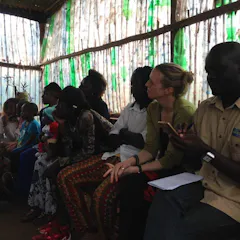
Without change, the trajectory of growth and development in the world will remain consistent with that of the past 80 years.

Africa has recorded a tremendous growth in its output of academic engineering research over the past 20 years. Greater collaboration can increase this growth even more.

Today’s scientific research is characterized by interdisciplinary, international collaboration. Awards like the Nobel Prizes haven’t caught up.
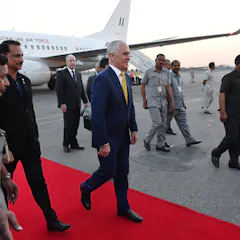
India will soon have the largest economy in the world. A way for Australia to benefit is to collaborative with universities.

The scientific impact of a research paper increases with every additional commenter who provides feedback – particularly if the comment came from a well-connected academic.
Top contributors
-

Associate Professor, School of Education, Aarhus University
-
Tshwane University of Technology
-
Professor of Public Affairs, The Ohio State University
-
Adjunct Professor, Njala University
-
UTS Distinguished Professor of Accounting, University of Technology Sydney
-
Assistant Professor and Co-Director of the Histopathology and Tissue Shared Resource, Georgetown University
-
Research professor, Southern Cross University
-
Emeritus Professor, Environmental Science, James Cook University
-
Professor and Chair, Southwestern Environmental Science and Policy, Northern Arizona University
-
Senior Lecturer of Educational Leadership and Policy, Kenyatta University
-
Senior Research Fellow, Max Planck Institute for Innovation and Competition
-
Postdoctoral Research Fellow in Conservation Biology, University of Pretoria
-
Associate Professor, Management Discipline, Faculty of Business, Arts and Law, Southern Cross University
-
Senior Lecturer, Education, Arts, Literacies, University of Glasgow
-
Dean of Research, Adelaide University