

A new publication sheds light on the plants of Burkina Faso and Mali.
Articles on Scientific collaboration
Displaying all articles

Don’t be fooled by the image of a mad scientist isolated in his basement laboratory. Science is a collaborative endeavor, and international teams have contributed to a huge rise in scientific output.

A South African team had a rare chance to capture information about Pluto’s atmosphere.

China’s Change'6 is going to explore the Moon’s far side and bring back precious lunar soil for scientists to study.

The European Union’s 10-year Human Brain Project is coming to a close. Whether this controversial 1 billion-euro project achieved its aims is unclear, but its online forum did foster collaboration.
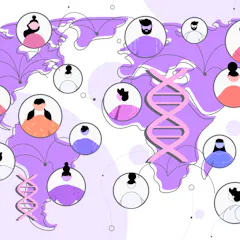
Existing genetic data and sequencing tools are overwhelmingly based on people of European ancestry, which excludes much of the rich genetic variation of the world.
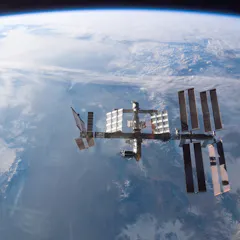
The head of the Russian space agency announced that the country will withdraw from the International Space Station after 2024. A space policy expert explains what this means and why it’s happening now.
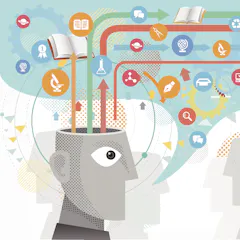
Starting in 2023, all research proposals funded by the NIH will need to include a data sharing and management plan. An expert on open science explains the requirements and how they might improve science.

Supply chain issues, emergency science, social distancing requirements and a lot more free time offered both challenges and opportunities for research scientists.
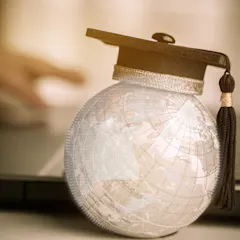
The International Indonesian Scholars Association (I4) launched a new “matchmaking” platform to connect scientists based in Indonesia with those working abroad to improve research collaboration.

In an era of big scientific collaborations, China’s renegade actions have hurt its reputation. As international researchers back away, it may be the country’s military that ultimately suffers.

Canada must take the lead as a global champion of science as America under President Donald Trump presses its assault on fact and knowledge.
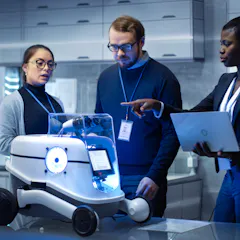
Africa has recorded a tremendous growth in its output of academic engineering research over the past 20 years. Greater collaboration can increase this growth even more.

A new initiative called the International Brain Laboratory is tackling this fundamental mystery of neuroscience in an unusual way.

Deep underground, scientists research subatomic particles from space in a bid to understand the building blocks of our universe.
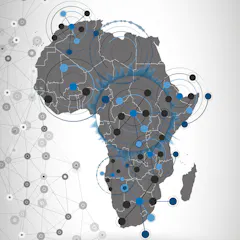
A focus on collaboration among African universities and research institutions is crucial in developing national policies that meet the principles of open data while keeping it safe from exploitation.
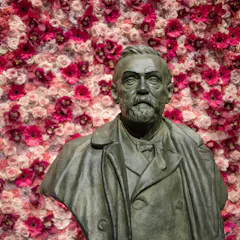
Today’s scientific research is characterized by interdisciplinary, international collaboration. Awards like the Nobel Prizes haven’t caught up.
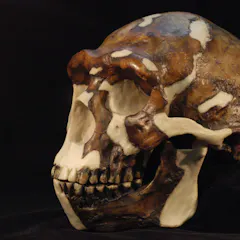
Bringing the past into a digital space creates so much more overt space for interpretation and different narratives.

The outgoing president leaves behind some solid accomplishments in the world of science, tech and medicine. But the biggest departure from his predecessors might have been in his approach.
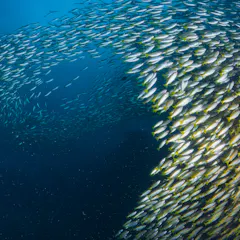
The two countries share huge marine resources and opportunities. At the same time both face increasing challenges to their oceans and coastal regions from climate change and over-exploitation.
Top contributors
-

Professor of Public Affairs, The Ohio State University
-
Associate Professor of Public Policy and Women's Studies, University of Michigan
-
Curator at the Origins Centre Museum, University of the Witwatersrand
-
Research scientist at SNOLAB, Adjunct faculty at Laurentian University, Laurentian University
-
Associate Professor of Neuroscience, Cold Spring Harbor Laboratory
-
Professor, School of the Environment, The University of Queensland
-
Digital Research Infrastructure Consultant, University of Cape Town
-
Postdoctoral fellow, Astrophysics, McMaster University
-
Tshwane University of Technology
-
Associate Professor of Computer Science and Electrical Engineering, University of Maryland, Baltimore County
-
Professor of Strategy and Security Studies, Air University
-
Professor of Mechanical, Aerospace and Biomedical Engineering, University of Tennessee
-
Assistant Research Professor of Mechanical Engineering, Colorado State University
-
President, IPB University
-
Professor of Interactive Games and Media, Rochester Institute of Technology