
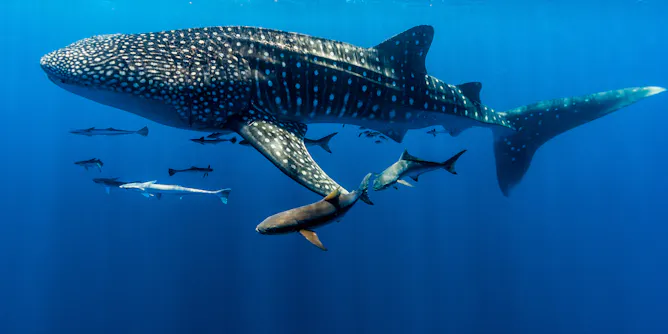
Sharks and rays have been swimming through the oceans for millions of years – but we still don’t really know where.
Articles on Rays
Displaying 1 - 20 of 21 articles
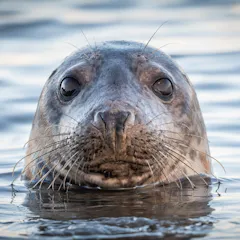
Nets used in the Irish fishing industry could be replaced by other types of fishing to preserve marine life.
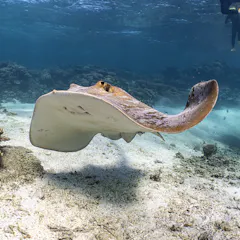
In stingray nurseries, competition for food can be fierce – and it helps to not be a picky eater.
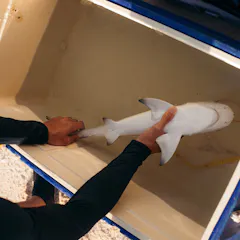
Rather than a clever survival tactic, tonic immobility might just be ‘evolutionary baggage’.
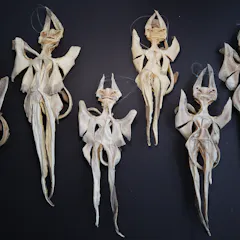
They look like devils and hence are called pez diablo in Spanish, but these demonic objects are dried and mutilated versions of living rays known as guitarfish.
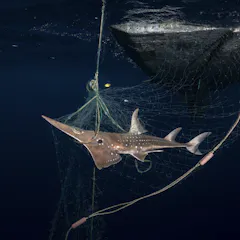
Listen to conservation scientist Hollie Booth explain what happened when fishermen in Indonesia were paid to release sharks caught up in their nets.
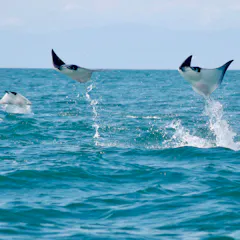
Breaching is one of the most spectacular behaviors among marine animals. A recent review shows that many shark and ray species breach, and identifies the most commonly hypothesized reasons.

The skate is found in deep waters and it’s not clear how fisheries might threaten the species.
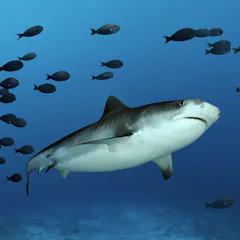
A new initiative is pinpointing areas in the world’s oceans that are key habitats for sharks and their relatives, so that governments can consider protecting these areas.

Your faithful companion sees the world differently than you do, but it’s a mistake to assume dogs only see black, white and shades of grey.

Rhino rays, which are close relative of sharks, are some of the most fascinating – and most threatened – fishes that you’ve never heard of.
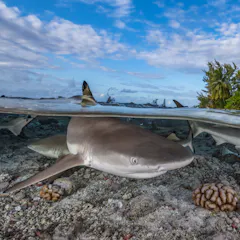
Over 100 shark and ray species were recently added to an international treaty, known as the CITES list, to protect them from the threat of unsustainable and illegal trade.
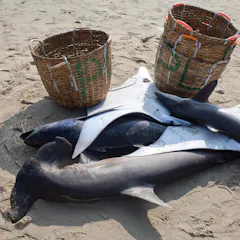
Sharks and rays are traded for their meat, liver and other products. The global demand for these products has increased, and in India, the trade affects livelihoods and culture.
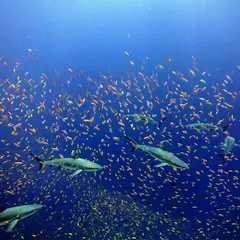
Sharks are much more severely threatened by humans than vice versa. A marine biologist explains how people can help protect sharks and why some strategies are more effective than others.
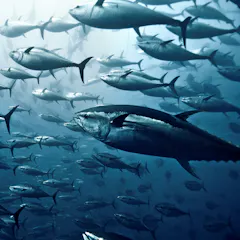
Just about every creature on Earth needs to grab some Zs from time to time. Imagine trying to doze while dodging great whites and killer whales.
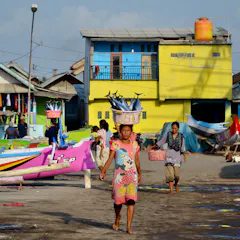
The true cost of marine conservation often falls on vulnerable coastal communities. Can a ‘beneficiary pays’ approach protect both endangered species and the communities dependent on them?

Hard and strong, or bendy and flexible? A cartilaginous skeleton provides advantages in the ocean, but wouldn’t stand up to life on land.
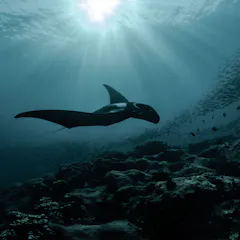
Nearly all species of sharks and rays are captured in fishing operations. But research shows that fishing quotas and closing some areas to fishing can help rebuild threatened populations.

Which species are becoming endangered and which are recovering, according to the IUCN World Conservation Congress?
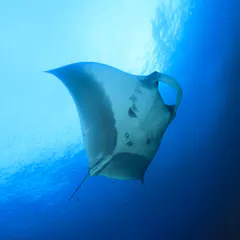
A high seas treaty could help rebuild populations – but time is running out.
Top contributors
-

Faculty Research Associate in Marine Biology, Arizona State University
-
Senior Research Fellow, Conservation Science, University of Oxford; Bangor University
-
Executive Dean of the College of Arts, Sciences & Education and Professor of Biological Sciences, Florida International University
-
Postdoctoral research fellow in Biological Sciences, Simon Fraser University
-
Associated Scientist, Leibniz Institute for the Analysis of Biodiversity Change
-
Principal Lecturer in Wildlife Conservation, Nottingham Trent University
-
Professor, Department of Biological Sciences, Simon Fraser University
-
Research Assistant / MSc Student in Biological Sciences, Simon Fraser University
-
PhD student, Biology, Dalhousie University
-
Professeur Titulaire. École d'optométrie. Expertise en santé oculaire et usage des lentilles cornéennes spécialisées, Université de Montréal
-
Professor of Marine Ecology, University of Southampton
-
Adjunct Associate Professor of Wildlife, Fish, & Conservation Biology, University of California, Davis
-
Associate Professor of Natural Sciences, Trinity College Dublin
-
Assistant lecturer in wildlife biology, Munster Technological University
-
PhD Candidate in Coastal and Marine Resource Management, IPB University