

Academic publishing now shows the same decline that has hit social media and online marketplaces.
Articles on Publish or perish
Displaying all articles

Scientists write papers to share their results – and gain prestige and advance their careers. In this competitive field, selection can favor AI-written papers, citation cartels, paper mills and more.

‘Open science’ is a radical shift from traditional research practices. But it can help research integrity in several ways.

Publications drive university rankings and career progression. But the relentless pressure to publish has contributed to an increase in fraudulent data.

Quantitative indicators fall short of recognising and rewarding the many aspects on which a healthy scholarly ecosystem depends.
Paper mills rely on the desperation of researchers to fuel their business model.

Universities that pay academics to publish their research should do so with caution.
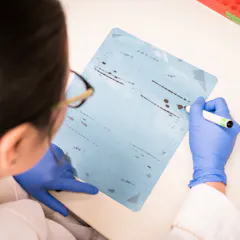
Western and northern blots help scientists identify specific proteins and RNA molecules in experimental samples. But results can be manipulated.

Women are underrepresented in academic science. New research finds the problem is even worse in terms of who authors high-profile journal articles – bad news for women’s career advancement.

The traditional mode of publishing scientific research faces much criticism – primarily for being too slow and sometimes shoddily done. Maybe fewer publications of higher quality is the way forward.

Some water researchers are ignoring the evidence offered by sampling if it doesn’t fit their preconceived notions. But science should always be honest and open.

New studies on the quality of published research shows we could be wasting billions of dollars a year on bad science, to the neglect of good science projects.

Sometimes scientists, the media and the general public inadvertently conspire to oversell science, and that is bad for us all.

Very few academics do a great deal to share their often important and relevant research with the general public. What’s holding them back?

Prime Minister Turnbull has signalled a desire to move away from a ‘publish or perish’ academic culture toward one that prioritises public impact and engagement. It’s a challenge scholars should embrace.
Top contributors
-

Professor of Psychology, University of Washington
-
Ph.D Candidate in Psychology, University of Washington
-
PhD Candidate in Cognitive Neuroscience, The University of Queensland
-
Honorary Research Fellow, Macquarie University
-
Dean of the College of Natural Sciences, Professor of Biochemistry and Molecular Biology, UMass Amherst
-
Researcher, Nelson Mandela University
-
Professor of Southeast Asian Studies, Australian National University
-
Senior lecturer, Nelson Mandela University
-
Postdoctoral research fellow, Monash University
-
Deputy Director, Neuroscience Research Australia
-
Professor of Higher Education, Rhodes University, South Africa, Rhodes University
-
Professor of Methodology and Integrity, Vrije Universiteit Amsterdam
-
Professor at UTS Business School; Centre for Climate Risk and Resilience, University of Technology Sydney
-
Professor of Business and Society, University of Technology Sydney
-
Postdoctoral Fellow, Rhodes University