

You might be tempted to go for a run to control your anger. But that can make things worse. Here’s what the evidence tells us actually works.
Articles on Psychology
Displaying 21 - 40 of 2362 articles

When it comes to transportation, there’s a hidden danger in choosing what feels safer.

We should adapt AI to how extraverts and introverts think.

In his new book, Cree behavioural scientist Louis Busch walks readers through teachings from several prominent Indigenous Knowledge Holders to reveal how suffering can provide both personal insight and communal strength.

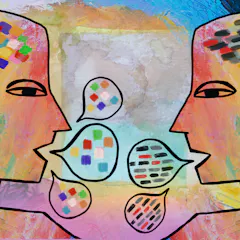
Research on language processing fluency can help us become aware of our psychological tendencies, and how to use them more productively with gen AI chatbots.

Saying ‘sorry’ to someone in authority evokes more guilt and shame in your first language.

More than 50 years on, Stockholm syndrome still isn’t a real diagnosis – and some researchers want the term retired for good.

You might be surprised by how many researchers who went on to make important contributions considered whether animals could have telepathy.

Around 20% of adults procrastinate regularly. Yet a lot of what we hear about this common behaviour is wrong.

Having larger in-person networks appeared to protect young people against developing severe depression symptoms. But large online networks had the opposite effect.

A psychologist explains why the dark humor around Mangione’s case isn’t evidence of nihilism but of what happens when demands for moral seriousness stop feeling credible.
Do you hear ‘psychotherapy’ and imagine lying on a couch, talking about dreams? Here’s where that image comes from – and why it might be time for an update.

True crime’s popularity can be explained by human psychological mechanisms and social needs.

Recent research finds that becoming too psychologically entangled with your followers can make success feel like a trap.

New research shows experiences of adversity are linked with stronger perceptions of injustice – and a greater tendency to believe in conspiracy theories.

Most people are overconfident. There’s an evolutionary reason for this.

A psychologist explains why dark political humor doesn’t prove young people are nihilistic, but rather reveals what happens when moral seriousness no longer feels credible.

The aim isn’t to get rid of difficult feelings, but to find ways of managing them effectively.

Child mental health services are supposed to change lives. So why don’t we measure whether they actually do?

Mindfulness can change how we experience time, making it easier to wait for future rewards without relying on greater willpower.
Top contributors
-

Professor of Psychology, The University of Melbourne
-
Senior Lecturer in Psychology, Leeds Beckett University
-
Professor of Psychology, Edge Hill University
-
Cornelia H. Dudley Professor of Psychology, Knox College
-
Associate Professor in Clinical Psychology and Neuropsychology, Trinity College Dublin
-
Professor of Cognitive Psychology and Director of the Institute for Climate Risk and Response, UNSW
-
Professor of Psychology, Monmouth University
-
Associate Professor, School of Psychology, UNSW
-
Professor of the Psychology of Time, Liverpool John Moores University
-
Associate Professor, Centre for Positive Health Sciences, RCSI University of Medicine and Health Sciences
-
Professor of Consumer Psychology, Anglia Ruskin University
-
Chair of Cognitive Psychology, University of Bristol
-
Professor of Social Psychology, Anglia Ruskin University
-
Professor, Melbourne School of Psychological Sciences, The University of Melbourne
-
Senior Lecturer in the School of Psychology, University of Lincoln