

Receiving visitors while behind bars was a raft of benefits, but people have reported many barriers. It must be made easier to help drive down recidivism rates.
Articles on Prisoner health
Displaying all articles

This is a problem for everyone. Research shows mental health intervention and engagement helps reduce offending among people with serious mental illness who commit offences.
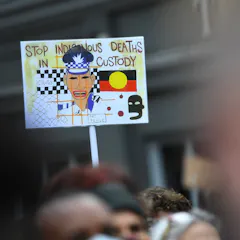
Victorian prisons provide limited access to adequate health care, particularly for Aboriginal and Torres Strait Islander people. Coronial inquests into deaths in custody show something must be done.

Despite the disproportionate numbers of Aboriginal people in prisons, there are near to no cultural protocols in place, and chronic illness is often not addressed.
Prisons are already a hotbed of disease, and without action COVID-19 could have catastrophic consequences behind bars.

Urgently needed treatment for opioid use disorder is often denied to incarcerated people, feeding the crisis in prisons and jails.

Australia needs to think about who gets the flu vaccine first before the next pandemic strikes and supplies run low.
By excluding prisoners from the NDIS, the federal government is discriminating against prisoners with a disability in direct contravention of our international human rights obligations.

The predictable path into prison for Aboriginal people with disabilities is preventable. Here are some solutions.

Many young people in jail suffer fetal alcohol spectrum disorders. Diagnosing these before sentencing will establish the most appropriate path for these vulnerable offenders, which often isn’t jail.

We simply don’t know how many prisoners are released each year, nor their demographic characteristics. As a result, we cannot tailor services that would reduce ex-prisoners’ risks of re-offending.
Top contributors
-

Head, Justice Health Group, Curtin University
-
Professor Emerita of Criminology, UNSW
-
Associate Professor, UNSW
-
University Distinguished Professor of Forensic Behavioural Science & Dean, School of Health Sciences, Swinburne University of Technology
-
NHMRC Emerging Leadership Fellow, The University of Melbourne
-
Associate Lecturer, Philosophy, Adelaide University
-
Professor of Paediatrics and Child Health, University of Sydney
-
Professor of Health Psychology, University of Surrey
-
Doctor of Criminology, Australian Catholic University
-
Lecturer, The University of Melbourne
-
PhD Candidate, University of Technology Sydney
-
Senior Research Fellow and Health Psychologist, UCL
-
Professor, University of Technology Sydney
-
Family Physician, Department of Family Medicine, McMaster University
-
Associate professor, Schulich School of Law, Dalhousie University