
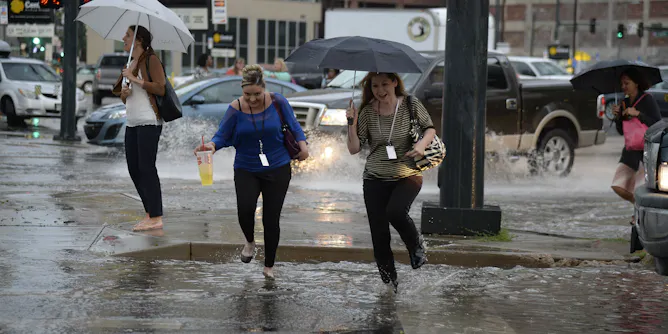
Even though annual precipitation is rising nationally, the landscape is drying out more rapidly. That’s changing the water cycle.
Articles on Precipitation
Displaying 1 - 20 of 40 articles
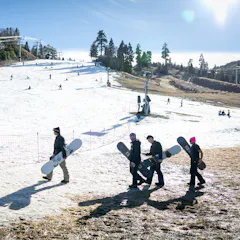
A major atmospheric river brought record precipitation to the Pacific Northwest, yet the snow and water supply still suffered. It’s a growing problem.
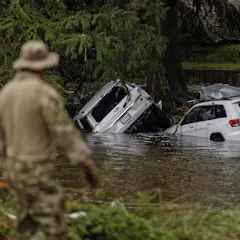
Large parts of the central and eastern U.S. have seen at least 50% more precipitation than normal. An atmospheric scientist explains why and what creates flash flood weather.
Clouds affect Earth’s weather and climate in many ways. New research suggests that the presence of microplastic particles could alter these processes.

In Canada, groundwater is generally abundant and lakes are ubiquitous. But the exchanges between groundwater and lakes are complex and often invisible.

Water is everywhere, but freshwater supplies are limited on many Caribbean islands. Rising demand and climate change are worsening water shortages for the people who live here.
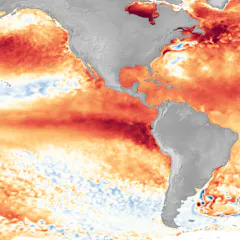
An atmospheric scientist explains how El Niño works, this year’s oddities and why this phenomenon doesn’t last long.

There’s a rule of thumb that rainfall intensity increases by about 7% per degree Celsius as temperatures rise. But the increase is much higher in the mountains, scientists found.

March 2023 was the wettest for 40 years in England and Wales.

Calling the Amazon “the lungs of the world” overlooks the forest’s vital role in the water cycle.

Snowstorms that sweep across the Great Lakes can dump several feet of snow on the other side. A climate scientists explains why.
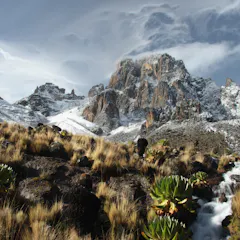
Mountain systems are sensitive to climate change. Loss of snow and ice sets off effects which have wide ranging consequences.
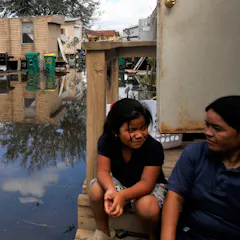
It’s not just mosquitos. Flooding, extreme heat and other climate-related hazards are bringing people into contact with pathogens more often, and affecting people’s ability to fight off disease.

Algorithms can help determine what farm inputs and policies can boost food production.
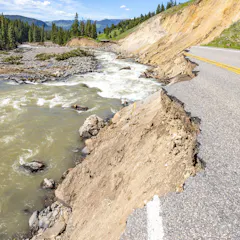
Extreme downpours brought deadly flooding to the Appalachian region, just a few weeks after the destructive Yellowstone River flood.
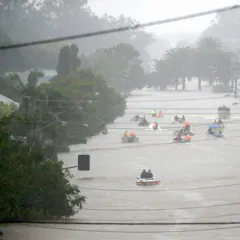
One weather configuration has been responsible for record-breaking downpours in Australia, South America, and South Africa this year.
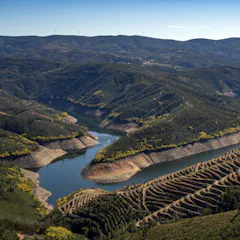
If the world overshoots its climate targets, drought could cause dryland areas to expand by a quarter and encompass half the Earth’s land area, threatening lives and livelihoods.
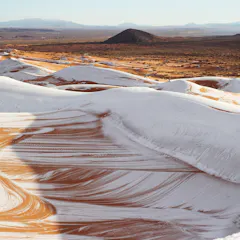
In order for snow to form, two distinctive weather properties are needed: cold temperatures and moist air. The Sahara can tick these boxes.
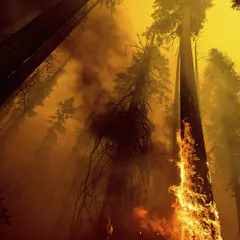
US disasters in 2021 told a tale of two climate extremes. A climate scientist explains why wet areas are getting wetter and dry areas drier.
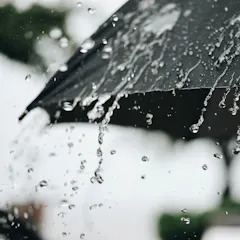
Extended periods of rain are most likely found in locations where mountains are near oceans.
Top contributors
-

Professor of Physical Geography, University of the Witwatersrand
-
Research Scientist in Climate Variability and Hazards, CSIRO
-
Climate Scientist, Australian Bureau of Meteorology
-
Research Scientist, Knowledge Mobilization, Global Insitute for Water Security, Global Water Futures Program, University of Saskatchewan
-
Professor of Atmospheric Science, Colorado State University
-
Associate Professor, Department of Economics, Fordham University, Fordham University
-
Professor of Sociology and Board of Governors Research Chair in Resilience & Sustainability, Mount Royal University
-
Professor of Civil & Environmental Engineering and Earth System Science, University of California, Irvine
-
Postdoctoral Research Associate in Crop and Soil Sciences, Washington State University
-
Associate Professor of Biology, University of Hawaii
-
Assistant Professor of Climate and Space Sciences Engineering, University of Michigan
-
Researcher in Physical Geography, Lund University
-
Ph.D. Candidate in Geography and Environmental Science, University of Hawaii
-
Research Fellow, ARC Centre of Excellence for Weather of the 21st Century, Monash University
-
Postdoctoral Researcher, University of California, Los Angeles