
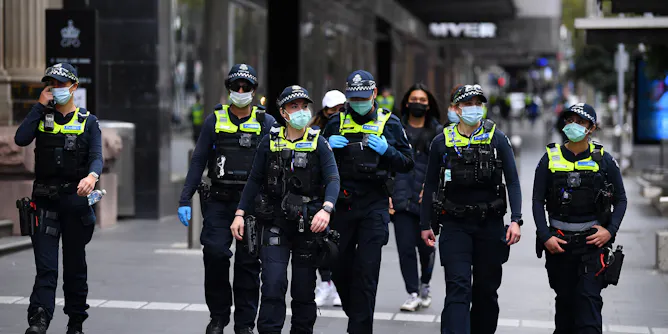
Police don’t have the resources to check vaccine certificates at public venues – and it could also erode public trust in the institution.
Articles on Policing
Displaying 141 - 160 of 376 articles
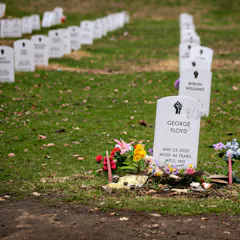
Research found that police officers killed more than 30,000 people from 1980 to 2018 – 17,000 more than official federal data suggests.
FBI statistics recorded a 30% rise in homicides in 2020. A criminologist helps break down what was behind the spike.

Months of bipartisan talks in Congress aimed at reaching consensus over policing reforms have ended with no agreement. Two policing scholars argue that federal efforts are better placed focusing on supporting local measures.
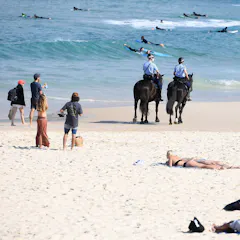
To dob or not to dob? What are our reporting obligations in a pandemic? An ethicist steps you through five questions to ask yourself before you dob (and the same rules apply for kids, too).

If proposed amendments to the law are passed, it will no longer be possible to acquire a firearm licence for self-defence in the country. This has sparked heated debate.
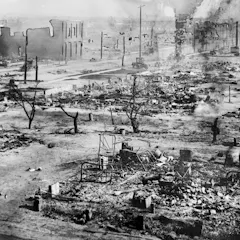
Digging deeply into the nation’s past can help illuminate the racial struggles facing the U.S. today.
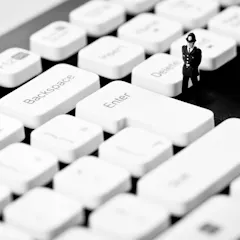
Just three big developers are being paid tens of millions of pounds to supply the majority of these UK systems.
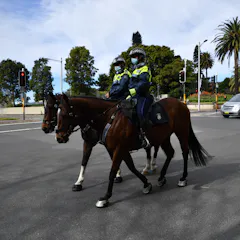
Policing during the pandemic has tended to focus on punitive measures against individuals. A community-focused, public health approach would move away from coercive policing.
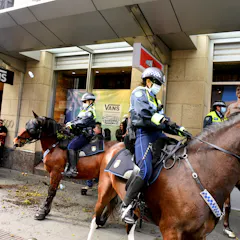
Along with firearms and disease, the horse was a key element in occupying Aboriginal land during the colonial period and controlling the largely convict workforce on the frontier.

Existing racism and implicit bias in Canadian media downplayed the terrorist attack by a white accused while exaggerating and staying silent on the reasons behind a hit-and-run by Muslim teens.

Even famous Supreme Court rulings like Brown v. Board of Education haven’t necessarily pushed US society forward in a linear direction.
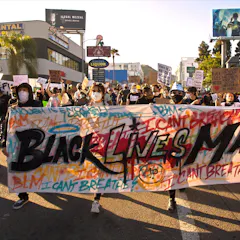
It’s tempting to see the sentencing of Derek Chauvin for the murder of George Floyd as an American phenomenon. But that is to ignore past and present injustice much closer to home.
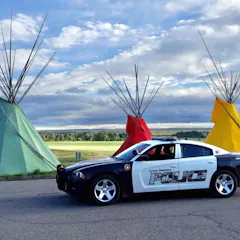
A defendant who is not a Native American claimed tribal police had no power over him, even on tribal land. The Supreme Court disagreed.
Evidence shows that many Black Americans experience police killings of unarmed Black people – even those they do not know – as traumatic events, causing acute physical and emotional distress.
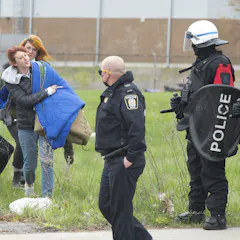
A key component in any planning around encampments is the voice of people with lived experience. It is clear the go-to response of policing is not working.
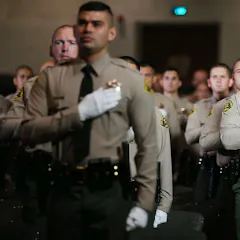
Police are sworn to protect the public, but cadets are still trained for battle – not public service – according to a new study examining all 50 US state police academy curricula.
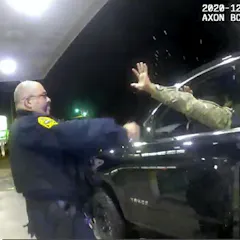
Police officers who kill, injure or violate the rights of citizens are often not held accountable, even in civil court – because in most cases, they can’t be sued for official acts.
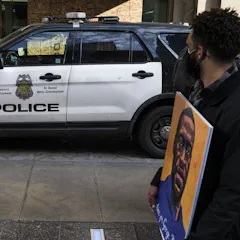
Attempts to reform US police departments fail when they are unable to get community support. Perhaps it is time to take a different tack, argue two criminal justice scholars – one a former cop.

The trial of Derek Chauvin for the murder of George Floyd reveals a broken system of policing. The guilty verdicts should be a starting point for fundamental and meaningful change.
Top contributors
-

Associate Professor in Criminal Justice and Criminology, Bond University
-
Professor of Law, University of Technology Sydney
-
Assistant Professor of Criminal Justice and Criminology, Georgia State University
-
Emeritus Professor in Law and Criminal Justice, Adelaide University
-
Senior Lecturer in Law, UNSW
-
Associate Professor, UNSW
-
Assistant Professor, Augusta University
-
Professor (Practice), Faculty of Business and Economics, Monash University
-
Professor Emerita of Criminology, UNSW
-
PhD Candidate in Social Work and Criminology, UNSW
-
Professor, Sociology, University of Alberta
-
Professor of Criminology, University of Leeds
-
Eleanor Rathbone Chair of Sociology, University of Liverpool
-
Assistant Professor of Criminology and Criminal Justice, University of South Carolina
-
Associate Professor in Law, University of Canterbury