
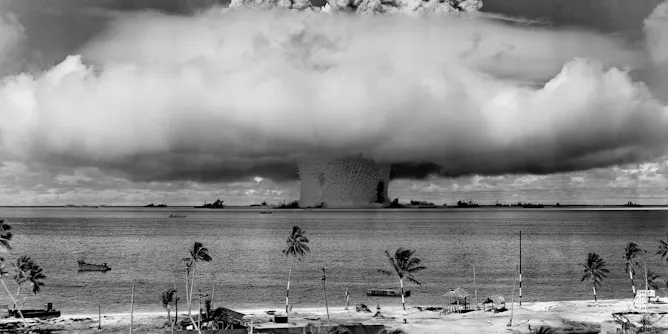
Marine fish could serve as a crucial global emergency food supply in times of crisis, if marine ecosystems were in a healthy state to start with.
Articles on Plankton
Displaying 21 - 40 of 46 articles
Cold-water plankton is being replaced by warm-water species.

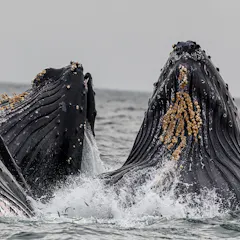
How did whales that feed on tiny prey evolve into the largest creatures on Earth? And why don’t they get even bigger?
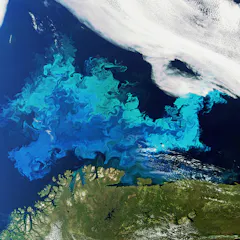
Populations of plankton are in decline. If we push this critical foundation of the marine food chain to extinction, we could cripple ecosystems for millions of years.
Acidic oceans are disrupting a major part of the carbon cycle, slowing how seas absorb carbon from the atmosphere. This could massively speed up the effects of climate change.v
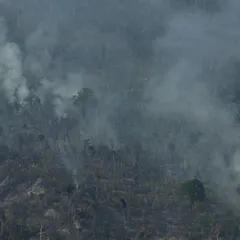
If the Amazon rainforest functions as our planet’s lungs, what do raging wildfires threaten? An atmospheric scientist explains why the fires, though devastating, won’t suffocate life on Earth.
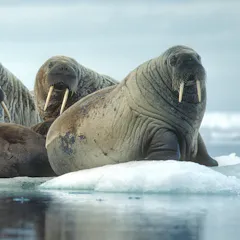
Algae at the bottom of the Arctic food chain relies on sea ice.

Plankton in the world’s oldest and deepest lake are being disrupted by exceptionally warm waters.
Although often separated as two unique subjects in science, geology and biology have been intricately intertwined since life on Earth first evolved billions of years ago.
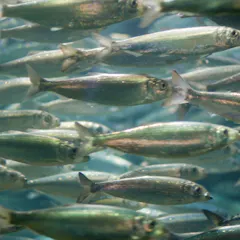
Fish are a key food source for millions of people worldwide. But a recent study finds long-term warming over the next 200 years could starve tiny plankton, with impacts that would ripple up food chains.
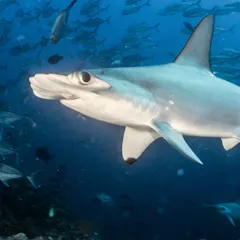
Plankton has a chemical fingerprint that reveals where it came from. Scientists have now used this to track sharks at the opposite end of the food web.

A recent study shows plankton that have adapted to road salt have disrupted circadian rhythms. This finding suggests that environmental pollutants could also affect human circadian clocks.
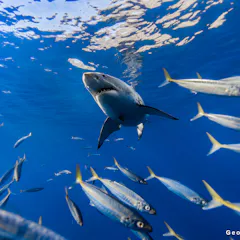
The world’s oceans are home to innumerable life forms, from sponges to sea lions, and scientists have many creative ways of studying them.
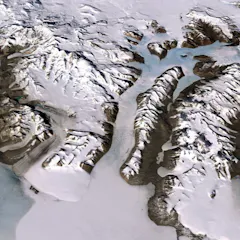
Melting ice from Antartica could feed vast plankton blooms, trapping carbon in the ocean. To understand this complex mechanism, researchers looked at volcanoes deep under glaciers.
They ‘engulf living prey, suck out their innards, poison them, harpoon them, make them explode, and steal and reuse body parts’. And we ignore them at our peril.
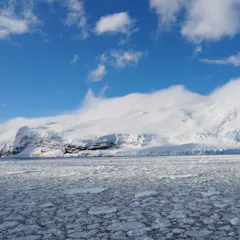
Why spend three months completing a lap of Antarctica (and probably getting seasick along the way)? It’s the only way to get vital clues about the remote Southern Ocean and its influence on the planet.

Most ocean species start out as larvae drifting with currents. Using underwater robots, scientists have found that larvae use swimming motions to affect their course and reach suitable places to grow.
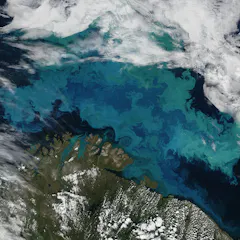
Tiny organisms change ocean acidity to benefit themselves.
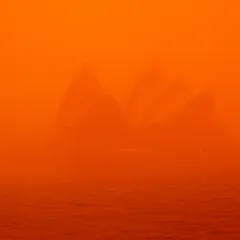
The dust storm that turned Sydney red in 2009 triggered plankton blooms in the Tasman Sea, demonstrating how we might fertilise the ocean to take up more carbon dioxide.
These tiny organisms play a big role in regulating the Earth’s climate.
Top contributors
-

Associate Professor of Marine Conservation, University of Plymouth
-
Assistant Professor of Biological Sciences, Rensselaer Polytechnic Institute
-
Professor Emeritus of Marine, Earth and Atmospheric Sciences, North Carolina State University
-
Research Fellow, School of Earth & Environment, University of Leeds
-
Research Scientist, Queen's University, Ontario
-
Professor of Environmental Change, UCL
-
Professor of Environmental Science and Policy, University of California, Davis
-
Research Fellow in School of Earth and Ocean Sciences, Cardiff University
-
Associate Professor of Marine Ecology, University of Southampton
-
Associate Professor, School of Environmental and Life Sciences , University of Newcastle
-
Researcher, Remote Sensing and Satellite Research Group, Curtin University
-
Professor of Palaeoclimatology, University of Nottingham
-
Chair Professor, Swansea University
-
Professor in Earth Sciences, Nanyang Technological University, Singapore, and Emeritus Professor of Mineral Physics, University of Cambridge
-
Professor of Coastal Oceanography, University of California, Davis