
South Africa’s mathematics achievement trends are unusual. This could point to possible ways to improve results.
Articles on PIRLS
Displaying all articles
Classroom reading clubs can be a space for children to share ideas and build understanding.
There are alternatives to England’s focus on synthetic phonics, which teaches children to decode words by learning the relationship between letters and sounds.
Two researchers independently studied Australian students’ results. These papers both reached the same conclusions: scores on the vast majority of standardised assessments are not in decline.
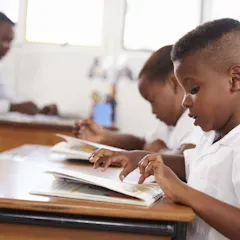
Reading fluency and expanding vocabulary are the bridge from decoding to comprehension. Weaknesses in any of these building blocks will limit a child’s ability to read for meaning.

Girls don’t just outperform boys when it comes to reading skills. They also say they like reading more than their male counterparts.

Political will is key to tackling pupils’ literacy struggles.
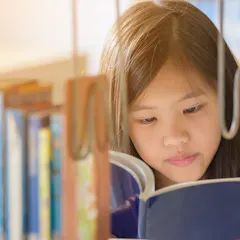
A major international test has found about 80% of students have “more than elementary” skills in reading comprehension. This is the same result Australian students recorded in 2016.
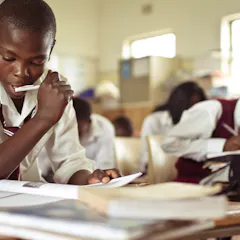
Research shows that grit is a strong predictor of reading achievement. This suggests that socio-emotional skills are important for student achievement, even in high-poverty contexts.
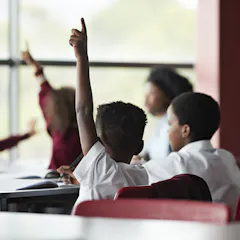
Interventions aimed at improving literacy scores must be targeted at the parts of the system that need it the most.
New insights show that South Africa’s education system is heading in the right direction.
It would be wiser to spend money on policies that allow teachers to teach in ways that nurture children’s sense of belonging and making sure children are not hungry when they are trying to learn.

Amid concerns about Australia’s position in international literacy rankings, parents are an untapped resource for improving literacy.

The year 2017 is finally coming to an end, so here’s a wrap of our coverage for the year, with bonus quiz!
The results of an international study into reading skills offer reason for optimism for Australian students. But tragically, too many children are still being left behind.
Top contributors
-

Senior Research Fellow, The Centre for Independent Studies; Associate Investigator, ARC Centre of Excellence in Cognition and its Disorders, Macquarie University
-
Research Affiliate, Faculty of Health Sciences, University of Sydney
-
Head of the School of Philosophy, Psychology and Language Sciences; Professor of Linguistics, University of Edinburgh
-
Postdoctoral fellow, Stellenbosch University
-
Education economist, Stellenbosch University
-
Senior Lecturer, Nelson Mandela University
-
Professor at Southern Africa Labour and Development Research Unit, University of Cape Town
-
Professor, Griffith Institute for Educational Research, Griffith University, Griffith University
-
Senior Lecturer in Science Education, University of Wollongong
-
Director: Centre for Evaluation and Assessment, University of Pretoria
-
Emeritus Professor, Institute of Education, UCL
-
Senior Research Fellow, Australian Council for Educational Research
-
Visiting Scholar in Education, Manchester Metropolitan University
-
Senior Lecturer in Education, University of New England
-
Senior Lecturer in Assessment and Quality Assurance, University of Pretoria