
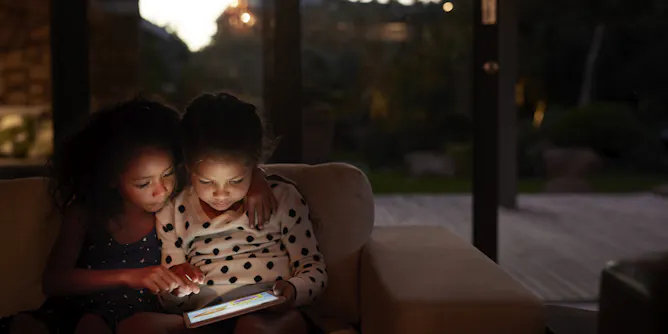
If families embrace reading as fun and routine and teachers work more closely than before with the families of their students, it’s possible that remote learning won’t be a huge obstacle to literacy.
Articles on Phonics
Displaying 21 - 40 of 49 articles

With 52% of 15-year-olds now saying they read only if they have to, experts say a new way of teaching literacy is overdue.
Two literacy scholars share their concerns about growing pressure on educators to emphasize phonics to teach reading. In their view, critiques of other methods often rest on a false premise.

A whole language approach to teaching reading gives kids a whole linguistic picture of how words work. This includes teaching individual letters and sounds, as well as what the words mean in context.
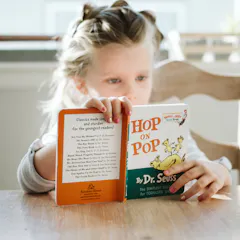
English is a code-based language, with 26 letters to represent 44 speech sounds. Children must first learn to master the code if they want to be successful readers.

Early experiences sharing and developing positive connections, language and communication set the stage for home reading to start children on the path to literacy.

For learners in the early stages of reading, the best way to counteract the loss of literacy skills over the summer is not by forcing study but by boosting play that develops fine motor skills.

It would be wiser to spend money on policies that allow teachers to teach in ways that nurture children’s sense of belonging and making sure children are not hungry when they are trying to learn.
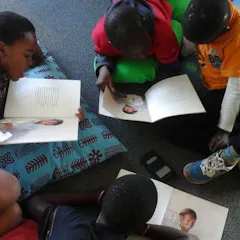
Reading involves more than decoding letter-sound relationships and making meaning from isolated texts.
Children in the early stages of learning to read should be given decodable books to practise and generalise their developing alphabetic skills.

The Victorian opposition has pledged funding for “decodable readers” which focus only on sounds. But kids prefer to read rich texts.
Results from a recent trial of England’s phonics check in South Australia show teachers liked it and students need it.

The results of an international study into reading skills offer reason for optimism for Australian students. But tragically, too many children are still being left behind.
Education Minister Simon Birmingham is right to be concerned about the number of children struggling with literacy - but this test is not the solution.

Many young children can give the false impression that they are learning to read, when in fact they are mostly guessing words from pictures or context. This test will help to identify these students.

Phonics instruction gives children letter-sound knowledge, a skill that is essential for them to read unfamiliar words by themselves.

A focus on phonics may be the cure to Australia’s literacy woes.
Being able to sound out letters in words doesn’t mean you can understand them. There is no clear evidence that a new phonics screening test for children in Year 1 will help improve reading levels.

Phonics programs can be helpful for students with very particular learning needs - but it’s not a one-size-fits-all literacy solution. Here are some things you should be wary of.
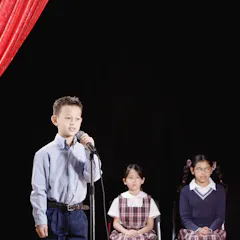
Channel Ten’s newly announced show, The Great Australian Spelling Bee, may seem like a great platform for promoting literacy skills. But it is promoting the memorisation of pointless, low-frequency words rather than anything helpful.
Top contributors
-

Associate Professor in Language, Literacy and TESL, University of Canberra
-
Professor of Cognitive Psychology, School of Education, La Trobe University
-
Professor of Early Childhood and Primary Education, UCL
-
Senior Lecturer in Education, Auckland University of Technology
-
Senior Research Fellow, The Centre for Independent Studies; Associate Investigator, ARC Centre of Excellence in Cognition and its Disorders, Macquarie University
-
Professor of Sociology of Education, UCL
-
Professor, Werklund School of Education, University of Calgary
-
Emeritus Professor of Education, Macquarie University
-
Professor, School of Education, University of Southern Queensland
-
Senior Industry Fellow, School of Education, RMIT University
-
Associate Professor of Early Childhood Education, University of Maryland, Baltimore County
-
Associate Professor, Edith Cowan University
-
Emeritus Professor, Department of Cognitive Science, Macquarie University
-
Senior Lecturer, School of Education, Macquarie University
-
PhD Candidate, Sessional Academic, Edith Cowan University