

Corporations restrict what farmers can do with their own seeds, as well as their farm equipment when it breaks down.
Articles on Patents
Displaying 21 - 40 of 126 articles

The incentives to bring manufacturing back to the US will affect productivity, but in ways that might be surprising.
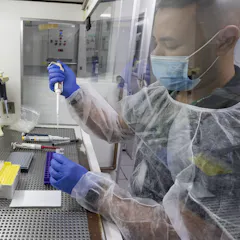
In open-source endowed research positions, professors release all of their intellectual property. Surveys of academics in the U.S. and Canada find most like the idea.

The Medicines Patent Pool was created to promote public health, facilitating generic licensing for patented drugs that treat diseases predominantly affecting low- and middle-income countries.

Although female inventorship has grown over the years, 15 years’ worth of patent outcomes from IP Australia suggests inventing is still a luxury for women.

Waiving patent rights on COVID-19 vaccines and drugs is still crucial to ensure access globally, but the waiver on the table at the June World Trade Organization meeting doesn’t do the job.

The Coalition planned to tax company income from patents at 17% instead of 30%. While it would have lifted the number of patents, there’s little to suggest it would have lifted productivity.

Boosters and vaccinating children mean we’re relying on two pharmaceutical companies to supply Australia’s COVID vaccines. That needs to change.

Drug repurposing can redeem failed treatments and squeeze out new uses from others. But many pharmaceutical companies are hesitant to retool existing drugs without a high return on investment.

The Russian government has essentially legalised intellectual piracy as a response to sanctions.

Just as access to vaccines was vastly more difficult for low-income countries, the same is now true for the virus’ treatments: at potentially great cost to the world.
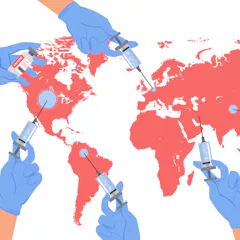
CORBEVAX is anticipated to significantly expand vaccine access to people in low- and middle-income countries.
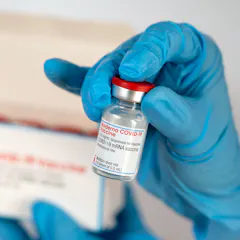
Moderna claims its scientists alone invented the mRNA sequence used to produce its COVID-19 vaccine. The US government, which helped fund the drug, disagrees.
New Zealanders won’t see the full text of the UK free trade agreement until it is signed, meaning it will proceed without open public debate – despite locking in constraints on future governments.

The Federal Court of Australia has made a world-first ruling in favour of granting a patent to an artificial intelligence. But what comes next?

The decision is supported by the government’s policy environment in recent years. This has aimed to increase innovation, and views technology as a way to achieve this.
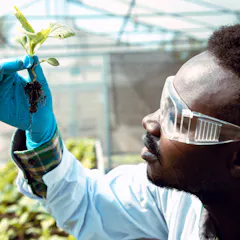
Stronger agricultural R&D systems will enable agriculture to power Africa’s transformation.
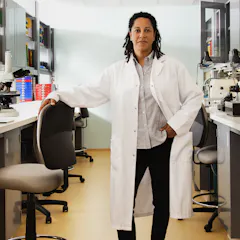
Boosting the number of female inventors isn’t just a matter of fairness. Inventions by men are more likely to ignore women’s needs.
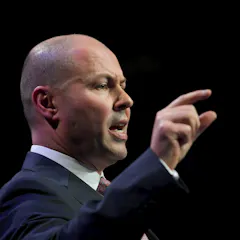
Lowering the tax rates on profits from patents registered in Australia is unlikely to increase local research and development. But it will be a gift for multinationals.

Waiver talks might convince companies to focus on technology transfer and training, and let go of the plan to maximise patent-based revenues.
Top contributors
-

Professor of Intellectual Property Law, City St George's, University of London
-
Associate Professor, School of Law, University of Canberra
-
Professor of Public Health, La Trobe University
-
Assistant Professor of Resource Economics, UMass Amherst
-
Professor of Law, University of Denver
-
Associate Professor of Public Policy and Women's Studies, University of Michigan
-
DST-NRF SARChI Chair in Innovation Studies, Tshwane University of Technology
-
Lecturer, Faculty of Law, Monash University
-
Tshwane University of Technology
-
Professor of Economics, Loughborough University
-
Associate Professor of Law, Fordham University
-
Professor and Distinguished Research Chair, Globalization and Health Equity, L’Université d’Ottawa/University of Ottawa
-
John M. Thompson Chair in Information Technology and Innovation and Professor, Western University
-
Senior Lecturer in Law, City St George's, University of London
-
Director, Melbourne Institute of Applied Economic and Social Research, The University of Melbourne