
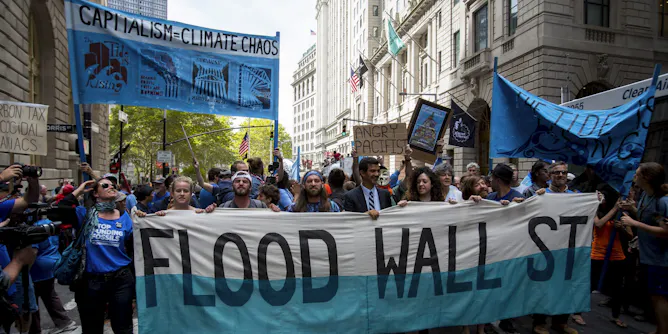
1988 marked the first call for climate action from the scientific community. Nearly 30 years later it’s been a bumpy ride.
Articles on Paris 2015 climate summit
Displaying 141 - 160 of 256 articles
Russia wants recognition for its huge forests and will ensure any climate deal doesn’t harm its economic interests.
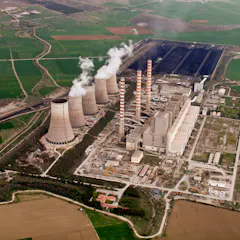
What does the OECD’s decision to limit finance for coal power stations mean for coal producers such as Australia?
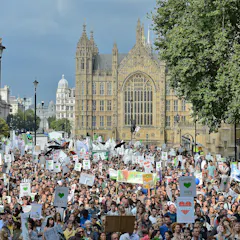
The Paris climate talks will now take place within a state of emergency that is threatening to limit public participation.
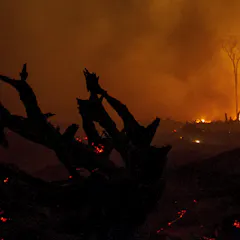
Australia’s leadership on climate finance in developing nations could be an opportunity to improve climate diplomacy.
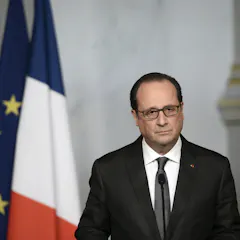
The Paris attacks could inspire international leaders to come together in a global climate deal.
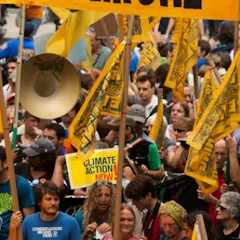
Don’t look to politicians and high finance, it’s pressure from below that will be the driver of change.
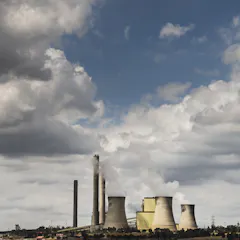
The latest emissions auction closes the gap to Australia’s climate target, but still leaves work to be done.
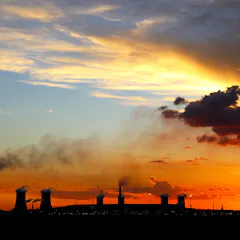
Australia is reportedly blocking a deal to limit coal power finance in developing countries.
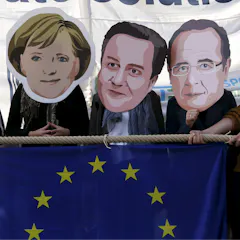
After being quietly ignored at Copenhagen 2009, these talks are a big challenge for the EU.

New Canadian prime minister Justin Trudeau brings a very different face to climate talks in Paris. Will it project its oil extraction tradition or show global leadership on emissions cuts?
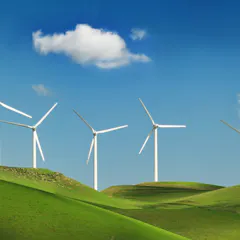
What have businesses put on the table ahead of the Paris climate summit in December?
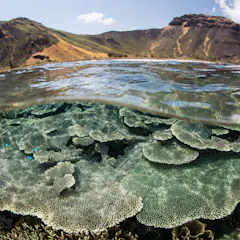
It should not be assumed that policies intended to deal with the climate will simultaneously stop ocean acidification.
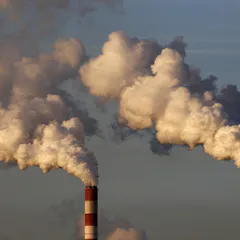
Behind the US pledge to cut carbon in Paris climate talks lies a bigger effort to build a durable system to verify all countries’ emission cuts.
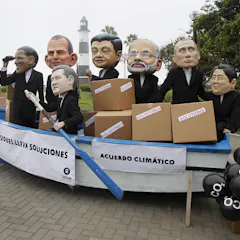
For as long as the United Nations has been holding climate summits, protesters have been gathering outside them to bemoan the rate of progress and call for tougher action.
Probably not, but that might be for the best if it encourages countries to be more ambitious in their commitments, rather than playing it safe to avoid falling foul of legal obligations.
The 2015 “Conference of Parties” in Paris will bring together 195 nations rich and poor as well as the EU to try and hammer out a definitive climate agreement. So how does it all work?
Rich countries are supposed to give $100 billion to developing countries in the upcoming Paris climate talks to deal with climate change. How much has been committed and how will this work?

The United Nations is promoting a website to measure, reduce and offset your personal carbon emissions. But will this fix climate change?
Current climate pledges will see the world warm more than 2C. To avoid dangerous climate change countries will need to at least double their efforts.
Top contributors
-

Senior Research Fellow and Associate Professor, Melbourne Climate Futures initiative, The University of Melbourne
-
Professor of Public Ethics, Charles Sturt University
-
Research Fellow, Melbourne Sustainable Society Institute, The University of Melbourne
-
Postdoctoral Research Associate in Existential Risk, University of Cambridge
-
Professor of International Relations, The University of Queensland
-
Honorary Fellow, The University of Melbourne
-
Honorary Associate Professor, The Crawford School of Public Policy, Australian National University
-
Professor, Crawford School of Public Policy and Director, Centre for Climate and Energy Policy, Australian National University
-
Chief Research Scientist, CSIRO Environment; Executive Director, Global Carbon Project, CSIRO
-
Associate Professor, Adelaide Law School, Adelaide University
-
A/Prof., School of Earth Sciences, The University of Melbourne
-
Former Visiting Fellow, SPRU, University of Sussex Business School, University of Sussex
-
A.J. Meyer Professor of Energy and Economic Development, Harvard Kennedy School
-
Academic position - Research Associate at the Centre for Resources, Energy and Environmental Law, The University of Melbourne
-
Associate Professor, The University of Western Australia