

New research shows that we’ll have to remove carbon from the atmosphere for any chance of keeping warming below 2C.
Articles on Paris 2015 climate summit
Displaying 201 - 220 of 256 articles
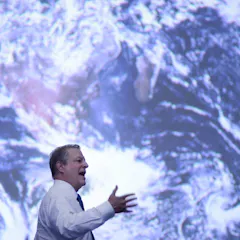
The reality of climate policy is it’s often provincial governments or city councils who are the most ambitious, especially where national governments leave a policy void.
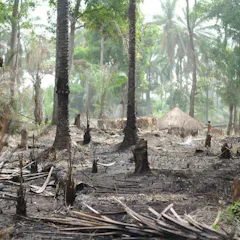
Africa needs to step up the protection of its tropical forests.
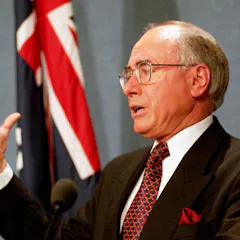
Australia’s government boasts of being one of the few nations to hit its Kyoto emissions target. But is it any wonder, when the Howard government successfully lobbied to make it almost unmissably easy?
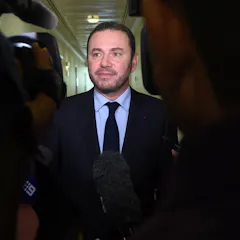
The French Ambassador to Australia Christophe Lecourtier sits down with Michelle Grattan to talk about the 2015 Paris climate conference, Australia’s role in tackling climate change and much more.
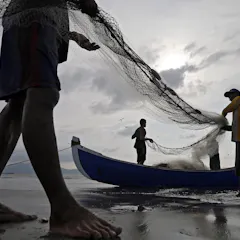
Failing to stick to the world’s agreed global warming limit of 2C won’t just affect the atmosphere - it will play havoc with the oceans too, potentially ruining ecosystems on which much of humanity depends.
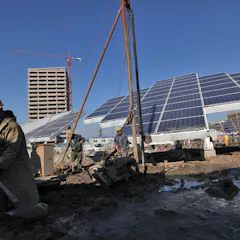
China’s formal climate target shows that the world’s largest greenhouse emitter is determined to green its economy on an unprecedented scale - and that it can bring the rest of the world along for the ride.
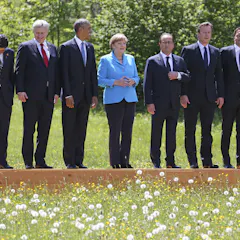
The world needs an alliance of leading well-being economies, a WE7, to lead it in the 21st century. It would be the first step towards a global network committed to a sustainable future for the planet.

Australia can reduce its greenhouse gas emissions by 50% below 2005 levels by 2030, according to analysis by ClimateWorks.

For the first time, a court has ordered a government to strengthen its climate targets. It’s a watershed, not just for the Netherlands but potentially for countries such as Australia whose targets have been criticised.
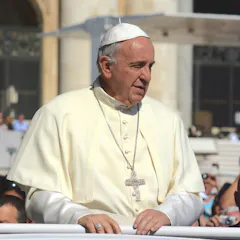
The immediate importance of the Pope Francis’ encyclical comes from its potential to influence world leaders and galvanise the developing world ahead of the Paris Climate Conference this year.
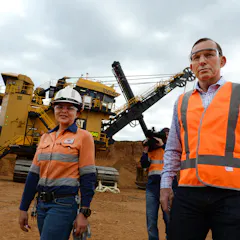
International and domestic forces appear to be conspiring to significantly ratchet up the pressure on Prime Minster Tony Abbott’s climate policy.
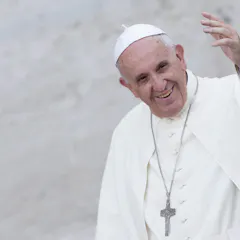
The long-awaited papal encyclical on the environment could have a significant influence on conservative politics around the world.
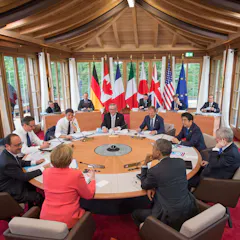
Advocates of climate action have been saying it for years - we need to wean ourselves off fossil fuels completely. And now, the leaders of the world’s richest countries have started saying the same.
The mid year Bonn negotiations for the proposed new global agreement to tackle climate change have just concluded. They will be finalised at the end of the year in Paris. What progress is being made? What are the challenging issues that may end up being a focus of negotiations in Paris? What does the roadmap from here look like?
The G7 is just the first in a series of international gatherings that will define climate policy for years to come.
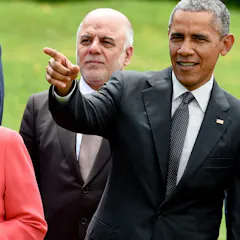
G7 leaders have pledged to help end the world’s fossil fuel use by the end of the century. It’s a laudable aim, but decarbonisation can and should be done by the middle, not the end, of this century.
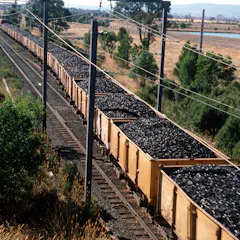
Australia’s grilling by other major nations at this week’s climate talks in Bonn show that it still has serious questions to answer over the scope of its greenhouse emissions-reduction targets.
Cutting soot emissions may be fashionable but it won’t stabilise global temperatures
Why we should look at emissions based on consumption rather than geography.
Top contributors
-

Senior Research Fellow and Associate Professor, Melbourne Climate Futures initiative, The University of Melbourne
-
Professor of Public Ethics, Charles Sturt University
-
Research Fellow, Melbourne Sustainable Society Institute, The University of Melbourne
-
Postdoctoral Research Associate in Existential Risk, University of Cambridge
-
Professor of International Relations, The University of Queensland
-
Honorary Fellow, The University of Melbourne
-
Honorary Associate Professor, The Crawford School of Public Policy, Australian National University
-
Professor, Crawford School of Public Policy and Director, Centre for Climate and Energy Policy, Australian National University
-
Chief Research Scientist, CSIRO Environment; Executive Director, Global Carbon Project, CSIRO
-
Associate Professor, Adelaide Law School, Adelaide University
-
A/Prof., School of Earth Sciences, The University of Melbourne
-
Former Visiting Fellow, SPRU, University of Sussex Business School, University of Sussex, University of Staffordshire
-
A.J. Meyer Professor of Energy and Economic Development, Harvard Kennedy School
-
Academic position - Research Associate at the Centre for Resources, Energy and Environmental Law, The University of Melbourne
-
Associate Professor, The University of Western Australia