
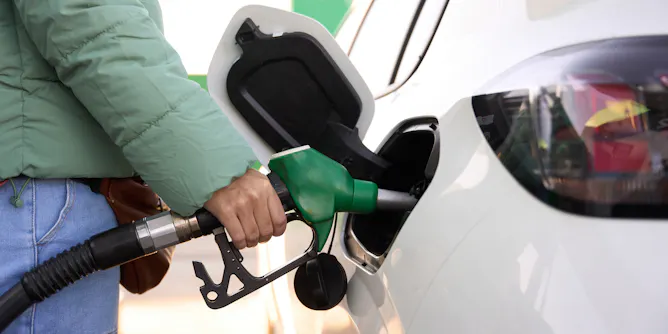
Starting yesterday, Australians are now paying 16 cents more for each litre of petrol they buy.
Articles on Panic buying
Displaying 1 - 20 of 41 articles
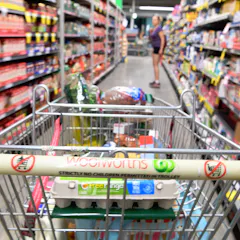
While stocking up on petrol or groceries ‘just in case’ feels sensible, it can quickly lead to shortages. But our individual choices can collectively help too.
Mass panic buying creates new problems for everyone that otherwise wouldn’t exist. To get people to stop, we need to give them a smarter message.

In a competitive market, careful planning and research will increase the chance of you buying a property you want and can afford.
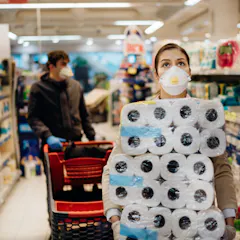
Understanding the traits of different customer groups can help shoppers and businesses serve their communities more ethically and effectively, especially in times of crisis.

Stocking up responsibly could mean you are prepared for emergencies, save money – and help keep supply chains running.

Online rage towards white communities and privileged classes can be read as fatigue with the postcolonial state.
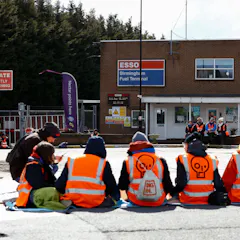
Fragile supply chains can handle protests better than massive extra demand.

In 2020 and 2021 empty supermarket shelves were due to spikes in demand. Now it’s a supply-side issue. The solutions, though, are substantially the same.

We’ve seen panic buying, the rise of the “homebody economy” and a strong shift towards contactless shopping. So what now?

Food supply chains had already taken a serious hit by panic-purchasing during the COVID-19 pandemic. The B.C. floods remind us how effective supply chain management planning can help avert crises.
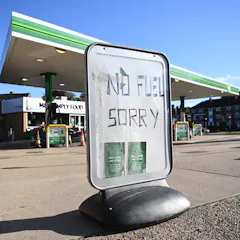
As continued panic buying will only perpetuate any fuel shortages, it’s important to think about what can be done to curb it.
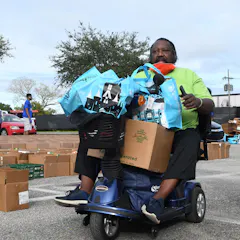
While long lines and food shortages are frustrating for most consumers, they can be physically and emotionally grueling for people with disabilities.
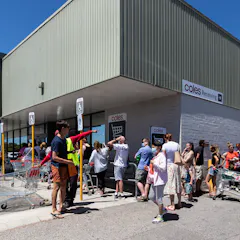
Another local lockdown, another outbreak of shoppers stockpiling. Fortunately supply chains are now prepared.

During the early stages of the pandemic, people adapted to changing situations by making new and different choices. But how did they make these decisions? Motivation theory can explain the process.

The pandemic has put a spotlight on a once little-discussed disorder – hoarding. But hoarding disorder is not what you might think.

Transparency should be the default position of governments – unless fear itself is the greatest risk.
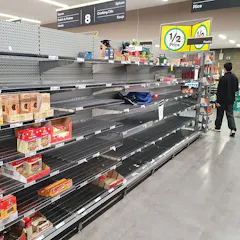
Irrational behaviour during difficult circumstances is rooted in deeper cognitive and evolutionary psychological mechanisms. Many reflect what are called emergency decision and purchasing contexts.

New data from the ABS shows how people adjusted their consumption patterns and behaviours during the early COVID-19 restrictions — and how some lifestyle changes have remained since then.
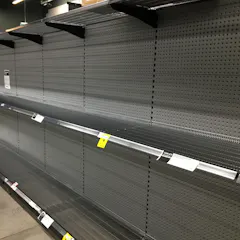
Melbourne’s return to stage 3 restrictions has precipitated another round of grocery stockpiling. But supermarket shelves won’t be empty as long as last time.
Top contributors
-

Associate Dean, School of Business and Law, Edith Cowan University
-
Adjunct assistant professor, Education, Queen's University, Ontario
-
PhD Candidate, University of Canberra
-
Professor of Marketing and Consumer Behaviour, Queensland University of Technology
-
Senior Lecturer, Queensland University of Technology
-
PhD Student in BioSciences, The University of Melbourne
-
Assistant Professor of Organisational Behaviour, INSEAD
-
Associate Head of School (Research), UniSQ School of Business, University of Southern Queensland
-
Associate Professor, The University of Melbourne
-
Assistant Professor, Beedie School of Business, Department of Technology & Operations Management, Simon Fraser University
-
Research Fellow, BehaviourWorks Australia, Monash Sustainable Development Institute, Monash University
-
Director, BehaviourWorks, Monash Sustainable Development Institute, Monash University
-
Senior Lecturer, School of Engineering and Built Environment, Griffith University, Griffith University
-
Researcher, UQ Critical Thinking Project, The University of Queensland
-
Lecturer in Law, Swinburne University of Technology