
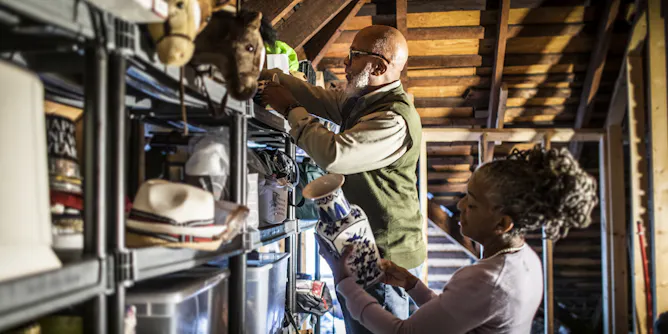
Assessing how well items align with your core beliefs may make it easier to let them go.
Articles on Hoarding
Displaying all articles

Hoarding can start in childhood with no trigger, or later in life after life events such as relationship changes.

Addressing the emotional and behavioural drivers of hoarding through therapy is crucial. But sometimes, a harm-avoidance approach is best.
When we’re surrounded by distractions, our brains essentially become battlegrounds for attention. Everything competes for our focus.

Running out of disk space and it’s making you anxious?

Our recent study found that as many as one in five people with ADHD could have significant hoarding symptoms.

Food supply chains had already taken a serious hit by panic-purchasing during the COVID-19 pandemic. The B.C. floods remind us how effective supply chain management planning can help avert crises.

Have you ever bought an item and then just not gotten around to using it because the time never felt right? New studies suggest an explanation for what researchers call nonconsumption.

Physical hoarding has been studied for decades - but now, new forms of digital hoarding are emerging.

During the early stages of the pandemic, people adapted to changing situations by making new and different choices. But how did they make these decisions? Motivation theory can explain the process.

The pandemic has put a spotlight on a once little-discussed disorder – hoarding. But hoarding disorder is not what you might think.

The 3M face mask dustup between the U.S. and Canada, although quickly resolved, starkly illustrated that Canada must find compromises with its southern neighbour about the trade of COVID-19 products.

Bulk buying disrupts the balance of the supply chain. Here’s how supply chains combat hoarding of products like toilet paper.
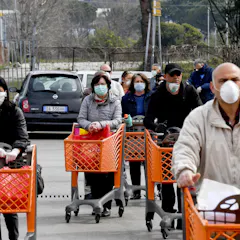
Psychological research suggests several ways in which socially-responsible behaviour might be encouraged.
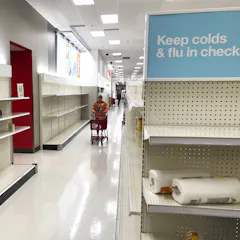
Faced with uncertain and anxious times, brains send out instructions to start stockpiling supplies – whether you’re a person facing a pandemic, or a rodent prepping for a long winter.

Behavioural scientists explain why people react badly to paternalistic messaging from politicians. If you treat people like children and tell them to stop doing something, it has the opposite effect.

Apart from their functional purpose, products can also impact how we feel, both about ourselves and our situation.

The new coronavirus outbreak has prompted panic buying in the US and around the world, even in products that are abundant.
Top contributors
-

Professor in Psychology, Macquarie University
-
Director, BehaviourWorks, Monash Sustainable Development Institute, Monash University
-
Professor in Psychology, UNSW
-
Associate Professor in Psychology, and Director of the Hoarding Research Group, Northumbria University, Newcastle
-
Professor, Urban Economics, Université du Québec à Montréal (UQAM)
-
Senior lecturer in Psychology, Keele University
-
Associate Professor in Psychology and Mental Health, Anglia Ruskin University
-
Associate Professor of Psychology, Australian Catholic University
-
Director of Health Programs, BehaviourWorks Australia; Lead, Monash-McMaster Social Systems Evidence Collaboration, Monash Sustainable Development Institute, Monash University
-
Professor, Operations and Supply Chain Management, University of Calgary
-
Lecturer, Information Systems, University of Southern Queensland
-
Assistant Professor, Beedie School of Business, Department of Technology & Operations Management, Simon Fraser University
-
Adjunct assistant professor, Education, Queen's University, Ontario
-
Professor of Psychology, University of Michigan
-
Senior Lecturer in Psychology, De Montfort University