
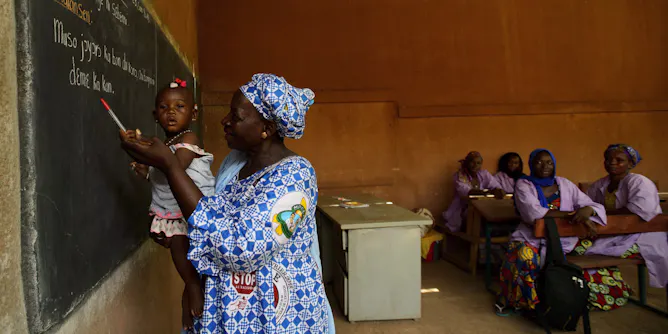
COVID-19 has presented an opportunity to increase gender equality both in Canada and worldwide. Rebuilding with women at the forefront will help communities succeed post-pandemic.
Articles on Pandemic response
Displaying 21 - 35 of 35 articles

Nine months into the pandemic, Indonesia has seen serious threats to civil liberties, involving not only privacy but also freedom of expression and of the press in the digital realm.
US president-elect Joe Biden is taking expert advice on how to tackle the US coronavirus crisis. But is that enough?
The state government has enlisted a US software company to deploy a data management system that will speed up contact tracing. But security could be a hitch.

Women are increasingly taking more visible senior roles in leadership. This reflects their ability to effectively manage difficult situations, as demonstrated by Chrystia Freeland and Kamala Harris.
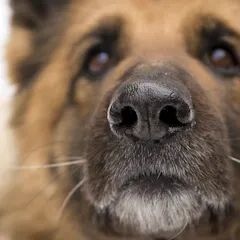
We’re working with professional trainers in South Australia, Victoria and New South Wales to train dogs to sniff out COVID-19. They could be highly valuable in managing the spread of infection.

Work in the sexual services industry has been disrupted by the coronavirus pandemic and workers have been left without access to government support.
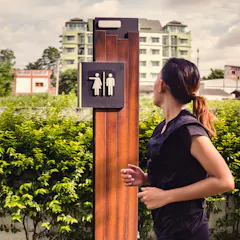
Public washrooms are an essential service and the people who maintain them are essential workers. But what happens when a pandemic closes public bathrooms and a civil rights protest breaks out?
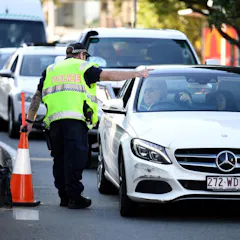
Australia’s island identity and attitude to border security was forged from handling pandemics since the time of federation. Here’s what we’ve learned along the way.
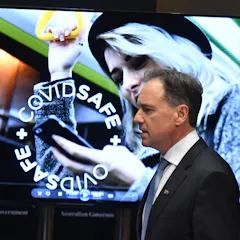
A critical problem with the bill is it allows the federal government to collect much more personal data from COVIDSafe users than is necessary for contact tracing.
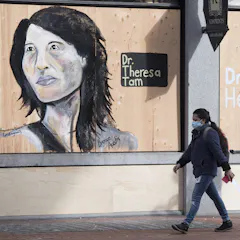
Politicians and public health officials appeal to our sense of fairness in requesting the public’s co-operation in controlling the pandemic. But COVID-19 doesn’t affect everyone equally.
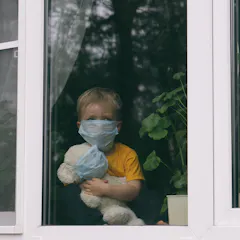
New Zealanders are preparing to stay at home for four weeks to stop the spread of COVID-19. Under existing laws, people who flout lockdown rules could face fines or six months in jail.
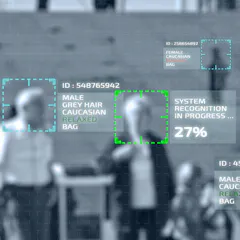
Recently, police forces have come under criticism for their engagement of facial recognition technologies. But pandemic response plans may increasingly incorporate surveillance.

In an age of social media and the propensity for misinformation to spread like wildfire, organizations and governments should consider social media strategies in pandemic response planning.
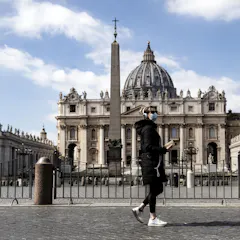
From China and South Korea to Italy and the US, different countries are taking very different approaches to COVID-19 – with varying degrees of success.
Top contributors
-

125th Anniversary Chair and Professor of Politics and Public Policy at the University of Birmingham, University of Sheffield
-
Associate Principal Research Fellow, Burnet Institute
-
Professor of Law, University of Waikato
-
PhD Candidate, Department of Sociology, University of Guelph
-
PhD student, Psychology, Memorial University of Newfoundland
-
Senior Advisor to the Dean of the Faculty of Arts + Labour Management Relations, Toronto Metropolitan University
-
Associate Professor, Paediatrics, Griffith University
-
Associate Professor, School of Animal and Veterinary Science, Adelaide University
-
Professor of Public Health, University of Otago
-
Associate Dean for Research and Professor of Health Policy and Management, Texas A&M University
-
Professor and Dean of the Faculty of Health Sciences, Simon Fraser University
-
Scientia Professor of Economics, UNSW
-
Professor, Political Science, University of British Columbia
-
Adjunct Associate Professor, Menzies Centre for Health Policy and Economics, University of Sydney
-
Associate Professor, Faculty of Law & Justice; Lead, UNSW Public Interest Law & Tech Initiative, UNSW