

This could mark the start of a major arms race in space, which would threaten all of us on Earth.
Articles on Outer Space Treaty
Displaying 1 - 20 of 40 articles

Historical events hold lessons about collaboration and competition in space that could inform how experts plan for the discovery of life beyond Earth.
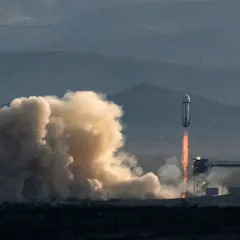
Commercial operators are launching more rockets and carrying more passengers than ever before. But international space law was written in the 1960s.
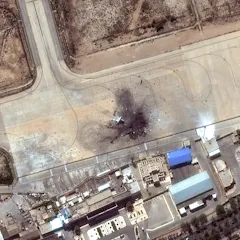
A new treaty on military space operations is highly unlikely, leaving private companies and militaries to define the boundaries of acceptable conduct in war.
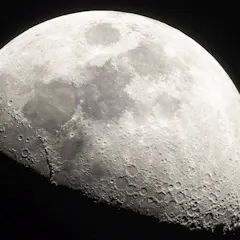
Today, there aren’t just two countries competing to get to the Moon. More countries have space programs, and private industry plays a larger role.
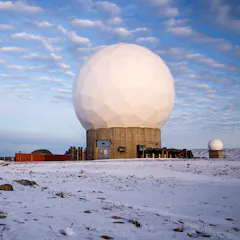
Greenland is central to US Space Force strategies for orbital dominance. Laws and treaties designed to maintain the peace in space are looking increasingly outdated.

Nuclear reactors in space may sound like something out of science fiction, but they are likely to prove important for powering long-term space missions.

As humanity moves closer to extracting and using space resources, the need for a cohesive and responsible global governance system has never been greater.
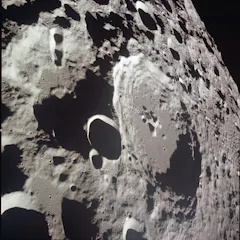
More people will be going to the Moon in coming years, and the way current legal frameworks are written could lead to conflict.

Space isn’t lawless, but the agreements governing it don’t cover everything nations will have to grapple with as they develop their space programs.

Nations will need to tread carefully on the Moon in order to avoid conflict.
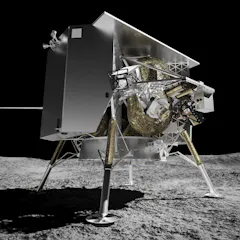
Sending human ashes and personal mementoes to the Moon is now possible, but it opens up a maze of legal and ethical conundrums.

Japan’s space agency is landing its first lunar probe this week. This makes the Moon an increasingly busy target for spacefaring nations – with conflicting political stances among them.
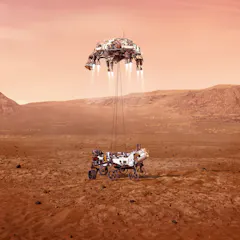
Climate change and the nuclear threat are raising concerns about our planet’s future ability to support human life. If we launch a species survival mission, who should go?

A US-led coalition and China are both planning to establish bases on the Moon. How the two nations will navigate actions on the Moon and how other countries will be involved is still unclear.
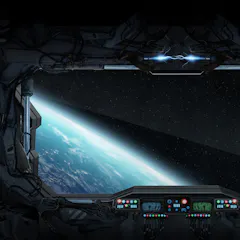
Our reliance on space infrastructure means that conflict in space would have global catastrophic consequences. But a recent declaration by the United States provides hope.
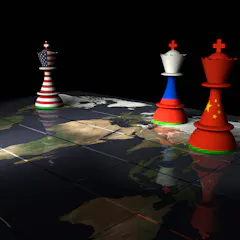
In the past 10 years, international alliances on Earth have begun to expand into space. Nations with similar interests collaborate with one another while competing with other space blocs.
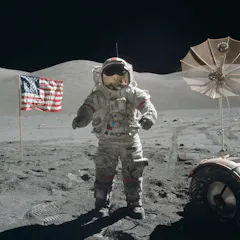
Several current programs aim at sending humans back to the Moon. What would be the purpose, and what are the real prospects?
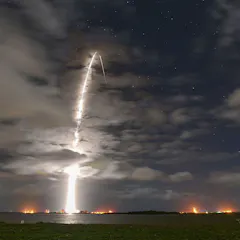
A change of government in the USA means less risk of ‘space war’ and more hope for peaceful cooperation.
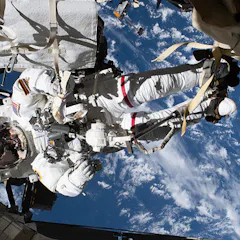
NASA’s new Artemis Accords will clearly test international treaties governing the extraction of resources and bans on territorial claims.
Top contributors
-

Professor of Air and Space Law, University of Mississippi
-
Senior Lecturer in Law, University of Waikato
-
Emeritus Professor of International Law, Western Sydney University
-
Professor, Adelaide University
-
Lecturer in space and military law and strategy, UNSW
-
Professor of Space Law, University of Nebraska-Lincoln
-
Researcher, Air and Space Law, McGill University; Bond University
-
Postdoctoral research associate, University of Oxford
-
Space Plasma Physicist, Imperial College London
-
Assistant Professor and Deputy Director of the International Institute of Air and Space Law, Leiden University
-
Andrew Dempster is a Friend of The Conversation.
Director, Australian Centre for Space Engineering Research; Professor, School of Electrical Engineering and Telecommunications, UNSW
-
Podcast host, The Conversation
-
Royal Society University Research Fellow / Reader, School of Earth and Environmental Sciences, University of Manchester
-
Professor of Law, University of Kent
-
Reader in Fine Art, University of Kent
