
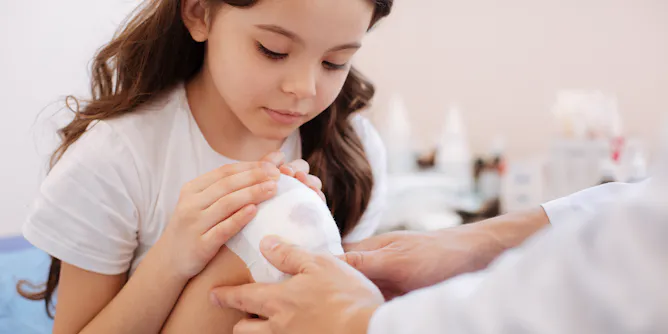
The body tries to plug a wound quickly to stop germs getting in through broken skin and making you sick. But behind the scenes, your blood is working hard to repair a wound.
Articles on Organs
Displaying 21 - 36 of 36 articles

One of the waste products that your kidneys put into your urine is a chemical called urobilin, and it is yellow.

The idea of human-animal hybrids can raise a lot of questions and it’s easy to feel they are “unnatural” because they violate the boundaries between species.

Our body is able to regulate its temperature very effectively, but heat waves can damage certain organs if we are not careful…
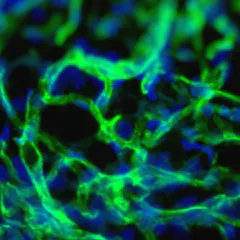
Small wounds can usually heal by themselves, but larger wounds can be a problem. With a little help from a seaweed we can help the body regenerate new blood vessels.
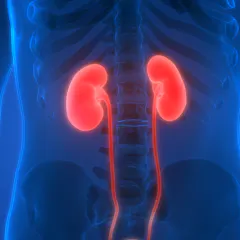
When my kidneys stopped working properly, my dad gave me one of his kidneys. Thanks, Dad.
Religious and cultural beliefs play a role in the country’s organ donor shortages. But these factors alone grossly oversimplifies the issue.
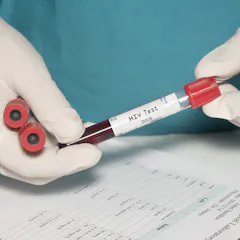
A liver transplant from an HIV-positive living donor to an HIV-negative recipient is possible, but there are still gaps in our knowledge.
I joined a Facebook group about organ donation. Within two days an Indian man offered to sell me his kidney.
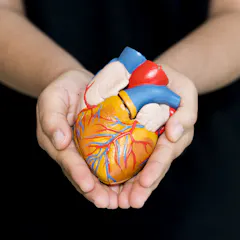
To encourage more people to donate, we need to figure out how location has affected their decision.
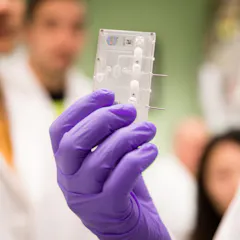
Researchers who’ve created a kidney-on-a-chip explain why these kinds of devices are an improvement over traditional ways to test new drugs.
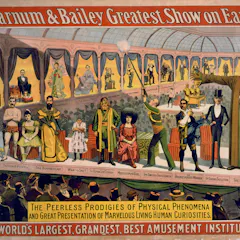
Most people don’t know if they have a hidden extra organ. But they’re surprisingly common and often harmless.
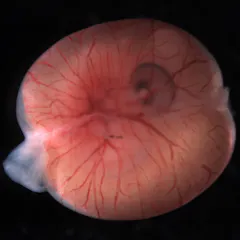
Taking the placenta as a case study, researchers are able to piece together how new organs evolve, by repurposing old tissues and using them to do new jobs.
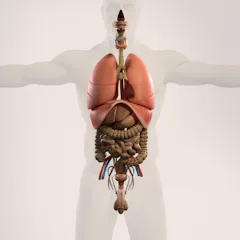
Hormones may not be the only thing that determines how your organs act.
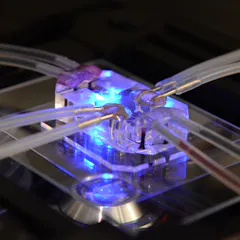
A so-called “organ-on-chip” device could speed up the way drugs are developed. And it’s just been named the London Design Museum’s design of the year.
“Mini brains” with separate working regions have been grown using stem cells in the lab for the first time. They have similarities to an embryo in the womb up to nine weeks. Under the right conditions…
Top contributors
-

Professor of Anatomy, Lancaster University
-
University of Washington
-
Senior Teaching Fellow, University of Warwick
-
Founding Director of the Wyss Institute, Harvard University
-
Senior Scientist and Deputy Scientific Director, IMBA
-
Associate Professor of Pharmaceutics, University of Washington
-
Lecturer, Macquarie University
-
Assistant professor, bioengineering, University of Pennsylvania
-
Research Assistant Professor of Pharmacy, University of Washington
-
Marie Curie Postdoctoral Fellow, IMBA
-
Postdoctoral research associate, The Gurdon Institute, University of Cambridge
-
Emeritus Professor at the MRC Centre for Regenerative Medicine, University of Edinburgh
-
Head: Cell Biology, Centre for HIV and STIs, National Institute for Communicable Diseases
-
Senior Research Assistant, WISERD, University of South Wales
-
Adjunct Associate Professor, Anatomy, UNSW