

South Africa runs a single waiting list for all transplant recipients, whether from the private or public sector.
Articles on Organ donation
Displaying 1 - 20 of 83 articles

Frontotemporal dementia accounts for around one in 20 dementia cases.

Everything you need to know for a cultural week ahead.
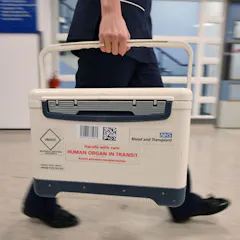
England’s opt-out organ donation system aimed to increase the number of donations. But new research reveals the policy has instead led to confusion, complications and a drop in donation rates.
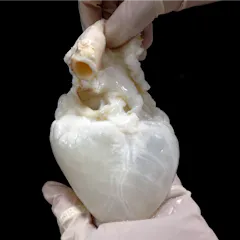
Scientist Doris Taylor explains how she and her team are creating bioengineered human hearts in their lab with the goal of one day eliminating the need for heart transplants.

The short answer: It’s complicated – and depends, in part, where you live.
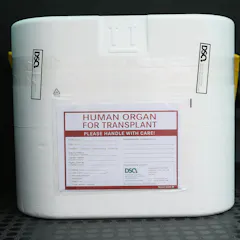
Demand for human organs has surpassed supply. This is leading to serious problems including a flourishing black market for organ trafficking.
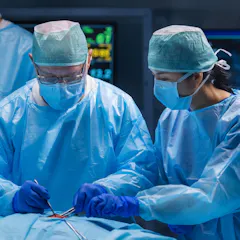
Every extra organ available for donation is potentially lifesaving. And it can be done safely and ethically.

A scholar who has studied imprisonment explains why the promise of sentence reductions in return for organ donation raises ethical issues about whether inmates can ever consent freely.
Contrary to what we may think, changing people’s default status from non-donor to donor cannot significantly increase organ donation rates — as long as the family is involved in the decision.
No, it’s not like donating a kidney. But it is still a gift.
China’s industrial-scale organ trafficking practice has been executing prisoners of conscience and using their organs for transplantation for decades. This is known as forced organ harvesting.
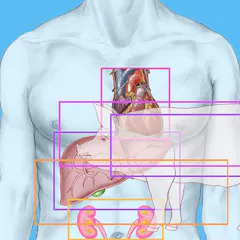
Recent successes putting genetically modified pig organs into people have brought xenotransplantation back into the spotlight.
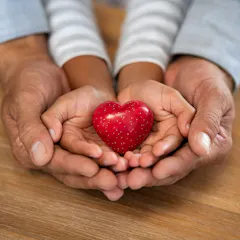
One tissue donation can save or improve the lives of more than 65 people. So it’s important to unpack and address the reasons South Africans are reluctant to register as tissue and organ donors.
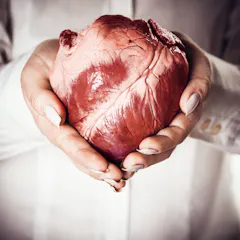
Printing organs could reduce the need for human donor organs. And 3D printed organs using a patient’s own cells would increase successful organ transplants by reducing the risk of rejection.
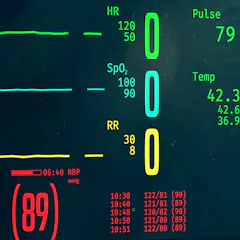
Is a person dead when their heart stops beating? It turns out that the classic “flatline” of death is not so straightforward.
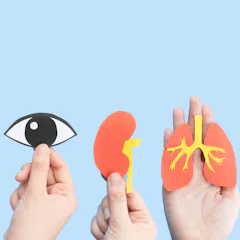
Deemed consent organ donation means that everyone is assumed to be an organ donor unless they opt out, but assuming consent raises some ethical issues.
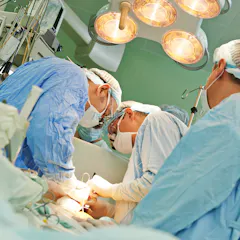
Thousands of Canadians are on waiting lists for life-saving organ transplants. An opt-out organ donor system, like the one Nova Scotia is implementing, could reduce avoidable deaths and suffering.
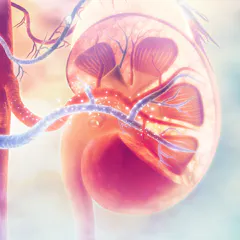
Organs from gay men or injecting drug users, often rejected for transplants, could safely be used, so long as donors test negative for infections such as HIV, and hepatitis B and C.
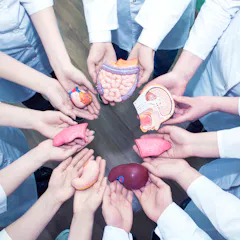
The number of people choosing to become posthumous donors in the UK has reached 25.3m but this is still considerably lower than other countries.
Top contributors
-

Postdoctoral Research Fellow at the Centre for Values, Ethics and the Law in Medicine (VELiM), University of Sydney
-
Senior Teaching Fellow, University of Warwick
-
Adjunct Fellow, T.C. Beirne School of Law, The University of Queensland
-
Professor in Clinical Ethics, Macquarie University
-
Chen Su Lan Centennial Professor in Medical Ethics, National University of Singapore; Distinguished Visiting Professor in Law, University of Melbourne; Uehiro Chair in Practical Ethics, The University of Melbourne
-
Associate professor, University of Canberra
-
Bioethicist and Health Communication Specialist, University of the Witwatersrand
-
Professor of Bioethics, University of Sydney
-
Professor, Medical Ethics, Bond University
-
Senior Lecturer in Medical Ethics and Law, St George's, University of London
-
Associate Professor in Health Ethics and Professionalism, School of Medicine, Deakin University
-
Research chair in fetal medicine, King's College London
-
Professor of Philosophy, University of Maryland
-
Honorary Associate at the Centre for Values, Ethics and the Law and Medicine, University of Sydney
-
Senior Research Assistant, WISERD, University of South Wales